Lesson 1.4 · Talking about the present
Be careful when reading news headlines
If you read the business news in English, you will notice that headlines seem to break the rules from Lessons 1.1–1.3. They use the present simple for things that are happening now – and for things that have just happened. It is a special style used only in headlines, so it is worth recognising, but not copying.
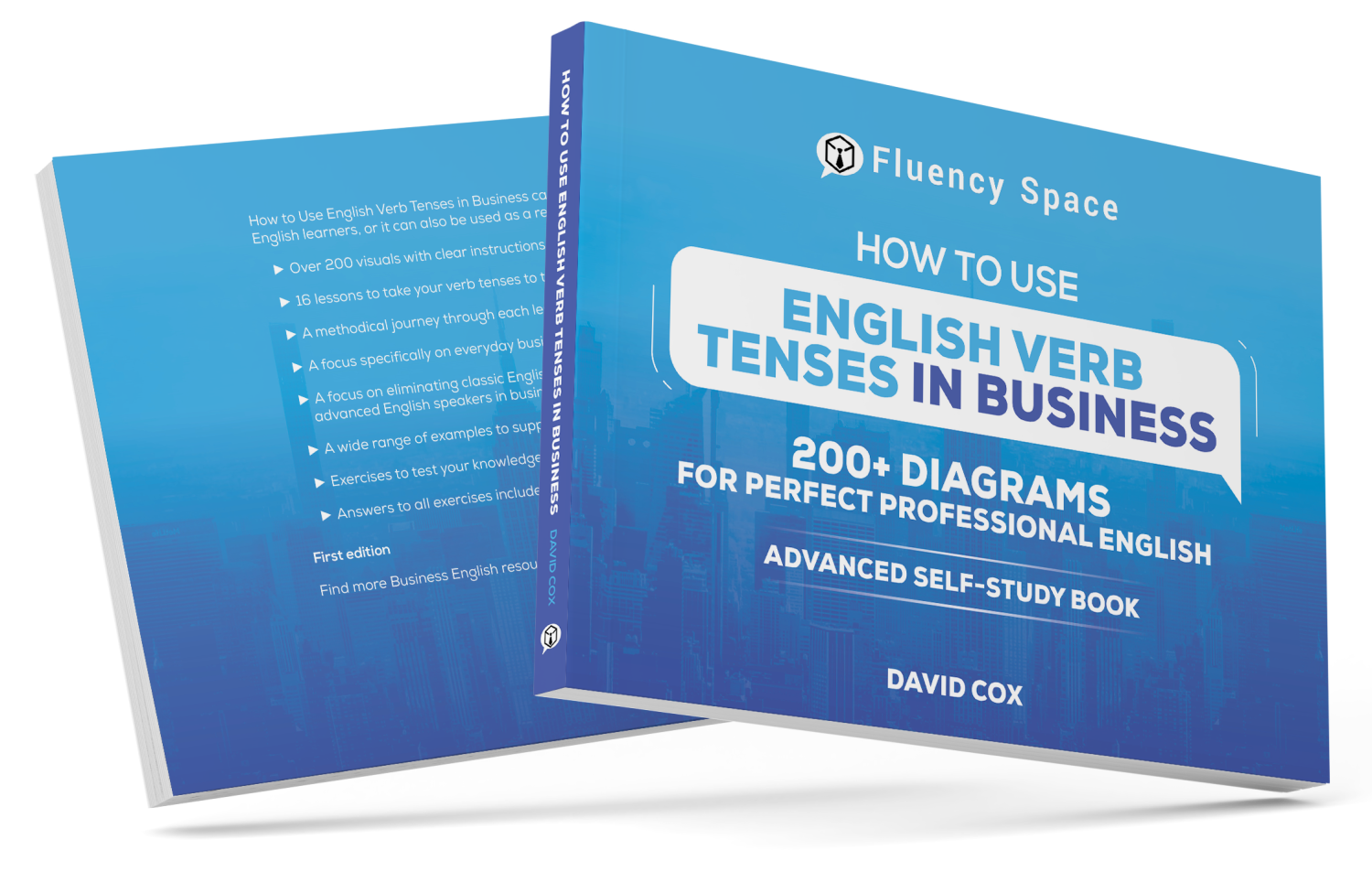
From How to Use English Verb Tenses in Business by David Cox · 200+ diagrams for professional English
Headlines use the present simple for current situations
In normal English, a temporary situation happening now takes the present continuous. In a headline, it takes the present simple.
Energy prices increase rapidly
News headlines use the present simple to talk about a temporary situation
Other examples:
- House prices plummet
- Tech shares slump on AI fears
- Eurozone economy slows
- Mortgage rates climb again
News headlines only use simple tenses. They use the present simple to talk about current situations. This style is only used in headlines, so unless you write them, you will never need it. But if you read the news in English often, it is important to recognise that the tenses in a headline are not standard English tenses.
As soon as the article begins, normal tenses return
Read past the headline and the article switches back to standard verb tenses.
Energy prices increase rapidly
News headlines use the present simple to talk about a temporary situation
According to analysts, the price of gas is increasing dramatically across Europe, causing real concern for manufacturers.
When the article begins, it switches back to standard verb tenses: present continuous to talk about a present temporary situation
Headlines use the present simple for events that have just happened
Headlines also use the present simple for news that has only just happened – where normal English would use the present perfect.
Central bank cuts interest rates
News headlines use the present simple to talk about events which have just happened
Other examples:
- CEO resigns after profit warning
- Carmaker cuts 2,000 jobs
- Retailer beats profit forecasts
- Shares plunge 40% on profit warning
Again, this is a style used only in headlines. If you don’t write news headlines, you will never need it – but you do need to recognise it, because the headline is not telling you about a habit or a general fact.
The article switches to the present perfect
Once the article begins, the same event is described with the present perfect – a past event we haven’t moved on from.
Central bank cuts interest rates
News headlines use the present simple to talk about events which have just happened
The central bank has cut its main interest rate by 0.25%, citing slowing growth across the region.
When the article begins, it switches back to standard verb tenses: present perfect to talk about a past event we haven’t moved on from
We look at the present perfect in detail in Lesson 3.
Decoding a headline
When you see a present simple verb in a headline, ask which of these it really means.
| The headline is about… | Headline | What it means in normal English |
|---|---|---|
| A situation happening now | House prices plummet | House prices are plummeting. |
| Something that has just happened | CEO resigns after profit warning | The CEO has resigned after a profit warning. |
Practise this lesson
Test yourself on the present simple and present continuous with sentences from real meetings, emails and presentations.
Teachers: use these diagrams
You are welcome to use these diagrams in your lessons and materials. Please credit Fluency Space with a link to this page.
Diagram: Fluency Space – fluencyspace.com/grammar/verb-tenses/tenses-in-news-headlines/Correct on paper is not the same as natural in the boardroom
One-to-one Business English coaching for C1/C2 executives and founders.
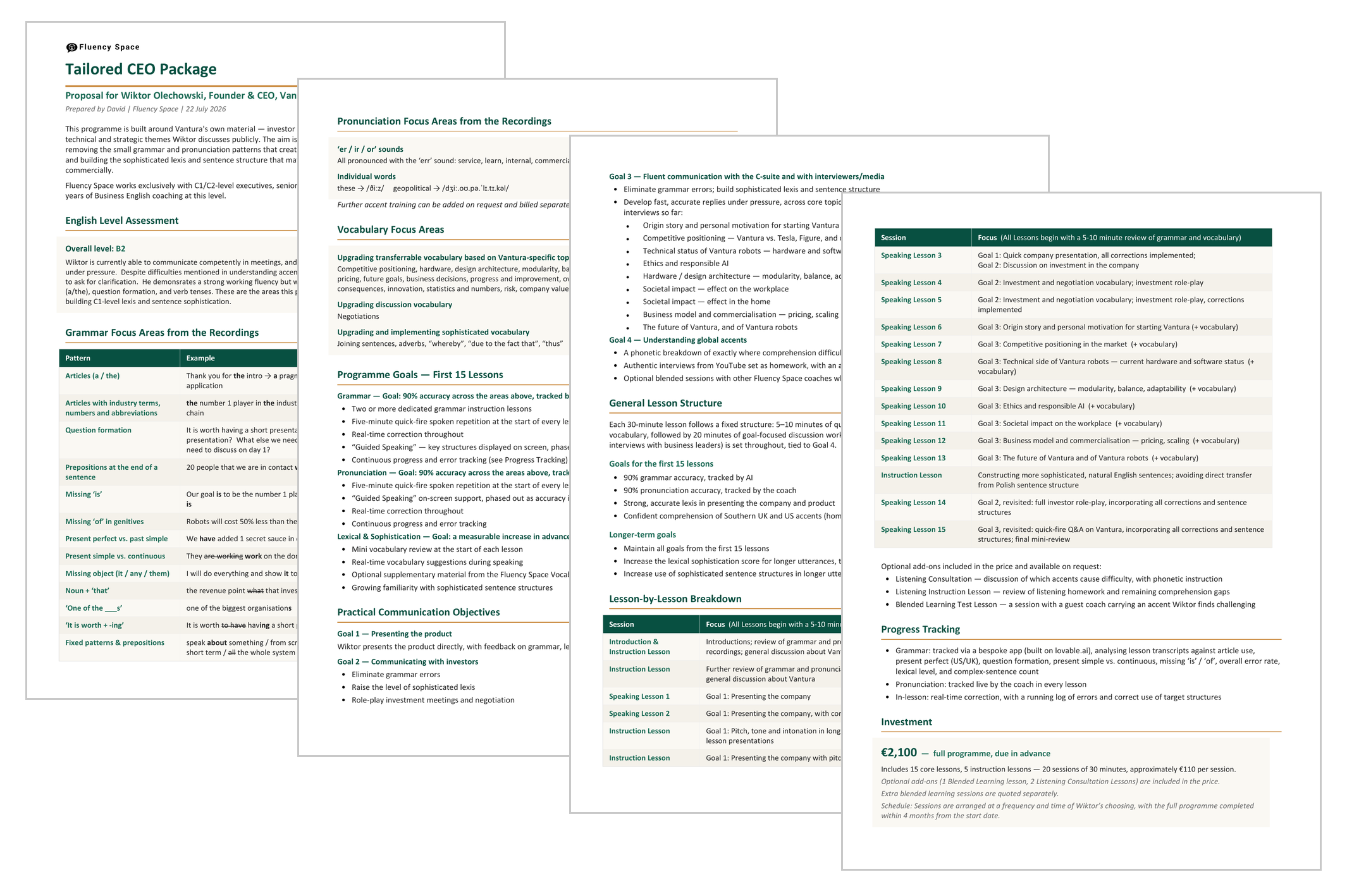
IN-DEPTH PROPOSAL BUILT WITH CARE
A Course Built around you
After your full English audit, we do a deep dive into your company, your role and your real communication goals - We then build a fully tailored program around them and send a proposal within 3 working days.

© Copyright Fluency Space. All Rights Reserved
OptimizePress Popup Overlay
the fluency space acadademy
Be one of the first 50 to join and get a huge discount!

Your advanced English training center. Over 600 pages of PDFs. over 250 diagrams and hundreds of exercises. 32 Vocabulary lessons covering the 400 most important phrases for advanced Business, 2x monthly Adapted Business English texts, 2x monthly YouTube listening lessons, 'How to Use English Verb Tenses in Business' textbook.
All of this and much more for only $5.99 per month. Cancel anytime!