Lesson 3.4 · From the past to the present
For and since in business introductions
When you introduce yourself, you almost always say how long you have been doing something: in your role, at your company, in the industry. It is one of the most important things to get right when you meet someone for the first time.
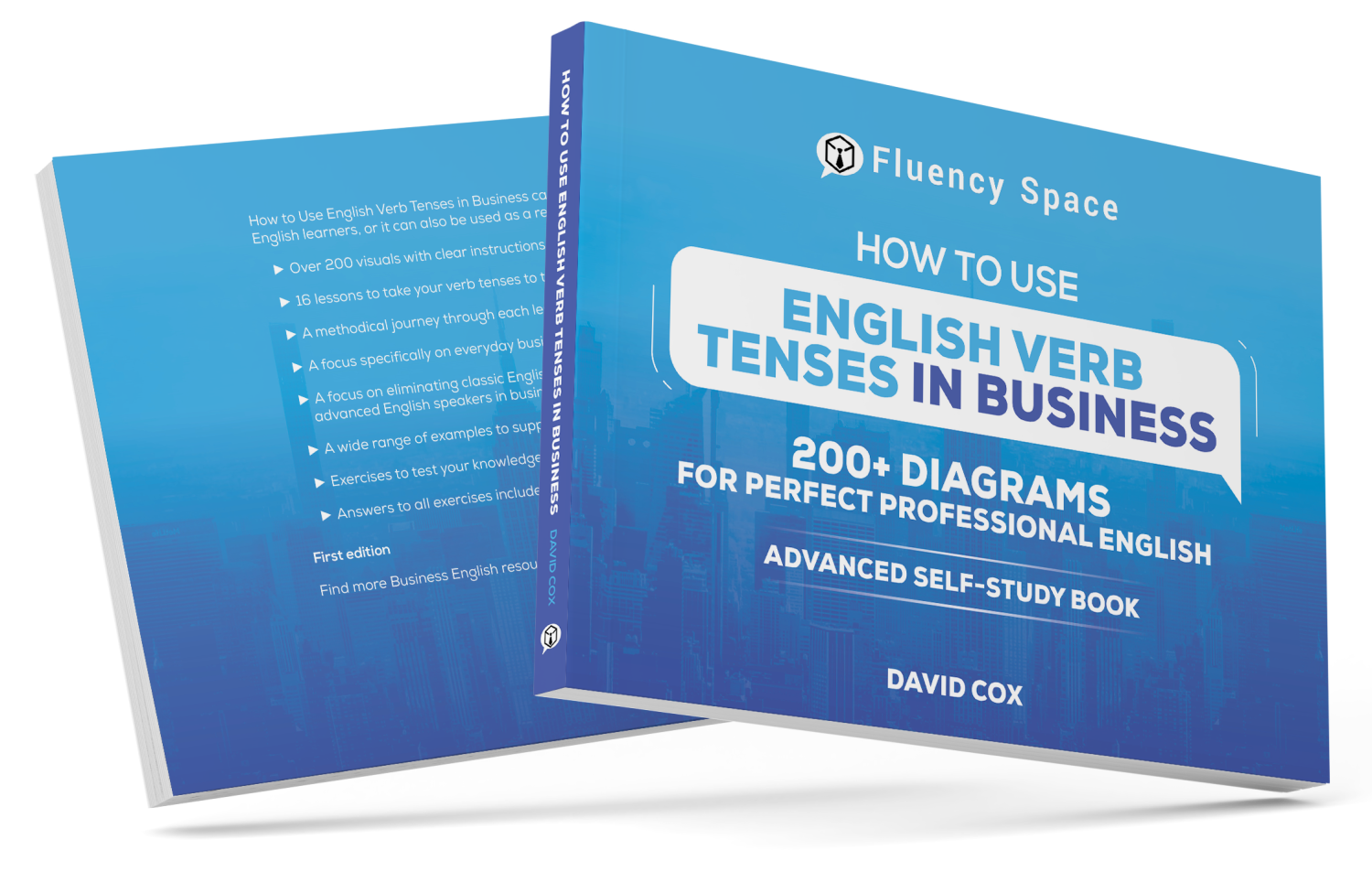
From How to Use English Verb Tenses in Business by David Cox · 200+ diagrams for professional English
Two mistakes people make very often
These two mistakes are very common – even at advanced level – and they confuse people when you first meet them.
- When to use ‘for’ and when to use ‘since’
- Which tense to use with ‘for’ and ‘since’
When to use ‘for’ and when to use ‘since’
‘Since’ goes with the start time. ‘For’ goes with the length of time.
We use since + the start time
I have been working at X Company since 2015.
- since 2015
- since last week
- since January
- since our first meeting
We use for + the length of timenot since
I have been working at X Company for 3 years.
sincefor 3 yearssincefor 2 monthssincefor 1 weeksincefor 30 minutes
The present perfect continuous: your best tense for introductions
When we are talking about the length of time from the beginning of an event to now, we don’t use the present continuous with ‘for’. This is one of the main mistakes that English learners make when using ‘for’ in business introductions.
✓I have been managing the team for 2 months.
Present perfect continuous with ‘for’ to say how long something has been happening so far
✗I am managing the team for 2 months.
The classic mistake: we don’t use the present continuous with ‘for’ to talk about the time from the beginning until now
‘Be’ and ‘know’: no continuous form
‘Be’ and ‘know’ are two key verbs where we don’t use continuous forms. With ‘for’ and ‘since’, we use the present perfect simple – and the same mistake with the present tense still applies.
‘Be’: ✓I have been CFO for 3 years. ✗I am CFO for 3 years.
‘Know’: ✓I have known him for 10 years. ✗I know him for 10 years.
The three forms you need for business introductions
With ‘for’ and ‘since’, these three forms cover almost everything you will say when you introduce yourself.
I have been -ing…
I’ve been leading the sales team since January.
For most activities: working, managing, leading.
I have been at…
I’ve been at the company for 6 years.
With ‘be’: your company, your role, a city.
I have known…
I’ve known Maria since our first meeting.
With ‘know’: people you work with.
Mixing tenses in a business introduction
In a real introduction, the present simple and the present perfect continuous work together.
What do you do, John?
Present simple to ask about a general, long-term situation
I manage the operations department at X company.
Present simple to talk about a general, long-term situation
I’ve been leading the team for quite a while, about 3 years.
Present perfect continuous with ‘for’ to say how long something has been happening so far
I’m their head of operations for Central Europe.
Present simple to talk about a general, long-term situation
Still there, or finished? ‘For’ and ‘how long’
If a continuing event happened in the past and it is now finished, we can use the past simple with ‘for’ and ‘how long’.
Past simpleYou are no longer working there
How long did you work at your previous company?
I worked at X company for 3 years.
Present perfect continuousYou are still working there
How long have you been working at the company?
I have been working at X company for 3 years.
On a business trip: so far, or in total?
We can also use the present continuous with ‘for’ and ‘how long’ to talk about the total length of time of something. This is often used when talking about how long you are staying somewhere on a business trip.
Present perfect continuousThe time so far
How long have you been staying in the city?
We have been staying here for 3 days.
3 days is the time that you have been staying there so far (you will probably stay for more days)
Present continuousThe total length of time
How long are you staying in the city?
We are staying here for 3 days.
3 days is the total length of time of your stay
The same with ‘be’
We don’t use continuous forms with ‘be’. So for the time so far we use the present perfect, and for the total length of time we use the present simple.
Present perfectwith the verb ‘to be’
How long have you been in the city?
We have been here for 3 days.
3 days is the time that you have been there so far (you will probably be there for more days)
Present simplewith the verb ‘to be’
How long are you in the city?
We are here for 3 days.
3 days is the total length of time of your stay
Practise this lesson
Test yourself on for and since with sentences from real meetings, emails and updates.
Teachers: use these diagrams
You are welcome to use these diagrams in your lessons and materials. Please credit Fluency Space with a link to this page.
Diagram: Fluency Space – fluencyspace.com/grammar/verb-tenses/for-since-business-introductions/Correct on paper is not the same as natural in the boardroom
One-to-one Business English coaching for C1/C2 executives and founders.

© Copyright Fluency Space. All Rights Reserved
OptimizePress Popup Overlay
the fluency space acadademy
Be one of the first 50 to join and get a huge discount!

Your advanced English training center. Over 600 pages of PDFs. over 250 diagrams and hundreds of exercises. 32 Vocabulary lessons covering the 400 most important phrases for advanced Business, 2x monthly Adapted Business English texts, 2x monthly YouTube listening lessons, 'How to Use English Verb Tenses in Business' textbook.
All of this and much more for only $5.99 per month. Cancel anytime!