Lesson 3.5 · From the past to the present
Giving updates: ‘in the last week’, ‘over the past month’
We often use ‘in the last week’ when we give updates in meetings. It is one of the most common areas where people make mistakes, even at a high level – and the wrong tense changes the meaning of your update.
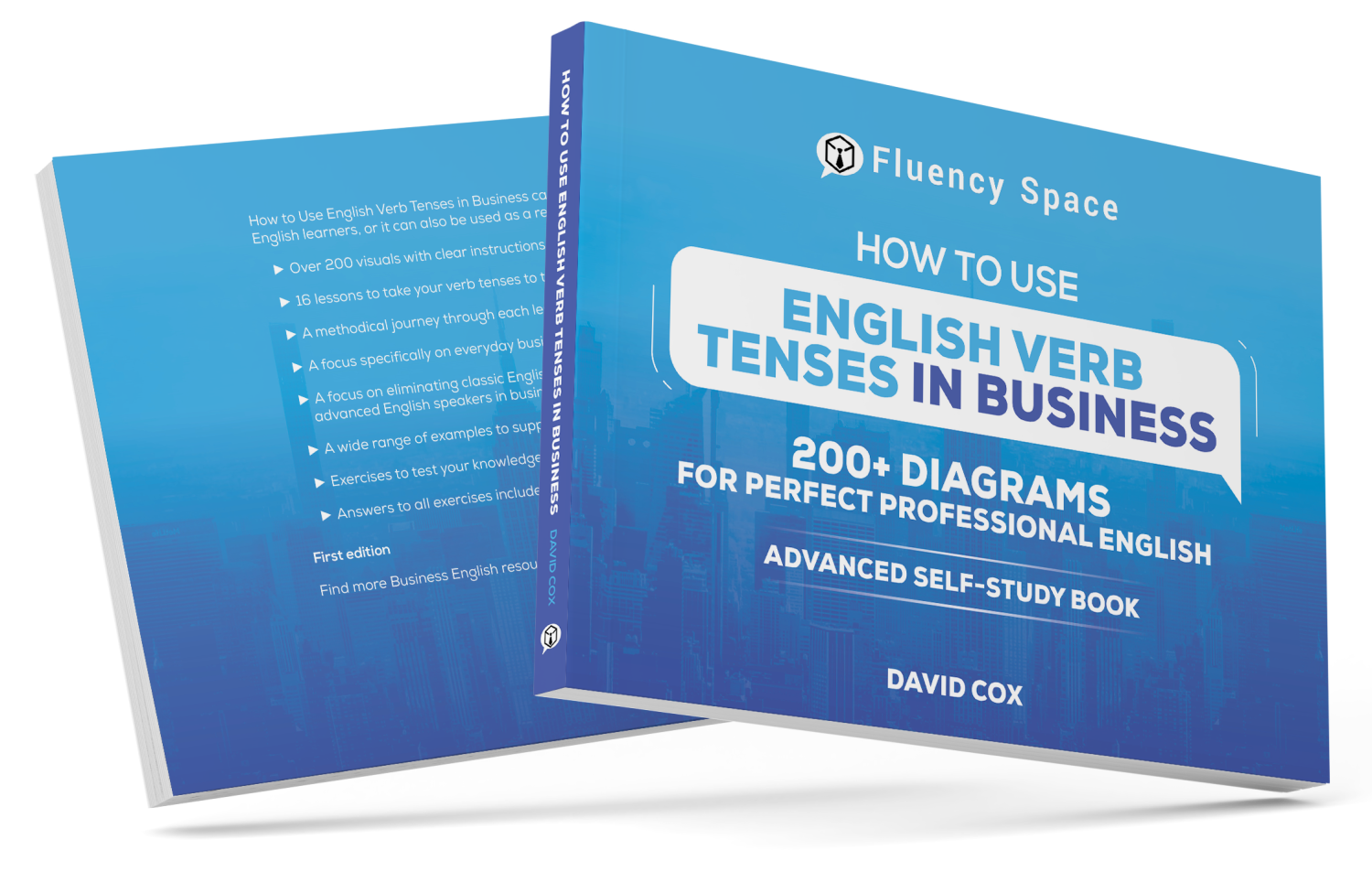
From How to Use English Verb Tenses in Business by David Cox · 200+ diagrams for professional English
‘Last week’ or ‘in the last week’?
They sound almost the same, but they describe two different periods of time. ‘Last week’ is a fixed, finished time frame. ‘In the last week’ is the last 7 days, up to now – and it is still continuing.
Past simpleNow finished
Last week I worked hard.
= last calendar week
- last week
Present perfect (continuous)Still continuing
In the last week I have been working hard.
= the last 7 days, and still continuing
- in the last week
- over the last week
- during the last week
- over the past few weeks
- in / over / during the past 6 weeks
How many times: present perfect
When we say how many times we have done something in the last week, we use the present perfect.
Last week I conducted 6 interviews with potential candidates.
Past simple – last calendar week, now finished
✓In the last week I’ve conducted 6 interviews with potential candidates.
Present perfect to say how many times something has happened in the last 7 days(and there may be more)
✗In the last week I conducted 6 interviews with potential candidates.
Confuses the meaning: the past simple says the period is finished, but ‘in the last week’ runs up to now
The final achievement: present perfect
When we talk about the result we have achieved in the last week, we also use the present perfect.
Last week we increased sales by 6%.
Past simple – last calendar week, now finished
✓In the last week we’ve increased sales by 6%.
Present perfect to talk about the result achieved in the last 7 days, up to now
✗In the last week we increased sales by 6%.
Confuses the meaning: the past simple says the period is finished, but ‘in the last week’ runs up to now
The continuing process: present perfect continuous
When we talk about the activity – what we have been busy doing over the last 7 days – we use the present perfect continuous.
Last week we worked on efficiency.
Past simple – last calendar week, now finished
✓In the last week we’ve been working on efficiency.
Present perfect continuous to talk about a process that has been happening in the last 7 days, and is still continuing
✗In the last week we work on efficiency.
Confuses the meaning: the present simple is for general, long-term situations – it sounds like something you always do
Mixing tenses: an update to the CEO
In a real update, these tenses work together.
CEOWhat have you been working on since our last meeting?
Present perfect continuous with ‘since’ to ask about the activity from the start time up to now
Head of OperationsWell, in the last week we’ve finalised the budget for the Warsaw office.
Present perfect to talk about a result achieved in the last 7 days
We’ve also interviewed four candidates for the country manager role,
Present perfect to say how many times something has happened in the last 7 days
and I’ve shortlisted two.
Present perfect to talk about a past event which we still haven’t moved on from(we haven’t made a decision yet)
We’re currently discussing the candidates,
Present continuous to talk about a present temporary situation
and we’ll make a decision next week.
‘will’ to talk about a future decision / promise
Mixing tenses: an update to the board
Board memberHow have things been since the last board meeting?
Present perfect with ‘since’ – we don’t use continuous forms with ‘be’
CFOBusy. Over the past week we’ve been going through the Q3 numbers with the auditors.
Present perfect continuous to talk about a process that has been happening over the past week, and is still continuing
We’ve finished the revenue side,
Present perfect to talk about a past event which we still haven’t moved on from(the cost side isn’t finished yet)
and it looks good.
Present simple – ‘look’ (meaning ‘seem’) is a verb we don’t use in continuous forms
Some things are taking longer than expected,
Present continuous to talk about a present temporary situation
but we’re meeting with the auditors again on Thursday to finalise everything.
Present continuous to talk about a fixed future arrangement
The same with months and years
The rule is the same for longer periods: in the last month, in the last year, over the past 6 months.
In the last month: In the last month we’ve opened two new offices, and we’re hiring another 20 people before the end of the year. In the last month I’ve been spending most of my time with our biggest clients, because two of them raised concerns at the last quarterly review.
In the last year: In the last year our revenue has grown by 12%, but our costs have been rising too, so we’re reviewing every department. In the last year we’ve launched three products. The first one didn’t perform well, but the other two are doing very well.
Over the past 6 months: Over the past 6 months we’ve been restructuring the sales team. We merged two regions in June, and we’ll complete the process in January. Over the past 6 months we’ve reduced staff turnover by a third, and the team seems much more motivated.
Practise this lesson
Test yourself on updates with sentences from real meetings, emails and updates.
Teachers: use these diagrams
You are welcome to use these diagrams in your lessons and materials. Please credit Fluency Space with a link to this page.
Diagram: Fluency Space – fluencyspace.com/grammar/verb-tenses/in-the-last-week-updates/Correct on paper is not the same as natural in the boardroom
One-to-one Business English coaching for C1/C2 executives and founders.

© Copyright Fluency Space. All Rights Reserved
OptimizePress Popup Overlay
the fluency space acadademy
Be one of the first 50 to join and get a huge discount!

Your advanced English training center. Over 600 pages of PDFs. over 250 diagrams and hundreds of exercises. 32 Vocabulary lessons covering the 400 most important phrases for advanced Business, 2x monthly Adapted Business English texts, 2x monthly YouTube listening lessons, 'How to Use English Verb Tenses in Business' textbook.
All of this and much more for only $5.99 per month. Cancel anytime!