Lesson 3.1 · From the past to the present
Present perfect or past simple: single events
For a single event in the past, two questions decide the tense: do you say when it happened – and if not, have you moved on from it?
From How to Use English Verb Tenses in Business by David Cox · 200+ diagrams for professional English
Do we say when the event happened?
If we use a time in the past to say ‘when’ something happened, we always use the past simple. This means any phrase referring to a past time: yesterday / last month / 1 hour ago / on 3rd January / in last week’s meeting / when I was young.
I broke my arm yesterday.
Past simple – we say when it happened
I joined the company when I was 24.
Past simple – we say when it happened
When we don’t say when: have we moved on?
When we don’t say when the event happened, we ask a different question.
Have we moved on to the next stage? Has the next thing happened – and have we moved on?
Yes: past simple
We have moved on. The consequences are finished.
No: present perfect
We haven’t moved on yet. The consequences are still ‘live’.
Business example: I (have) accepted the job offer
The same event, two different situations.
Past simpleConsequences are finished
I accepted the job offer…
…and I started last week.or…but I changed my mind.
We have moved on from accepting the offer.
Present perfectConsequences are still ‘live’
I have accepted the job offer…
…but I haven’t started yet.
We haven’t started in the job yet.
Two questions to decide the tense
Ask them in this order.
Do you say ‘when’ you accepted the job offer?with past phrases: yesterday / last week
yes
Past simple
I accepted the job offer yesterday.
no
Is the job offer still ‘live’, or is the offer no longer valid?
moved on
Past simple
I accepted the job offer, and I started last week.
still ‘live’
Present perfect
I have accepted the job offer, and I start next month.
Mixing tenses: ‘I accepted the job offer’
In real conversation, the tenses sit side by side.
I accepted the job offer yesterday.
Past simple to talk about a past event when we say ‘when’ it happened
I have just received an email with all the information about my first day.
Present perfect to talk about a past event which we still haven’t moved on from(you received the information about your first day, but you haven’t had your first day yet)
I am really looking forward to it!
Present continuous to talk about a present temporary situation
One rule, many situations
To really learn this, you need to see it in many contexts. The rule is always the same – have we moved on? – but the situations are different.
Preparing
- Present perfectI have prepared a presentation.
- I haven’t given the presentation yet.
- Past simpleI prepared a presentation.
- I gave the presentation – or the presentation was cancelled.
On its own, with no context, the past simple sentence leaves the listener thinking “What happened next?”
Explaining
- Present perfectI have explained how to do it.
- The explanation is still useful now – you should be able to do it.
- Past simpleI explained how to do it.
- That stage is over – something happened next, such as they did it (or didn’t).
Agreeing
- Present perfectWe have agreed to meet on Friday.
- The agreement still stands – the meeting hasn’t happened yet.
- Past simpleWe agreed to meet on Friday.
- We’ve moved on – the meeting has happened, or the plan changed.
News
- Present perfectThe town has flooded.
- This is current news – the town is still dealing with the flood.
- Past simpleThe town flooded.
- The flood is over – we’ve moved on to what happened afterwards.
Booking
- Present perfectI have booked a table at the restaurant.
- The booking is still ‘live’ – we haven’t eaten there yet.
- Past simpleI booked a table at the restaurant.
- We’ve had the meal – or the booking was cancelled.
I have done something – and now I will show you
A very common use in meetings and presentations: the work is done, but you haven’t shown it to anyone yet. That is the next stage, and it hasn’t happened.
I’ve prepared a presentation,
Present perfect to talk about a past event which we still haven’t moved on from(done, but I haven’t shown it to you yet)
so I’ll now share my screen.
‘will’ for something you decide to do immediately
Other examples: I have prepared a presentation, so I will now share my screen. (done, but I haven’t shown it yet) We have analysed the results, and here are our findings. (analysed, but we haven’t shown them yet)
Step by step: bringing someone up to date
In a step-by-step process, you did one step and moved on to the next (past simple). The latest step brings us up to date (present perfect) – with the next stage still pending.
I had a meeting with John
Past simple – we moved on to the next step
and we put together a proposal.
Past simple – we moved on to the next step
I sent it to the client
Past simple – we moved on to the next step
and they have suggested some changes,
Present perfect – the latest step, which brings us up to date(we haven’t moved on from it yet)
so we are reviewing those at the moment,
Present continuous to talk about a present temporary situation
and we will get back to them on Friday.
‘will’ to make a promise about the future(the next stage, still pending)
Not yet: ‘I haven’t … yet’
You may have noticed in these explanations that we also use the present perfect in the negative: “the meeting hasn’t happened yet” or “I haven’t shown the presentation yet”. When we haven’t done something, but we will do it in the future, we prefer to say “I haven’t … yet”.
I’ve started the report,
Present perfect to talk about a past event which we still haven’t moved on from(I’m still working on it)
but I haven’t finished it yet.
Present perfect to talk about an event which has not yet happened, but may happen in the future
Mixing tenses: ‘I haven’t … yet’
A common way to explain why something hasn’t happened yet.
A client called me with an urgent problem,
Past simple to talk about a finished event in the past(you have moved on because the problem is solved)
that I needed to solve immediately,
Past simple to talk about a finished event in the past(the problem is solved. We could also use the present perfect here because we are still suffering the consequences)
so I haven’t had a chance to look at your report yet.
Present perfect to talk about an event which has not yet happened, but may happen in the future
Questions with ‘yet’
We use the present perfect to ask questions with ‘yet’:
“Have you spoken to her yet?” “Have you finished the report yet?” “Have you found a solution yet?”
We use the present perfect because there is still time to do it in the future if you haven’t done it yet. We can also say the sentence without ‘yet’:
“Have you spoken to her (yet)?” “Have you finished the report (yet)?”
Is there still time?
We can also ask a question with the past simple: “Did you find a solution?” This suggests it is now too late to do something if you haven’t done it.
Past simpleNow too late to do it
Did you find a solution?
Present perfectThere is still time to do it
Have you found a solution (yet)?
Practise this lesson
Test yourself on single events with sentences from real meetings, emails and updates.
Teachers: use these diagrams
You are welcome to use these diagrams in your lessons and materials. Please credit Fluency Space with a link to this page.
Diagram: Fluency Space – fluencyspace.com/grammar/verb-tenses/present-perfect-single-events/Correct on paper is not the same as natural in the boardroom
One-to-one Business English coaching for C1/C2 executives and founders.

© Copyright Fluency Space. All Rights Reserved
OptimizePress Popup Overlay
the fluency space acadademy
Be one of the first 50 to join and get a huge discount!

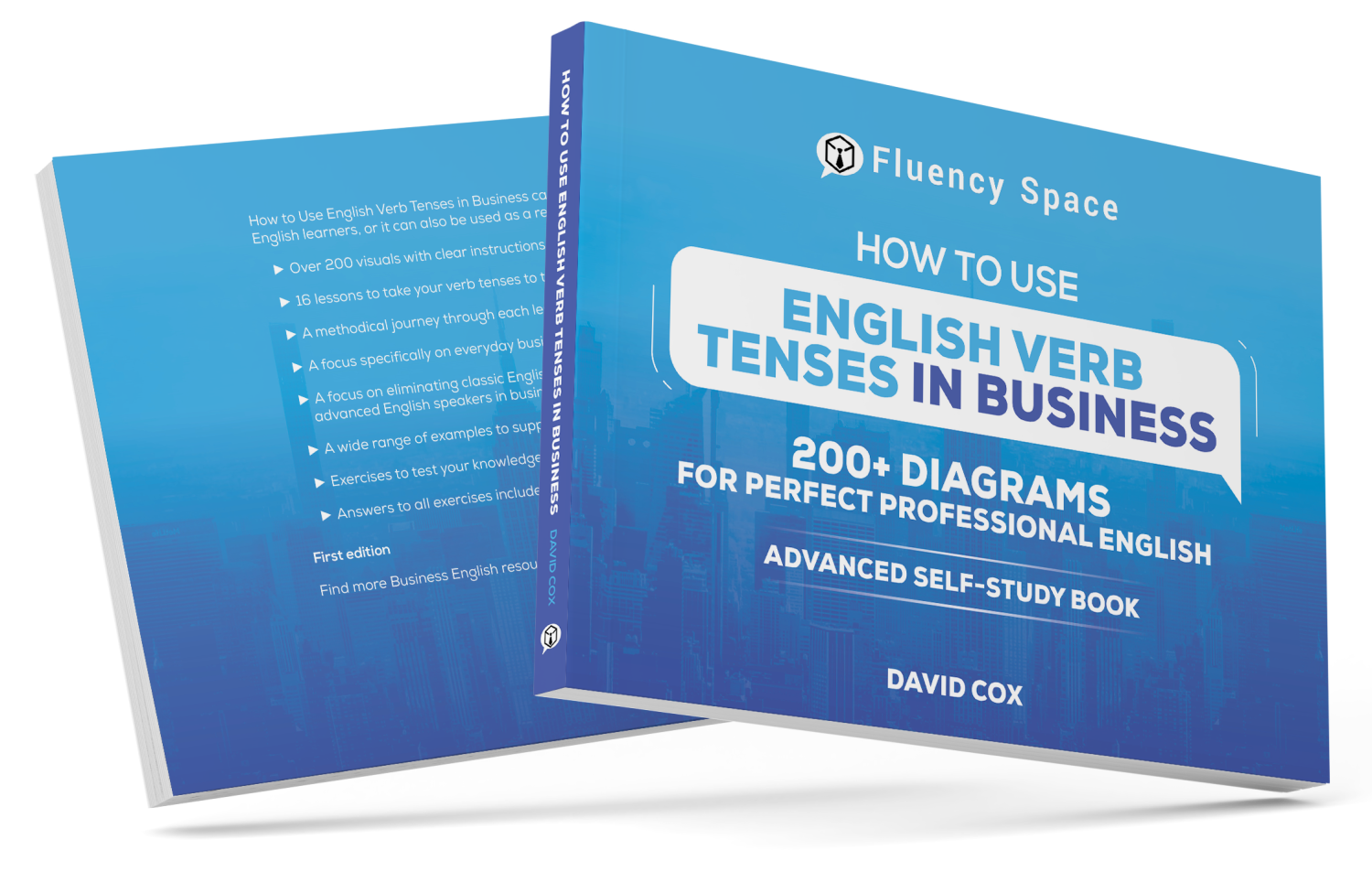
Your advanced English training center. Over 600 pages of PDFs. over 250 diagrams and hundreds of exercises. 32 Vocabulary lessons covering the 400 most important phrases for advanced Business, 2x monthly Adapted Business English texts, 2x monthly YouTube listening lessons, 'How to Use English Verb Tenses in Business' textbook.
All of this and much more for only $5.99 per month. Cancel anytime!