Lesson 1.3 · Talking about the present
Verbs we don’t use in continuous forms
Some verbs – often called stative verbs – are not normally used in the present continuous, even when the situation is temporary. They describe states rather than actions: knowing, wanting, owning, believing. Here are the ones professionals use every day, and the few that change their meaning.
From How to Use English Verb Tenses in Business by David Cox · 200+ diagrams for professional English
Verbs that we don’t use in continuous forms
These verbs normally stay in the present simple, whether the situation is long-term or temporary.
Knowing and understanding
know · understand
“I know it’s hard work.”
Possession
have · own
“We have many qualities.”
Giving your opinion
think · believe
“I think it’s going to be difficult.”
“I believe it will work.”
Wanting and needing
want · need · hope · wish
“I need some more time to complete the task.”
“I hope the presentation goes well tomorrow.”
Reporting what someone says
say · claim · state · suggest · appear
“John says he has solved the issue.”
Containing
contain · include
“This email contains important information.”
How something seems
look · sound
“The design looks great.”
Promises and statements
promise · guarantee · apologise · predict · admit
“I guarantee I will send it to you by 9pm.”
“I apologise for the delay.”
“I admit that I made some mistakes.”
Current situations with verbs not usually used in the continuous
In one sentence you can have a temporary action in the present continuous and a stative verb in the present simple – both describing the same temporary situation.
All of the suggestions that you are making
Present continuous to talk about a present temporary situation
sound really great!
Present simple – a temporary situation, but we don’t usually use the continuous with ‘sound’
Other examples: The presentation that they are putting together sounds really interesting. All of the plans that they are working on look really good.
Apologising for a temporary problem
A classic customer-service message: two temporary situations in the present continuous, and an apology in the present simple.
We are experiencing some technical difficulties at the moment,
Present continuous to talk about a present temporary situation
but we are working to solve them as soon as possible.
Present continuous to talk about a present temporary situation
We apologise for the inconvenience.
Present simple – a temporary situation, but we don’t usually use the continuous with ‘apologise’
‘Have’, ‘need’ and ‘want’ in current situations
Four temporary situations – but only one of them can go into the present continuous.
We currently have a team of six staff,
Present simple – a temporary situation, but we can’t use the continuous with ‘have’ when it means possession
who are all performing well,
Present continuous to refer to the current situation(we could also use the present simple here, to say they always perform well)
but we need to add a few new people
Present simple – a temporary situation, but we don’t usually use the continuous with ‘need’
because we want to increase our output.
Present simple – a temporary situation, but we don’t usually use the continuous with ‘want’
Using ‘have’ in continuous forms
When ‘have’ means possession, we don’t use the present continuous. But in many common phrases ‘have’ describes an action or experience – and then we can. These are the most useful ones:
- have a discussion
- have a conversation
- have a chat
- have a word with
- have a problem
- have lunch
- have a good time
- have difficulties
- have / take a look at
- have / take a break
- have / take a shower
- have / host a party
Current situations using ‘have’ in the present continuous
The same verb, two different meanings – and two different tenses in one sentence.
We are having a quick break,
Present continuous to talk about a temporary situation happening right now
because we have a lot of work to finish today.
Present simple – a temporary situation, but we don’t use the continuous with ‘have’ for possession
Other example: We are having some difficulties at the moment because we don’t have a big enough budget.
‘Think’: opinion or the act of thinking?
When ‘think’ gives your opinion, we don’t use the continuous. When it describes the act of thinking itself – the mental process – we can use the continuous, and for a temporary situation we must.
I think the current strategy isn’t optimal.
Present simple – ‘think’ for giving your opinion(a temporary situation, but no continuous with an opinion)
I’m thinking about changing the strategy.
Present continuous – the temporary process of thinking
‘Consider’ for options you are weighing up
‘Consider’ is another verb to watch. For options you are weighing up at the moment, you need the present continuous – often alongside ‘think’ for your opinion.
We’re considering moving production abroad,
Present continuous – an option we are weighing up in this temporary period
because I think it could save us an extra $3m a year.
Present simple – ‘think’ for giving your opinion
Practise this lesson
Test yourself on the present simple, the present continuous and verbs we don’t use in continuous forms, with sentences from real meetings, emails and presentations.
Teachers: use these diagrams
You are welcome to use these diagrams in your lessons and materials. Please credit Fluency Space with a link to this page.
Diagram: Fluency Space – fluencyspace.com/grammar/verb-tenses/stative-verbs/Correct on paper is not the same as natural in the boardroom
One-to-one Business English coaching for C1/C2 executives and founders.
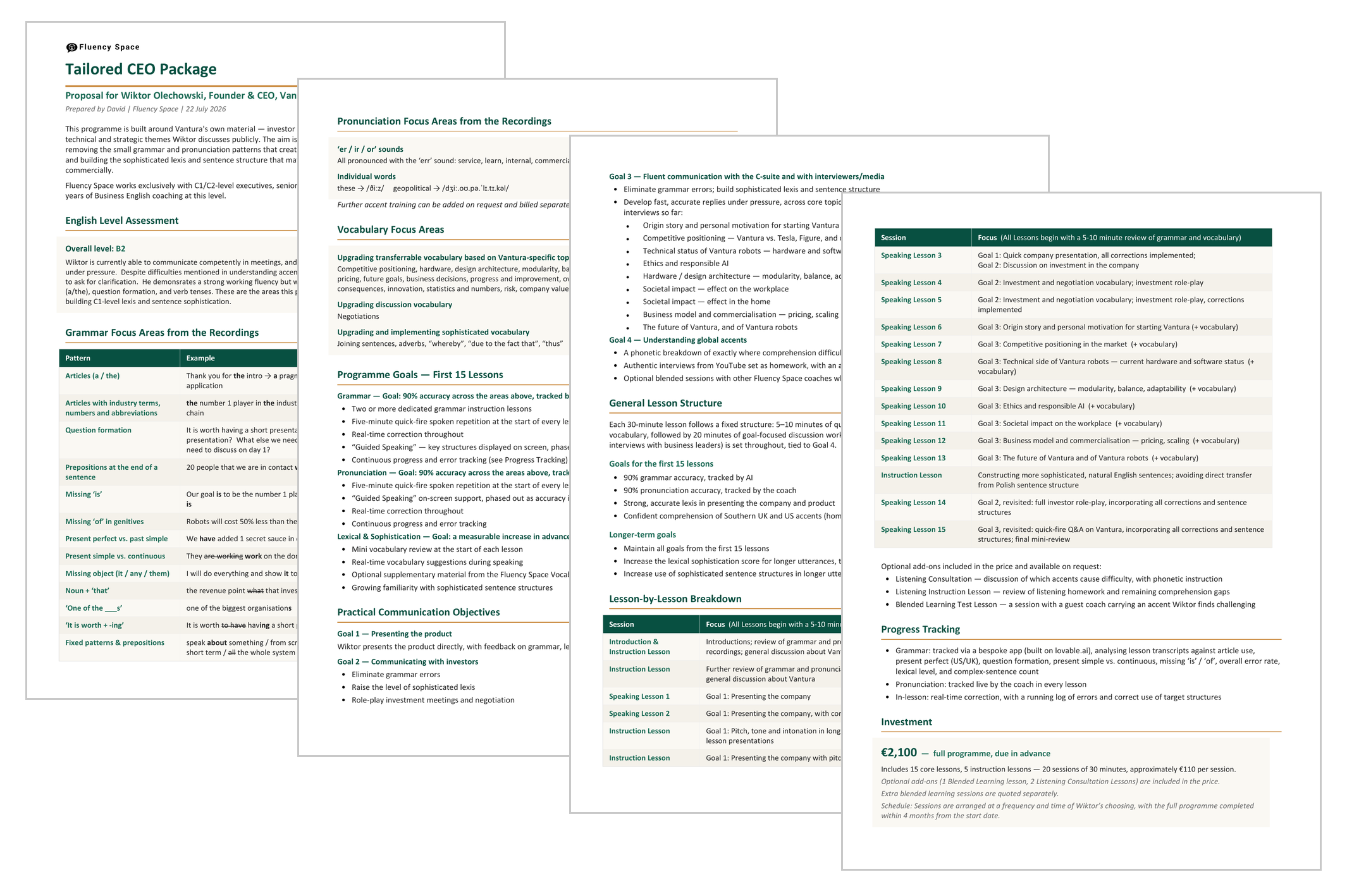
IN-DEPTH PROPOSAL BUILT WITH CARE
A Course Built around you
After your full English audit, we do a deep dive into your company, your role and your real communication goals - We then build a fully tailored program around them and send a proposal within 3 working days.

© Copyright Fluency Space. All Rights Reserved
OptimizePress Popup Overlay
the fluency space acadademy
Be one of the first 50 to join and get a huge discount!

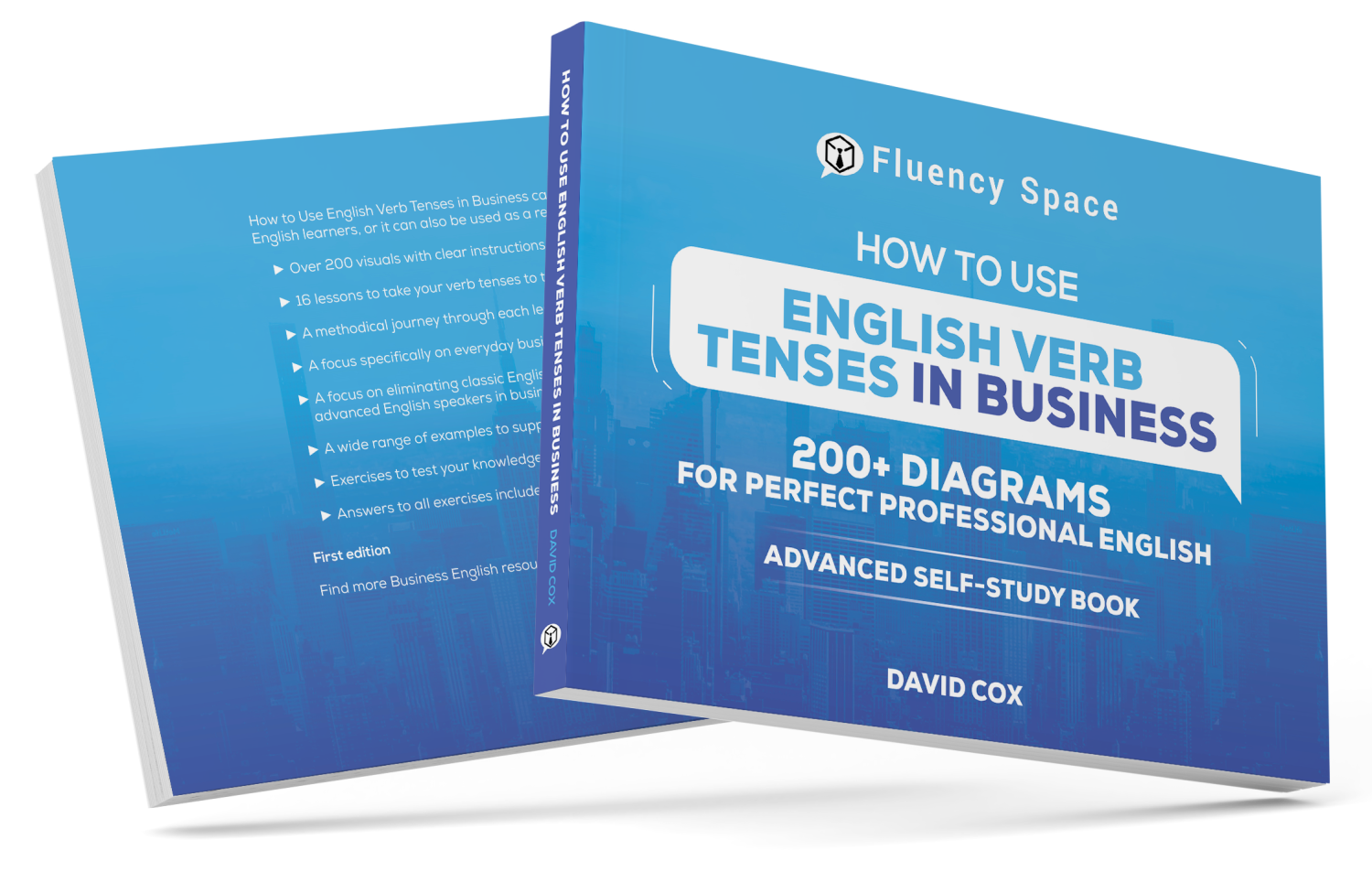
Your advanced English training center. Over 600 pages of PDFs. over 250 diagrams and hundreds of exercises. 32 Vocabulary lessons covering the 400 most important phrases for advanced Business, 2x monthly Adapted Business English texts, 2x monthly YouTube listening lessons, 'How to Use English Verb Tenses in Business' textbook.
All of this and much more for only $5.99 per month. Cancel anytime!