Extras
Future perfect and future perfect continuous: ‘By Friday, we will have…’
The future perfect (will have done) and the future perfect continuous (will have been doing) look back from a moment in the future. You won’t need them often – there is almost always a simpler option – but they are useful for deadlines, and for explaining why you will be tired.
This page is part of the Extras: tenses you will need far less than the ones in the main guide.
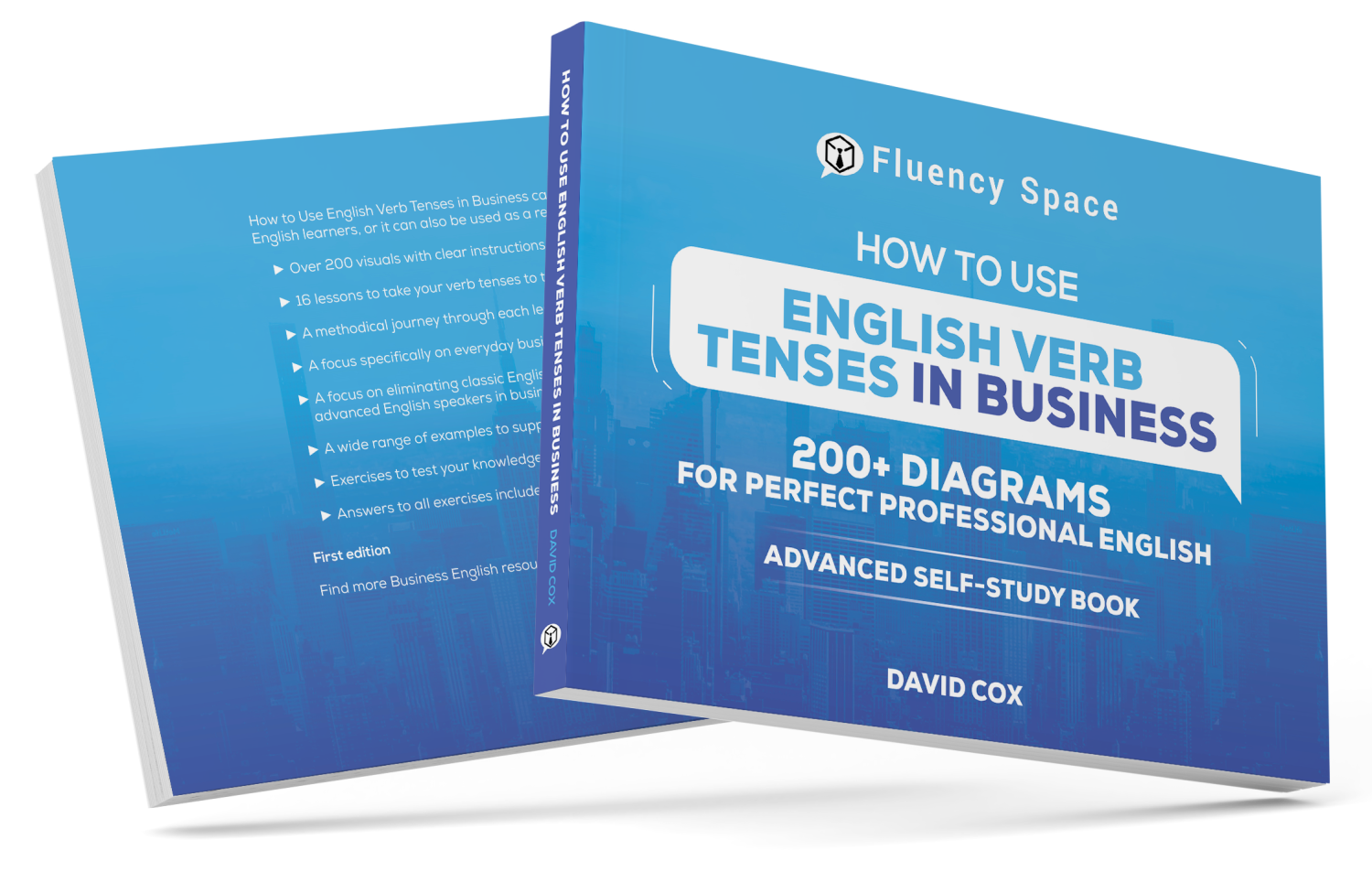
From How to Use English Verb Tenses in Business by David Cox · 200+ diagrams for professional English
The future perfect: finished by a deadline
The future perfect is mainly used with by. This means it can be useful in business to say that something will be complete by a particular date in the future:
I will have finalised the report by Friday.
Future perfect – something will be finished before a time in the future
Mixing tenses – and a simpler alternative
Here is the future perfect together with the present perfect:
I’ve organised a meeting for next Friday,
Present perfect to talk about a past event we haven’t moved on from (the meeting is organised, but it hasn’t happened yet)
because we will have finished the project by then.
Future perfect to talk about something which will be finished by a certain time
However, this can easily be replaced with a simpler future form – will be + adjective + by: The project will be finished by then. The project will be ready by then.
The future perfect continuous: how long, up to a future moment
To use the future perfect continuous, we first talk about something in the future, and then we say how long something will have been happening up to that moment. We use the same time phrases as with the present perfect continuous and the past perfect continuous:
- for 3 hours
- for 10 years
- during the summer
- all day
- all week
By the time the new factory is finally finished,
Present simple to talk about the future after ‘by the time’
we will have been working on it for two years.
Future perfect continuous to talk about how long something will have been happening up to another future event
Mixing tenses: why you will be tired
The main use of the future perfect continuous is to explain why you will be tired in a certain situation. We often use ‘when’ or ‘by the time’ in these sentences – so remember to use the present simple after them:
When we arrive at the conference hotel,
Present simple to talk about a future event after ‘when’
I think we’ll be tired,
‘Will’ to make a prediction about the future
because we will have been travelling all day.
Future perfect continuous to talk about how long something will have been happening up to another future event
Practise this lesson
Finished by a deadline, or how long up to a future moment? Practise with business examples.
Teachers: use these diagrams
You are welcome to use these diagrams in your lessons and materials. Please credit Fluency Space with a link to this page.
Diagram: Fluency Space – fluencyspace.com/grammar/verb-tenses/future-perfect-and-future-perfect-continuous/Correct on paper is not the same as natural in the boardroom
One-to-one Business English coaching for C1/C2 executives and founders.

© Copyright Fluency Space. All Rights Reserved
OptimizePress Popup Overlay
the fluency space acadademy
Be one of the first 50 to join and get a huge discount!

Your advanced English training center. Over 600 pages of PDFs. over 250 diagrams and hundreds of exercises. 32 Vocabulary lessons covering the 400 most important phrases for advanced Business, 2x monthly Adapted Business English texts, 2x monthly YouTube listening lessons, 'How to Use English Verb Tenses in Business' textbook.
All of this and much more for only $5.99 per month. Cancel anytime!