Lesson 8.3 · Conditionals
Suggestions and exploring options: ‘If we did…’ or ‘If we do…’?
In meetings and negotiations, the tense after ‘if’ tells people how serious you are. If + past simple, would explores an imaginary option without committing to it. If + present simple, will makes a real suggestion or a firm offer.
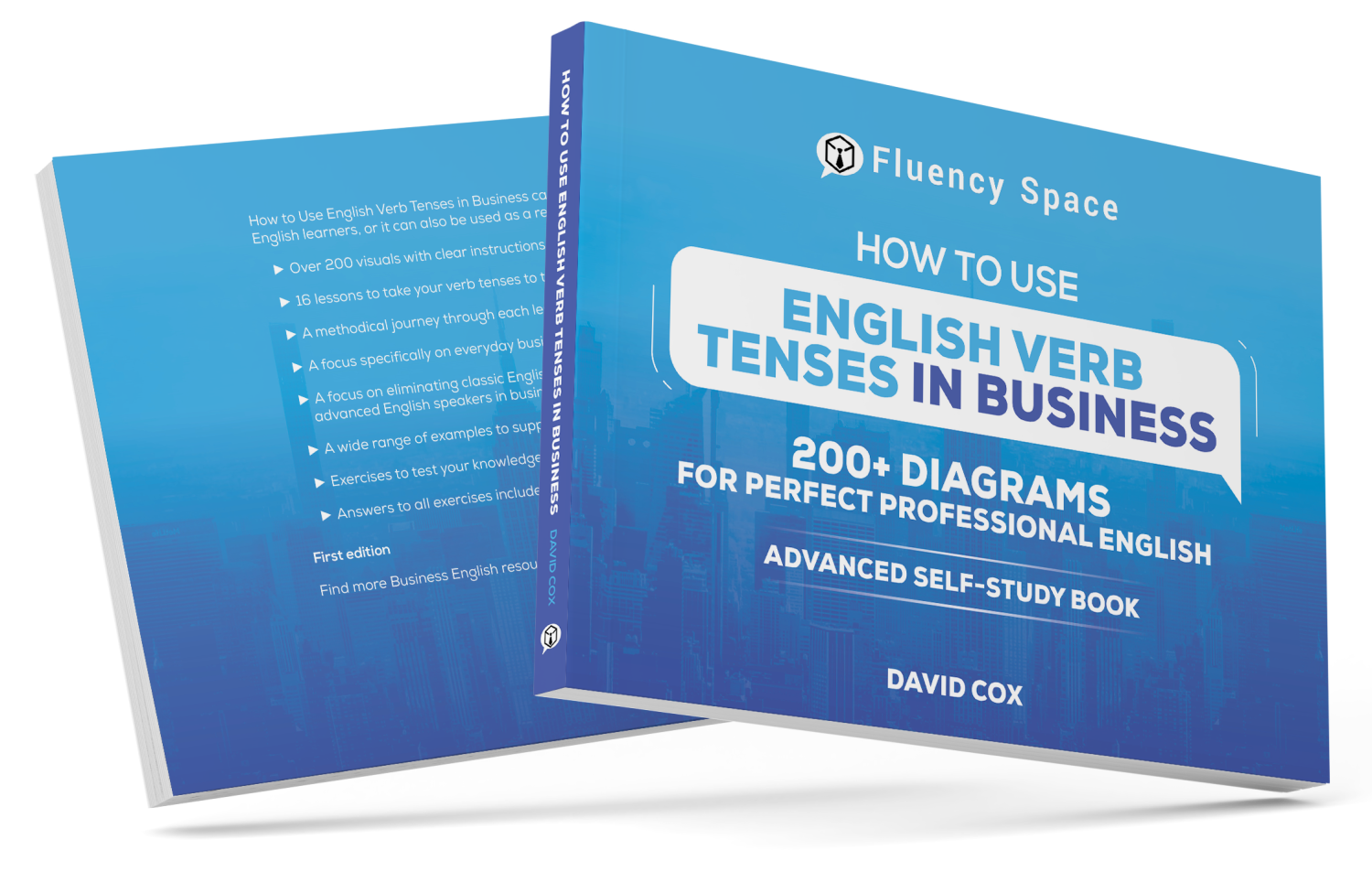
From How to Use English Verb Tenses in Business by David Cox · 200+ diagrams for professional English
1 · In meetings: exploring options or making real suggestions
When you are only thinking aloud about an idea, you step into an imaginary situation. When you think the team should really do it, you use real future forms:
| Exploring a hypothetical optionif + past simple, would – we’re only thinking aloud | Making a real suggestionif + present simple, will – I think we should do this |
|---|---|
| Potentially, if we moved production to Poland, we would save around 15% on labour costs. | If we move production to Poland, we’ll save around 15% on labour costs. |
| In theory, if we switched to a four-day week, we’d reduce our office costs by a fifth. | If we switch to a four-day week, we’ll reduce our office costs by a fifth. |
| Just as an idea – if we merged the two sales teams, we wouldn’t need two managers. | If we merge the two sales teams, we won’t need two managers. |
| If we outsourced IT support, it would free up at least three people for product work. | If we outsource IT support, it will free up at least three people for product work. |
| Hypothetically, if we raised prices by 5%, how many clients would we lose? | If we raise prices by 5%, we’ll lose a few small clients, but our margin will improve. |
Ways to signal that you are only exploring:
- Potentially, if we…
- In theory, if we…
- Just as an idea…
- Hypothetically…
- What if we…?
- What would happen if we…?
- Suppose we… – what would…?
Mixing tenses: from an idea to a real plan
In a real meeting, an idea often starts in the imaginary world – and then turns into a plan:
Potentially, if we moved production to Poland, we would save around 15%.
If + past simple, would – exploring an imaginary option
So I’m going to ask the finance team for the real figures.
Going to – a real plan for what we will do next (Lesson 2.2)
If the numbers look good, we’ll present the idea to the board in March.
If + present simple, will – a real possibility (Lesson 8.1)
2 · In negotiations: tentative offers or firm offers
Negotiators use the imaginary form to test the water. It makes an offer conditional, so you can find out what the other side might accept without promising anything. The real form is a commitment – the other side can hold you to it. You often move from the first to the second as the deal gets closer:
| Tentative: testing the waterif you + past simple, we would | Firm: a real offerif you + present simple, we will |
|---|---|
| If you ordered 5,000 units, we would be able to offer a 10% discount. | If you order 5,000 units, we’ll give you a 10% discount. |
| If you signed a three-year contract, we could fix the price for the whole period. | If you sign a three-year contract, we’ll fix the price for the whole period. |
| If you paid in advance, we would probably waive the delivery fee. | If you pay in advance, we’ll waive the delivery fee. |
| If you were able to move the deadline to June, we wouldn’t need to charge for overtime. | If you move the deadline to June, we won’t charge for overtime. |
| If we agreed to your price, would you be willing to cover shipping? | If we agree to your price, will you cover shipping? |
| If you took both products, we’d include the training at no extra cost. | If you take both products, we’ll include the training at no extra cost. |
Useful phrases for testing the water:
- If you were able to…, we would…
- Would you be willing to…?
- What would you need from us if…?
- Suppose we…, would you…?
- If we were to…, could you…?
Mixing tenses: from a tentative offer to a deal
Here, the offer starts in the imaginary world, the client makes a decision – and the offer becomes real:
If you ordered 5,000 units, we would be able to offer a 10% discount.
If you + past simple, we would – a tentative offer: testing the water
OK, we’ll take 5,000.
Will – the client makes a spontaneous decision (Lesson 2.1)
Great – if you sign by Friday, we’ll deliver in March.
If you + present simple, we will – a firm offer: the deal is on the table
Practise this lesson
Only exploring – or a real suggestion? Testing the water – or a firm offer?
Teachers: use these diagrams
You are welcome to use these diagrams in your lessons and materials. Please credit Fluency Space with a link to this page.
Diagram: Fluency Space – fluencyspace.com/grammar/verb-tenses/conditionals-suggestions-and-negotiations/Correct on paper is not the same as natural in the boardroom
One-to-one Business English coaching for C1/C2 executives and founders.

© Copyright Fluency Space. All Rights Reserved
OptimizePress Popup Overlay
the fluency space acadademy
Be one of the first 50 to join and get a huge discount!

Your advanced English training center. Over 600 pages of PDFs. over 250 diagrams and hundreds of exercises. 32 Vocabulary lessons covering the 400 most important phrases for advanced Business, 2x monthly Adapted Business English texts, 2x monthly YouTube listening lessons, 'How to Use English Verb Tenses in Business' textbook.
All of this and much more for only $5.99 per month. Cancel anytime!