Lesson 1.1 · Talking about the present
Present simple or present continuous: one rule for every situation
Choosing between the present simple and the present continuous is one of the most common mistakes in English – made by speakers of every language, at every level, including senior professionals. The good news: one rule covers almost every case.
From How to Use English Verb Tenses in Business by David Cox · 200+ diagrams for professional English
One rule: permanent or temporary?
With the present simple and the present continuous, you only need to think about one rule. The diagrams on this page look similar on purpose: it is the same rule, applied in every business context.
I work at a law firm.
Present simple for facts and general / long-term situations
I am working on a new project.
Present continuous for temporary / short-term situations
Present continuous for current situations and projects
We use the present continuous with anything that is temporary. This means it is very often used for something you are working on at the moment – even if you are not doing it right now.
I am doing – the present continuous for anything temporary
Examples: We are dealing with some problems at the moment. We are hiring some new staff members.
Key examples that professionals often forget
- I’m very busy because we are starting a new project.
- Investors are starting to take notice of our service.Even if what you are starting will be permanent, the starting phase is only temporary.
- We are trying to solve the problem with the client.
- The situation with the vendor is becoming worse.
Your role and your current projects
In business contexts, use the present simple for what you always do as part of your role, and the present continuous for your current projects and tasks.
I develop websites and apps.
Present simple to talk about a general, long-term situation
I am currently developing a new app for our clients.
Present continuous to talk about a present temporary situation
Other examples: I oversee all processes in the company. I am currently overseeing the new product launch.
General situations and situations right now
When we talk about things happening right now, we also use the present continuous. These are temporary situations too.
Apologies, we don’t normally have technical problems,
Present simple to talk about a general, long-term situation
but we are experiencing some connection issues at the moment.
Present continuous to talk about a present temporary situation
Other examples: Normally it is very sunny here, but it is raining today. I don’t normally like seafood, but I’m really enjoying these prawns.
Temporary situations – even when you’re not doing them right now
We use the present continuous for temporary situations even if you are not doing the activity at this exact moment.
I am speaking to John about the problem.
Present continuous to talk about a present temporary situation(I am not speaking to him right now, but during this temporary period)
I am watching a really great TV series.
Present continuous to talk about a present temporary situation(I am not watching the series right now, but during this temporary period)
General habits and temporary habits
We follow exactly the same rule with habits. Long-term habits use the present simple; temporary habits use the present continuous.
Normally, we only meet twice a week to discuss the product,
Present simple to talk about a general, long-term habit
but we are currently meeting five times a week to prepare for next month’s launch.
Present continuous to talk about a present temporary habit
Other example: I normally go to the gym twice a week, but I’m currently going every day to get fit for next month’s marathon.
Even with ‘every day’ or ‘all the time’
Phrases like ‘every day’ and ‘all the time’ don’t automatically mean the present simple. If the habit is temporary, we still use the present continuous.
I work late every evening.
Present simple to talk about a general, long-term habit
I am working late every evening.
Present continuous to talk about a present temporary habit
Other examples: I go to the gym every day. (always) I am going to the gym every day. (temporarily, to reach a fitness goal)
Negatives: don’t avoid the present continuous
People often forget – or are afraid – to use the present continuous in negative sentences, so they fall back on the present simple because it feels easier. But the negative present simple only fits things that never happen.
✓Apologies, my camera isn’t working.
Present continuous to talk about a present temporary situation
✗Apologies, my camera doesn’t work.
Present simple means it never works
✓I’m annoyed because they aren’t answering my calls.
Present continuous to talk about a present temporary situation
✗I’m annoyed because they don’t answer my calls.
Present simple means they never answer – not what you want to say about a client today
Questions follow the same rule
The question form changes the meaning in exactly the same way: always, or just in this temporary period?
Why do you tell the client that we can give them a discount?
Present simple – something that always happens
Why are you telling the client that we can give them a discount?
Present continuous – something happening in this temporary period(not necessarily at this moment)
How often are you experiencing these problems?
Present continuous – a temporary situation
How often do you experience these problems?
Present simple – a permanent, general situation
Practise this lesson
Test yourself on the present simple and present continuous with sentences from real meetings, emails and presentations.
Teachers: use these diagrams
You are welcome to use these diagrams in your lessons and materials. Please credit Fluency Space with a link to this page.
Diagram: Fluency Space – fluencyspace.com/grammar/verb-tenses/present-simple-vs-present-continuous/Correct on paper is not the same as natural in the boardroom
One-to-one Business English coaching for C1/C2 executives and founders.
IN-DEPTH PROPOSAL BUILT WITH CARE
A Course Built around you
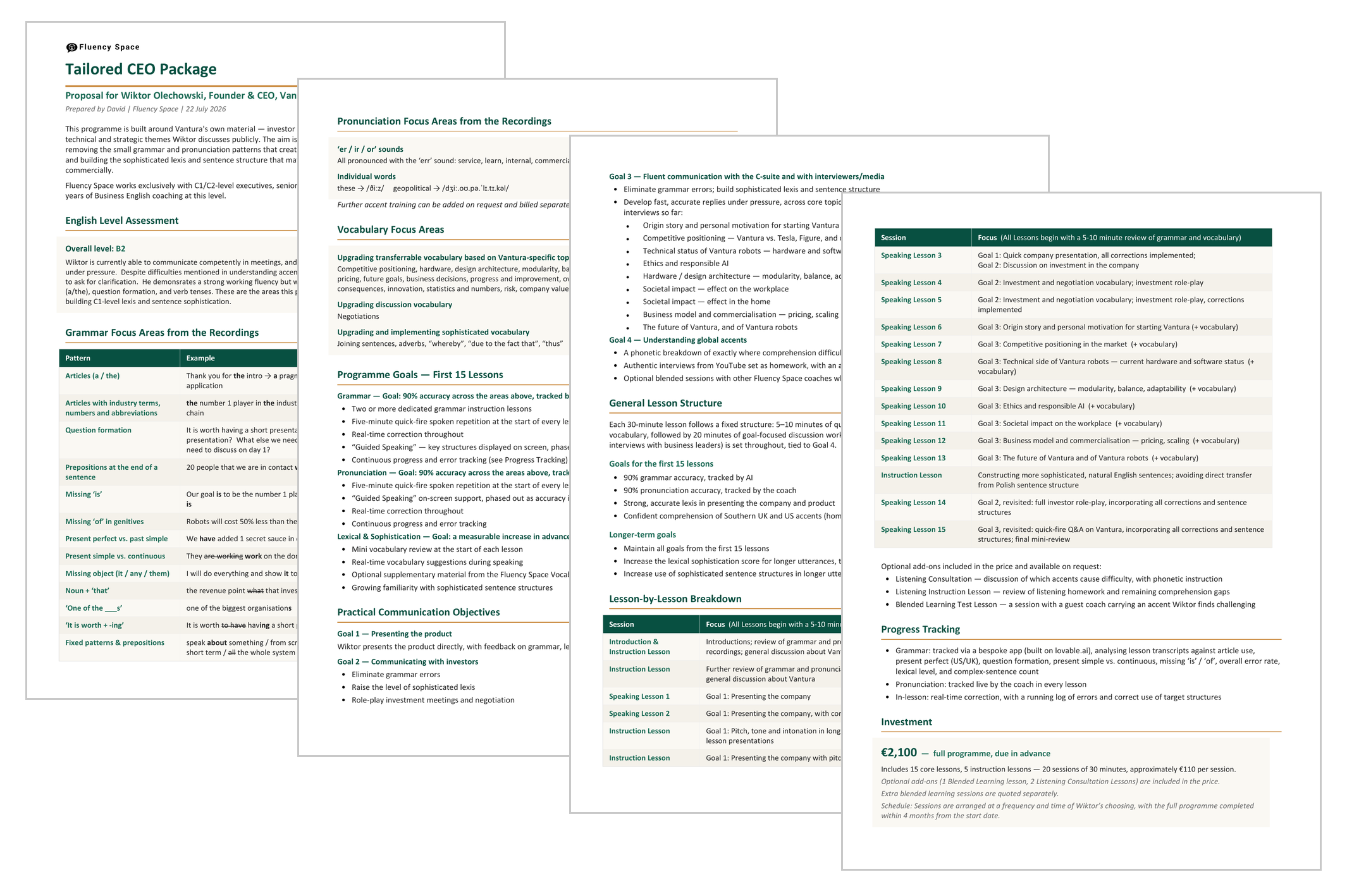
After your full English audit, we do a deep dive into your company, your role and your real communication goals - We then build a fully tailored program around them and send a proposal within 3 working days.

© Copyright Fluency Space. All Rights Reserved
OptimizePress Popup Overlay
the fluency space acadademy
Be one of the first 50 to join and get a huge discount!

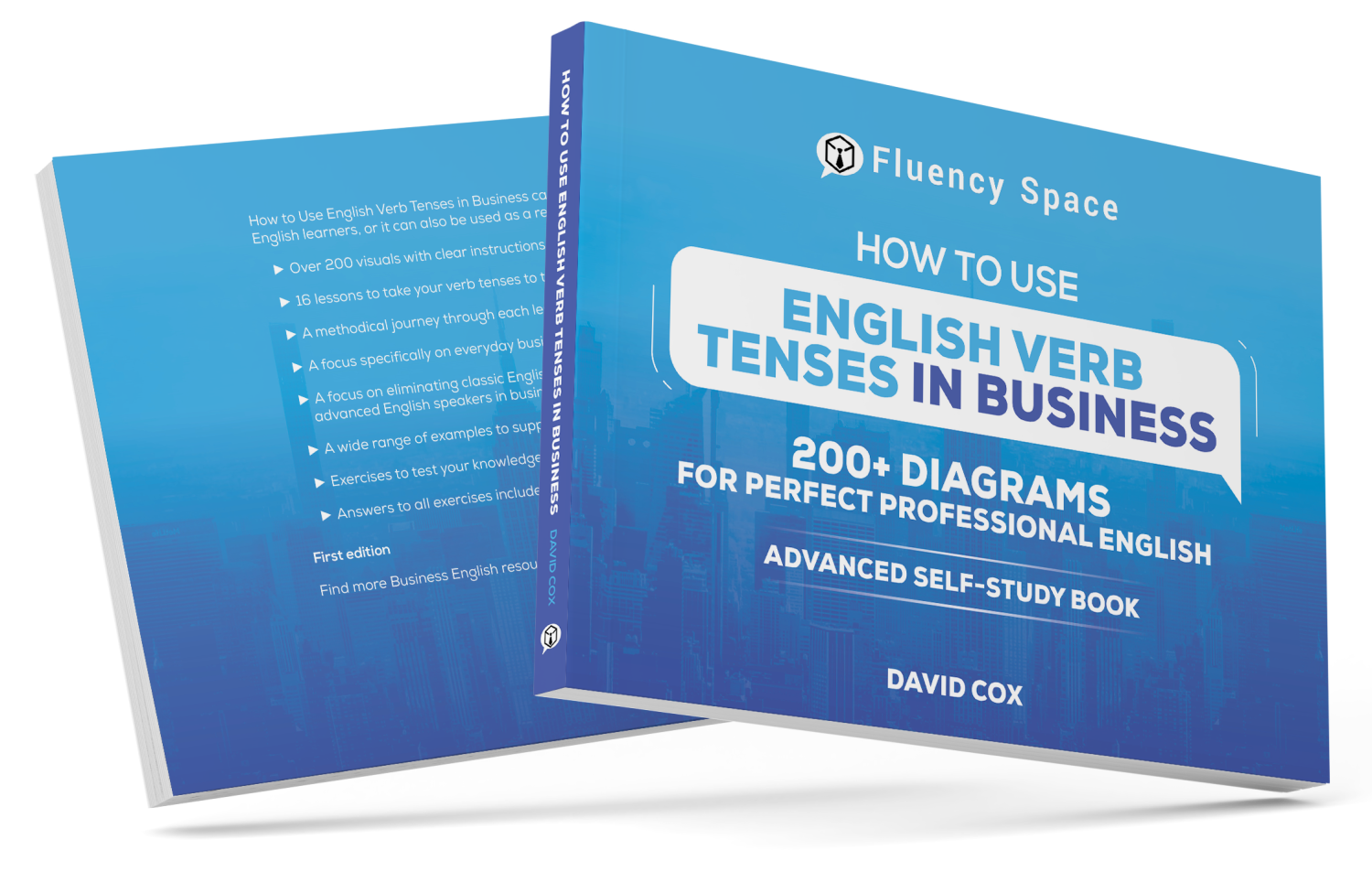
Your advanced English training center. Over 600 pages of PDFs. over 250 diagrams and hundreds of exercises. 32 Vocabulary lessons covering the 400 most important phrases for advanced Business, 2x monthly Adapted Business English texts, 2x monthly YouTube listening lessons, 'How to Use English Verb Tenses in Business' textbook.
All of this and much more for only $5.99 per month. Cancel anytime!