Lesson 3.2 · From the past to the present
Present perfect or past simple: repeated events
When you say how many times something has happened – or how many of something you have done – the choice between the present perfect and the past simple comes down to one question: can it happen again?
From How to Use English Verb Tenses in Business by David Cox · 200+ diagrams for professional English
Saying how many times, or how many of something
We use the present perfect to say how many times we have done something, or how many of something we have done, up to now. The number can still grow.
I have been to Madrid three times.
Present perfect to say how many times something has happened up to now(it can happen again)
I have worked with several major international clients.
Present perfect to say how many of something you have done up to now(you can work with more)
Apple have released ten versions of the iPhone.
Present perfect to say how many of something have happened up to now(there can be more versions)
Can it happen again?
This is the rule for every repeated event in this lesson.
Present perfect
It can happen again.
Past simple
It can’t happen again.
Steve Jobs launched many iconic products.
Past simple – the time period is finished(he can’t launch any more products)
Elon Musk has launched several major companies.
Present perfect – the time period is still open(he can launch more companies)
The same rule outside business: Elvis Presley released many great songs. (he can’t release any more) Taylor Swift has released many great songs. (she can release more)
More examples of things that can happen again: The company has released so many good products. (in its existence) I have seen this film many times. (in my life) I have called them several times. (and I aim to call them again)
Adding a time frame
We can also add a time frame to say when these repeated events happened. The rule stays the same.
Can it happen again within the time frame?
Yes – the time frame is still open: present perfect
- this year
- today(while the day is still going)
- this morning(while it is still morning)
- during the past few weeks
- in my career(while you are still working)
No – the time frame is finished: past simple
- last year
- yesterday
- this morning(when it is now the afternoon)
- during our discussion earlier(the discussion is over)
- in my last job
Time frames like today and this morning can take either tense. It depends on whether you see the time frame as still open or already finished.
Today: I’ve had three meetings today. (the day isn’t over – there may be more) I had three meetings today. (you see the day as finished – for example, in the evening)
This morning: I’ve spoken to the client twice this morning. (it’s still morning) I spoke to the client twice this morning. (it’s now the afternoon – the morning is finished)
Finished and unfinished time frames
Last year is over, so nothing else can happen in it. This year is still going, so the number can still change.
I went to China three times last year.
Past simple – the time frame is finished(it can’t happen again last year)
I have been to China three times this year.
Present perfect – the time frame is still open(it can happen again this year)
Other examples: Last year we signed twelve new clients. This year we’ve signed eight new clients so far. In Q2 the team missed three deadlines. This quarter the team has missed only one deadline.
Time frames in action
In a real update, you often switch between the two tenses as the time frame changes.
We’ve signed three new clients this month,
Present perfect – this month is still open
but last month we signed five.
Past simple – last month is finished
During our discussion earlier, you mentioned two problems with the supplier,
Past simple – the discussion is over
so I’ve called them twice today.
Present perfect – today is still open(I may call them again)
When the verb is ‘have’: use ‘have had’
With expressions like to have a meeting, to have a discussion or to have a call, the present perfect needs both verbs: have had.
Examples: We’ve had three meetings with the client this week. (to have a meeting) We’ve had several discussions about the budget. (to have a discussion) I’ve had two calls with the supplier today. (to have a call)
Without ‘had’, the meaning changes. ‘I have three meetings today’ means they are on your schedule – the present simple for timetabled events from Lesson 2.2.
‘Have had’ in action
The same question decides the tense: can it happen again within the time frame?
I’ve had 3 coffees today
Present perfect – today is still open(I may have more)
because I had 4 meetings this morning
Past simple – this morning is finished(it’s now the afternoon)
and I’ve had another 3 meetings this afternoon.
Present perfect – this afternoon is still open(there may be more meetings)
Practise this lesson
Test yourself on repeated events with sentences from real meetings, emails and updates.
Teachers: use these diagrams
You are welcome to use these diagrams in your lessons and materials. Please credit Fluency Space with a link to this page.
Diagram: Fluency Space – fluencyspace.com/grammar/verb-tenses/present-perfect-repeated-events/Correct on paper is not the same as natural in the boardroom
One-to-one Business English coaching for C1/C2 executives and founders.
IN-DEPTH PROPOSAL BUILT WITH CARE
A Course Built around you
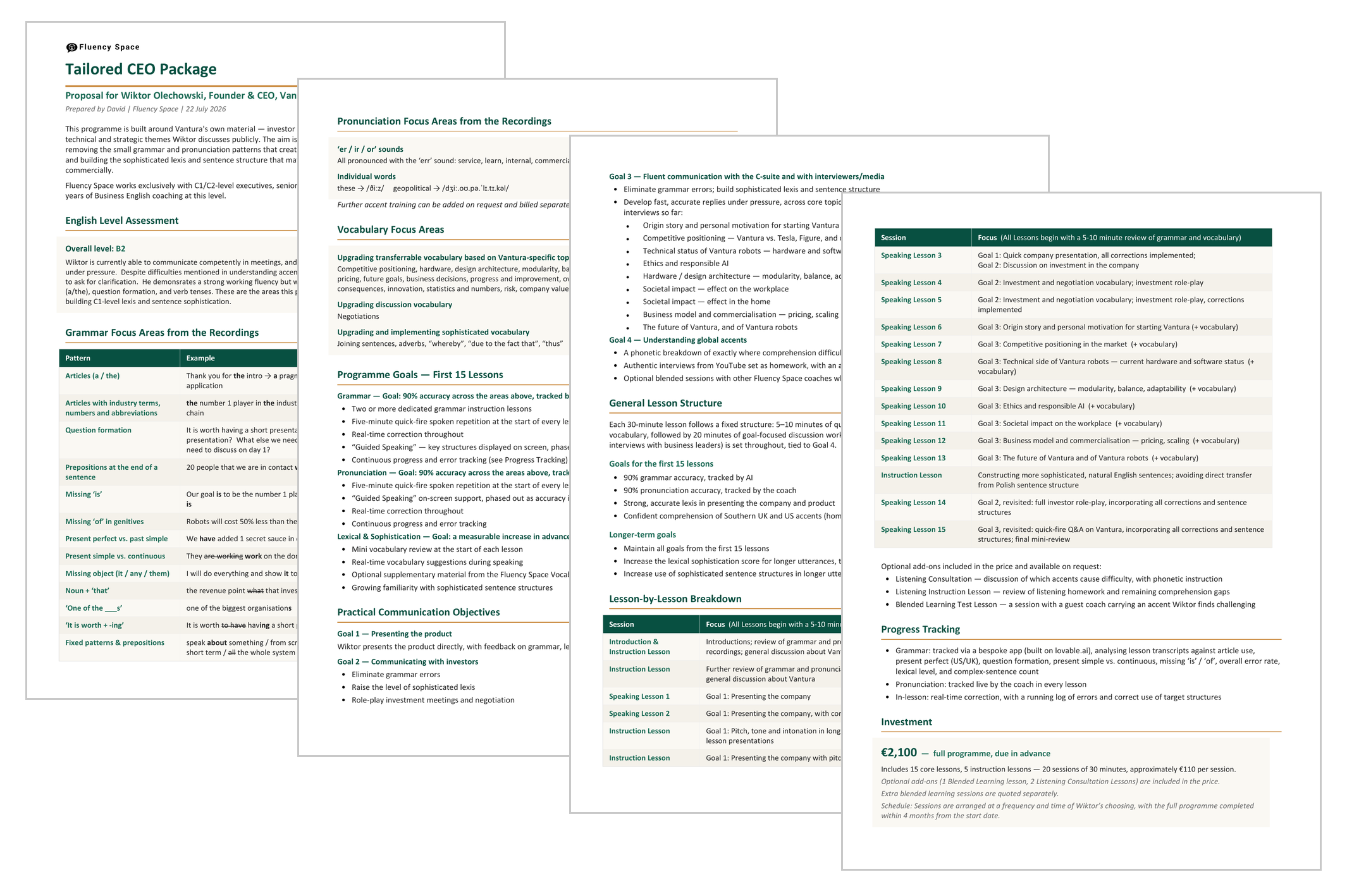
After your full English audit, we do a deep dive into your company, your role and your real communication goals - We then build a fully tailored program around them and send a proposal within 3 working days.

© Copyright Fluency Space. All Rights Reserved
OptimizePress Popup Overlay
the fluency space acadademy
Be one of the first 50 to join and get a huge discount!

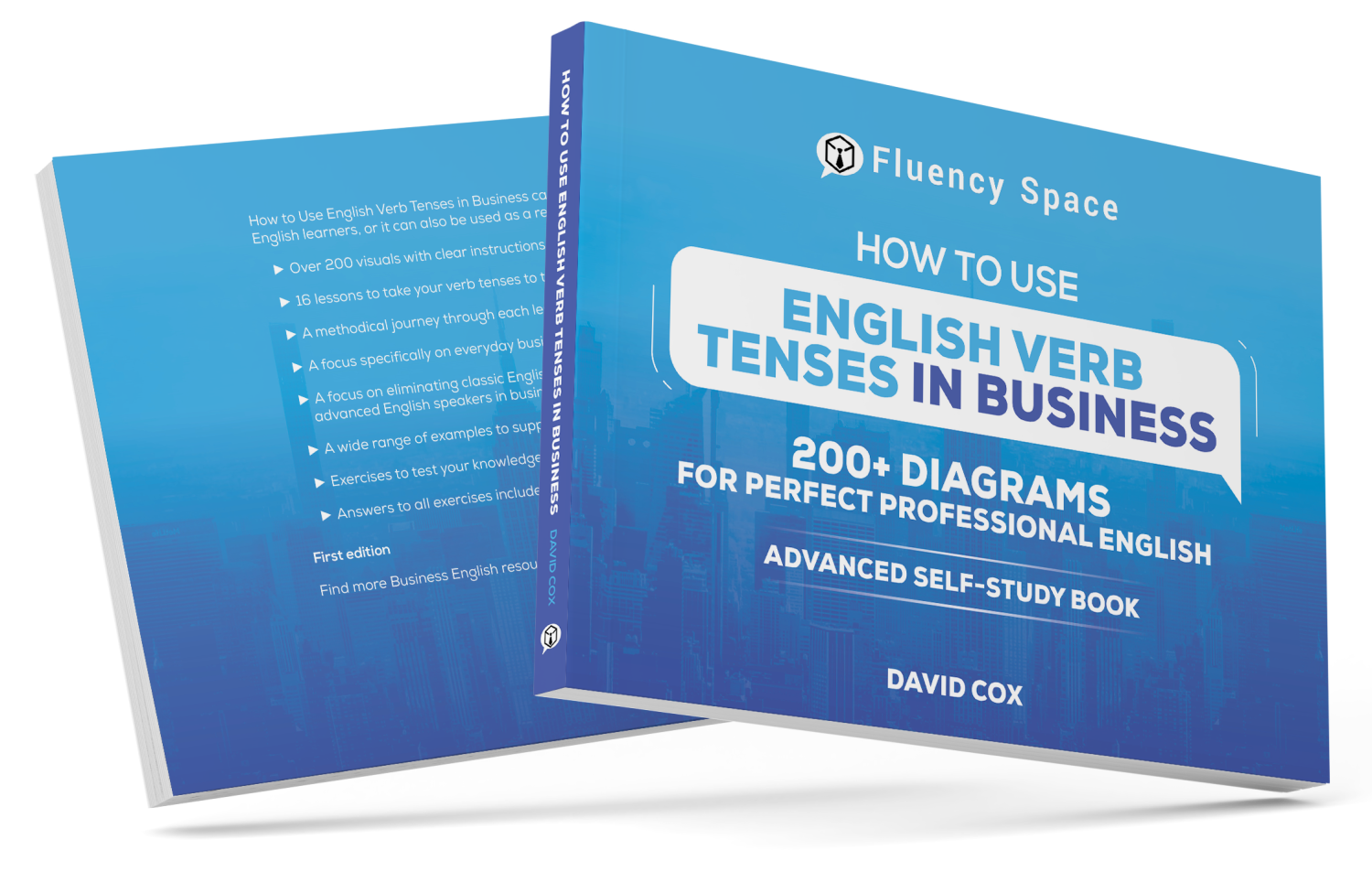
Your advanced English training center. Over 600 pages of PDFs. over 250 diagrams and hundreds of exercises. 32 Vocabulary lessons covering the 400 most important phrases for advanced Business, 2x monthly Adapted Business English texts, 2x monthly YouTube listening lessons, 'How to Use English Verb Tenses in Business' textbook.
All of this and much more for only $5.99 per month. Cancel anytime!