Lesson 2.5 · Talking about the future
Future with ‘when’, ‘until’ and ‘as long as’
After when, as soon as, before, after, until, in case and as long as, English talks about the future with the present simple – not ‘will’. This page shows the rule, the one common exception, and how the present perfect fits in.
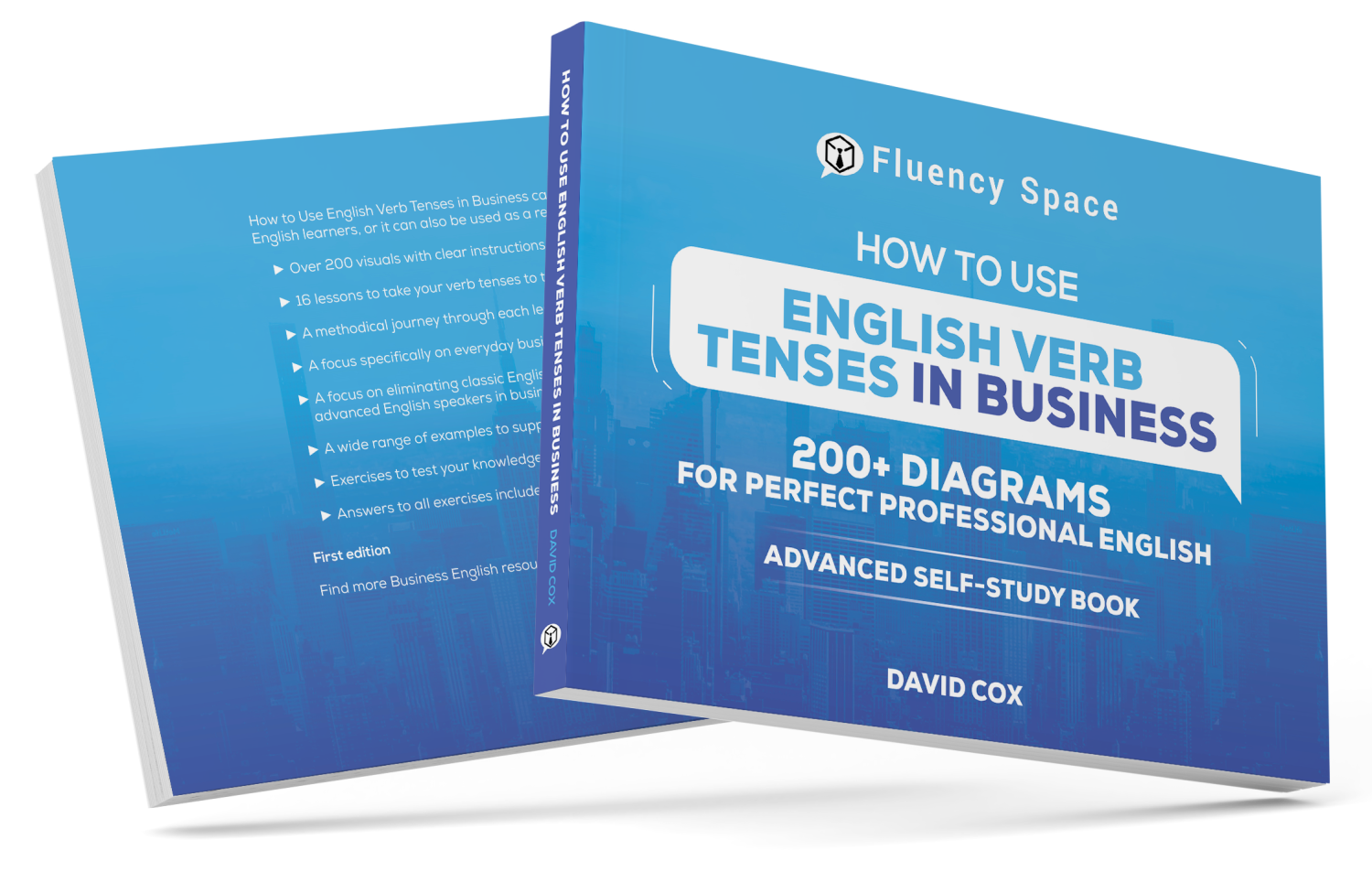
From How to Use English Verb Tenses in Business by David Cox · 200+ diagrams for professional English
Using the present simple for the future with ‘when’
In nearly all future sentences, we use the present simple after when, if, until, before, after, in case, as soon as and as long as.
I am going to explain everything
‘going to’ to talk about a plan which is not yet fixed
when you get here.
Present simple to talk about a future event after ‘when’
Other examples: I’ll let you know when I’m ready. When it gets cold we’ll go inside. I’m going there as soon as it opens.
Using the present simple after ‘before’ and ‘until’
The same rule applies after ‘before’ and ‘until’, whatever future form the main clause uses.
I am meeting a colleague
Present continuous to talk about a fixed future plan
before we go to the airport.
Present simple to talk about a future event after ‘before’
We’ll continue the discussion
‘will’ to make a spontaneous plan for the immediate future
until we find a solution.
Present simple to talk about a future event after ‘until’
Future sentences with ‘I don’t know…’ / ‘Do you know…?’
The only time we use ‘will’ in sentences with when / if / in case is when the sentence begins with a phrase like ‘I don’t know if…’, ‘Do you know when…?’ or ‘Can you tell me when…?’.
I don’t know
Present simple for a temporary situation, because we don’t use the present continuous with ‘know’
if our problems will ever end.
‘will’ to make a future prediction
More examples with ‘Do you know?’ / ‘I don’t know’
After these phrases, the second part of the sentence uses whichever future form fits its meaning.
I don’t know
Present simple for a temporary situation, because we don’t use the present continuous with ‘know’
when they are going to arrive.
‘going to’ to talk about a plan which is not yet fixed
Do you know
Present simple for a temporary situation, because we don’t use the present continuous with ‘know’
when the presentation starts?
Present simple to talk about an official, timetabled event
Using the present perfect after ‘when’ / ‘until’ / ‘if’ / ‘in case’
When talking about the future, we can also use the present perfect after when / until / in case / if. This shows that one action will be complete before another action.
I will call you
‘will’ to make a future promise / offer decided just now
when I have finished.
Present perfect after ‘when’, to show that this future action will be finished first
Other examples: We won’t begin until everyone has joined the call. I’ll speak to you after the meeting has finished. I will read through the contract again just in case I have missed something.
Present perfect with ‘as soon as’
The finished action comes first, and the next action starts straight after it.
As soon as everyone has joined the call,
Present perfect after ‘as soon as’, to show that this future action will be finished first
we’ll begin the meeting.
‘will’ to make a spontaneous future plan decided just now
Other examples: I’ll give you a call if I have forgotten anything. When the show has started, people won’t be allowed into the theatre.
What about ‘if’?
‘If’ follows the same rule: I’ll call you if I hear anything. But sentences with ‘if’ have their own patterns, which we cover in the conditionals lessons.
Teachers: use these diagrams
You are welcome to use these diagrams in your lessons and materials. Please credit Fluency Space with a link to this page.
Diagram: Fluency Space – fluencyspace.com/grammar/verb-tenses/future-with-when/Correct on paper is not the same as natural in the boardroom
One-to-one Business English coaching for C1/C2 executives and founders.
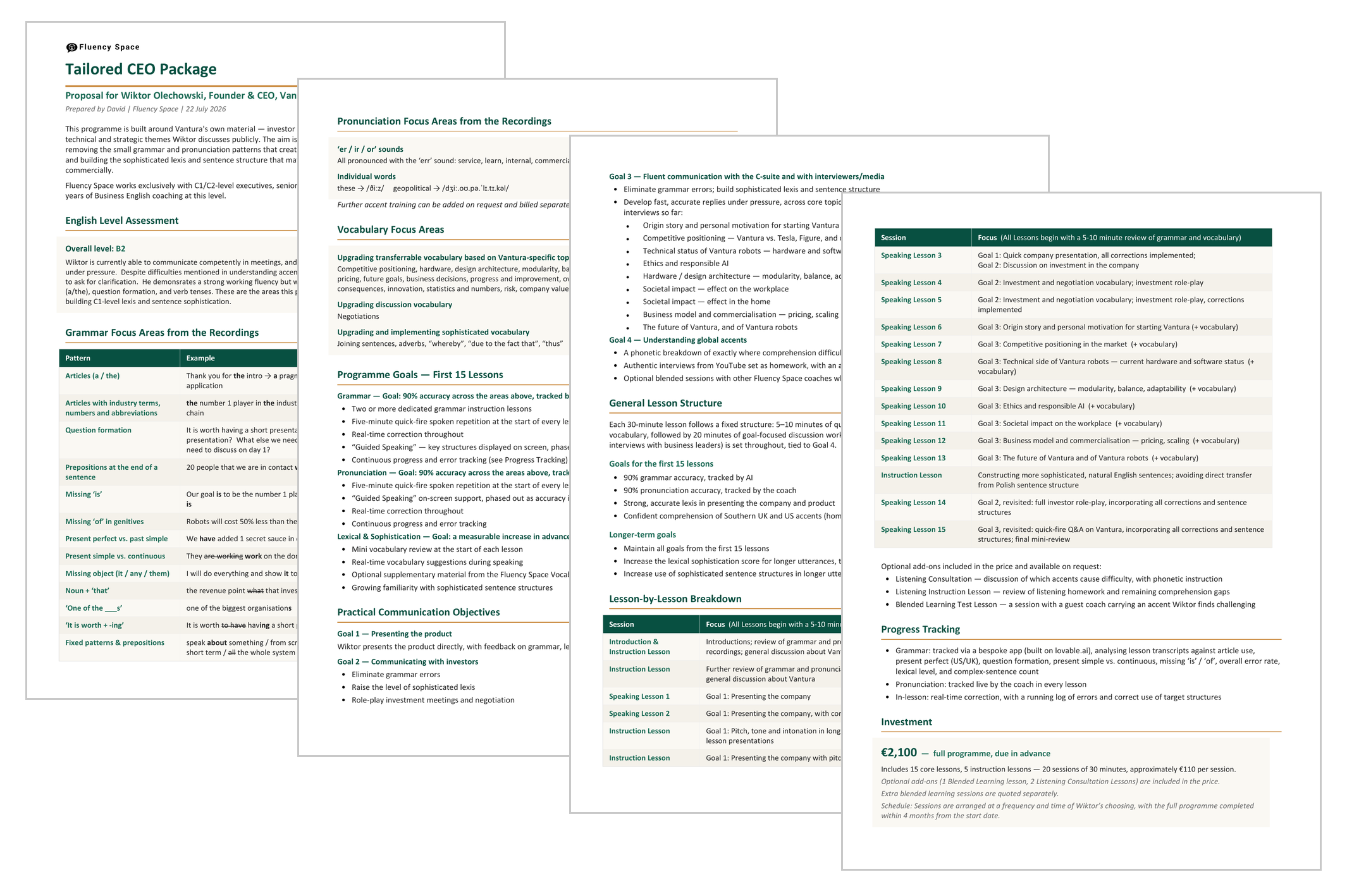
IN-DEPTH PROPOSAL BUILT WITH CARE
A Course Built around you
After your full English audit, we do a deep dive into your company, your role and your real communication goals - We then build a fully tailored program around them and send a proposal within 3 working days.

© Copyright Fluency Space. All Rights Reserved
OptimizePress Popup Overlay
the fluency space acadademy
Be one of the first 50 to join and get a huge discount!

Your advanced English training center. Over 600 pages of PDFs. over 250 diagrams and hundreds of exercises. 32 Vocabulary lessons covering the 400 most important phrases for advanced Business, 2x monthly Adapted Business English texts, 2x monthly YouTube listening lessons, 'How to Use English Verb Tenses in Business' textbook.
All of this and much more for only $5.99 per month. Cancel anytime!