Lesson 2.4 · Talking about the future
Predictions: ‘will’ or ‘going to’?
Both ‘will’ and ‘going to’ can make predictions about the future. The difference is what the prediction is based on: your opinion, or real evidence you can see now.
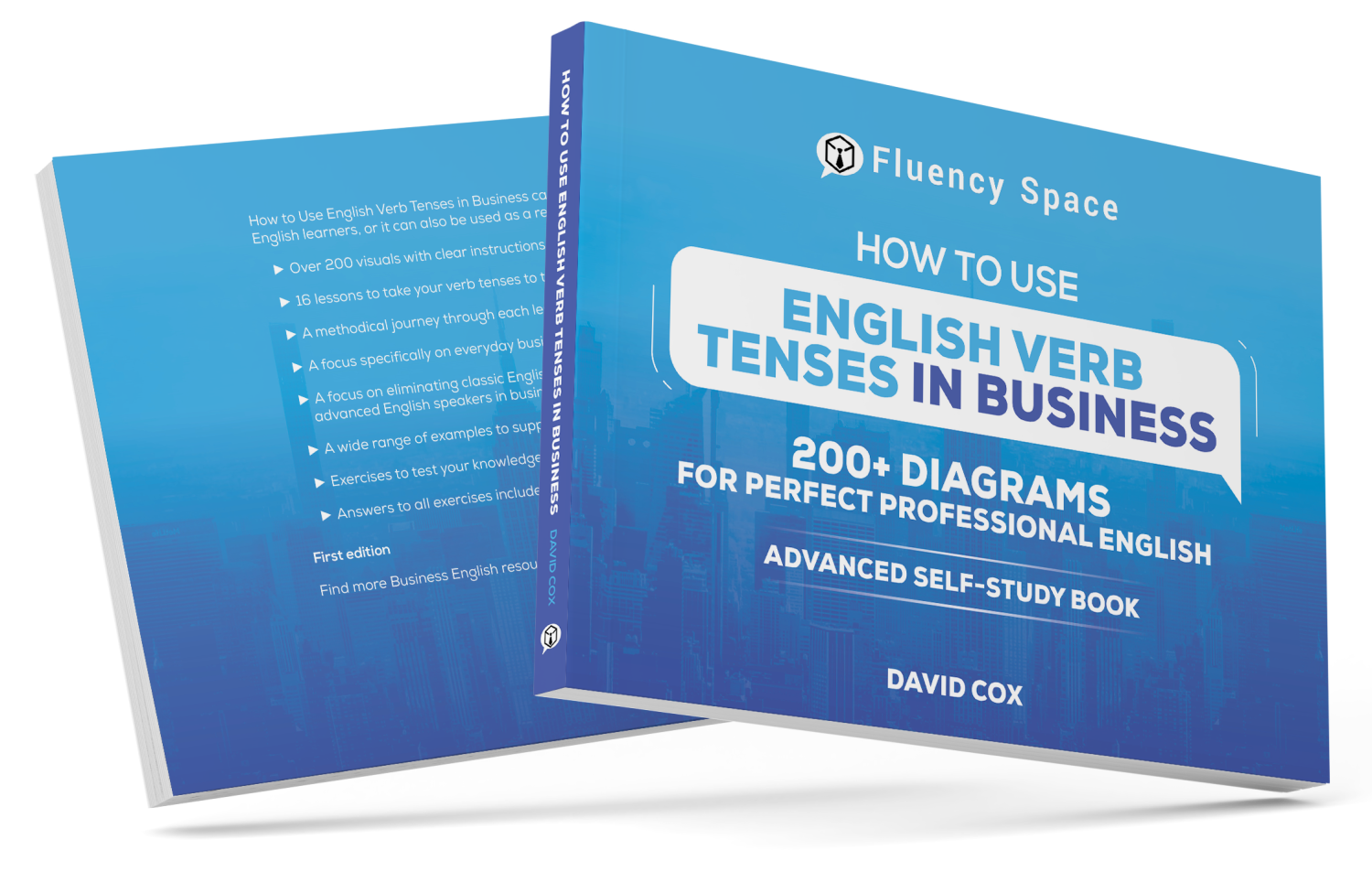
From How to Use English Verb Tenses in Business by David Cox · 200+ diagrams for professional English
Verb tenses with future predictions
The more your prediction is based on real evidence, the more likely you are to use ‘going to’.
More based just on opinionMore based on real evidence
will
- “I think that AI technology will be everywhere in the future.”
- “I think they will be happy with the changes we have made.”
going to
- “It looks like it is going to rain.”
- “We’re going to lose money if we don’t improve these sales figures.”
Talking about future plans and predictions
A prediction is often the reason for a plan.
The airport will probably be busy later,
‘will’ to make a future prediction
so we’re going to get there early.
‘going to’ to talk about a plan which is not yet fixed
Plans and predictions in a presentation
When you introduce a presentation, ‘going to’ sets out what you intend to cover, and ‘will’ predicts how it will go.
In today’s presentation, I am firstly going to talk about the company’s performance over the past quarter.
‘going to’ to talk about an intention which is not yet fixed
I am then going to talk about projected figures for next year.
‘going to’ to talk about an intention which is not yet fixed
Hopefully, there will be plenty of time for questions at the end.
‘will’ to make a future prediction
Talking about future predictions and offers
A prediction based on evidence can lead straight to an offer.
It looks like we are going to be very busy later,
‘going to’ to talk about a future prediction based on evidence(you have seen the workload)
so I will arrange some assistance for you.
‘will’ to make a spontaneous offer decided just now
Teachers: use these diagrams
You are welcome to use these diagrams in your lessons and materials. Please credit Fluency Space with a link to this page.
Diagram: Fluency Space – fluencyspace.com/grammar/verb-tenses/predictions/Correct on paper is not the same as natural in the boardroom
One-to-one Business English coaching for C1/C2 executives and founders.
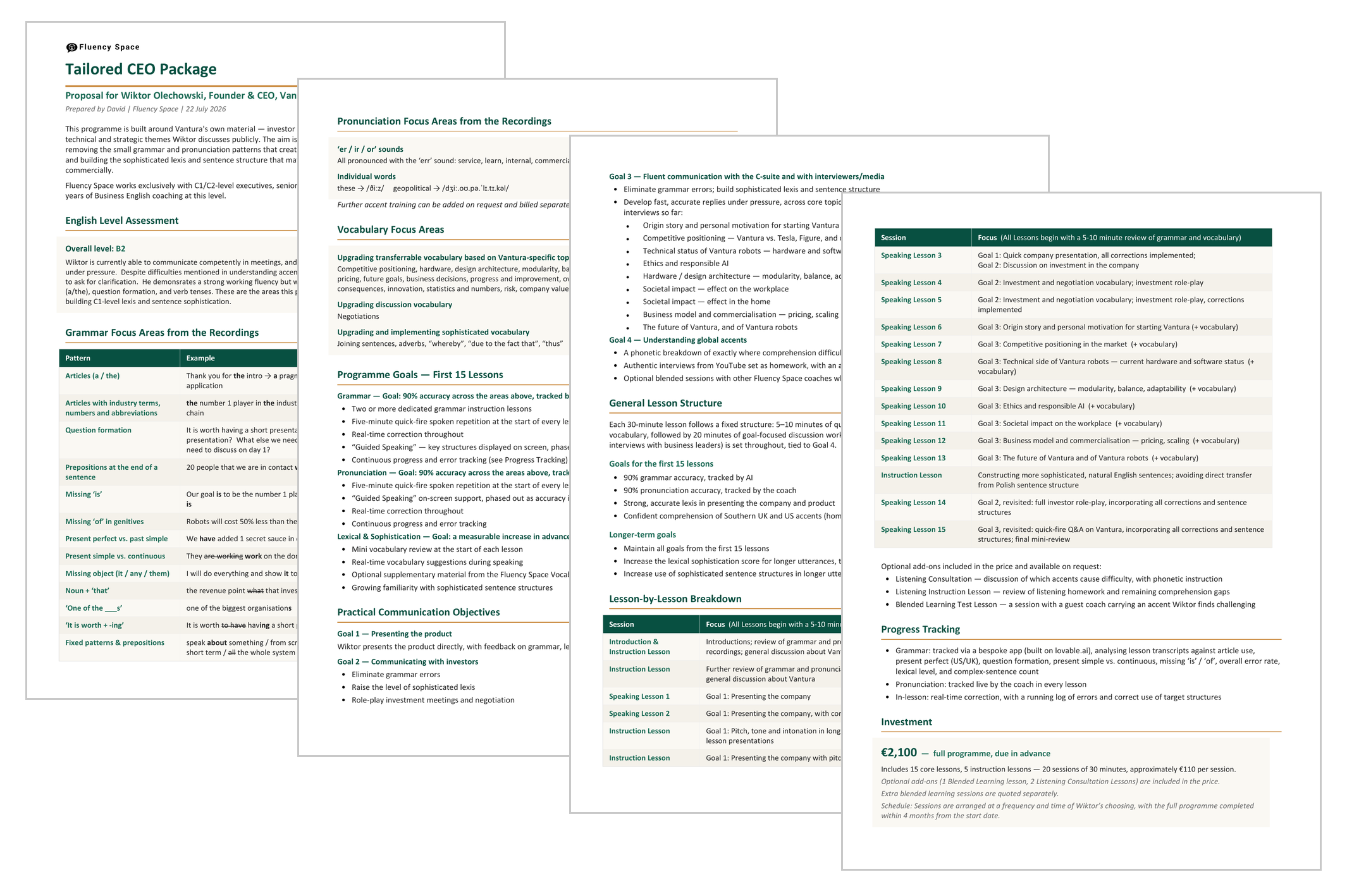
IN-DEPTH PROPOSAL BUILT WITH CARE
A Course Built around you
After your full English audit, we do a deep dive into your company, your role and your real communication goals - We then build a fully tailored program around them and send a proposal within 3 working days.

© Copyright Fluency Space. All Rights Reserved
OptimizePress Popup Overlay
the fluency space acadademy
Be one of the first 50 to join and get a huge discount!

Your advanced English training center. Over 600 pages of PDFs. over 250 diagrams and hundreds of exercises. 32 Vocabulary lessons covering the 400 most important phrases for advanced Business, 2x monthly Adapted Business English texts, 2x monthly YouTube listening lessons, 'How to Use English Verb Tenses in Business' textbook.
All of this and much more for only $5.99 per month. Cancel anytime!