Exercises · Present perfect or past simple
Present perfect or past simple gap-fill
Type the correct form of the verb in brackets. Contractions (I’ve, she’s) and full forms (I have, she has) are both accepted.
Need a refresher? Review the rules in 3.1 Single events, 3.2 Repeated events and 3.3 ‘Have you ever…?’ and ‘never’ in our Verb Tenses in Business guide.
1. Saying when
If you say when something happened – yesterday, in 2019, an hour ago – use the past simple.
Rules: 3.1 Single events
1Our CFO (leave) the company two weeks ago.
2We (launch) the new pricing model on 1st March.
3I (speak) to the investors an hour ago, and they’re happy.
4The CEO (announce) the restructuring at last week’s town hall.
5The auditors (send) their final report. Can you forward it to the board?
2. Have we moved on?
With no time given, ask: has the next stage happened? If not, the event is still ‘live’ – use the present perfect.
Rules: 3.1 Single events
1I (explain) the new process to the team, so they can use it from Monday.
2We (analyse) the results, and here are our findings.
3I (send) the proposal to the client, and they signed it the next day.
4The government (propose) a stricter tax law. It comes into effect next year.
5I had a meeting with John, and we (put) together a proposal.
3. Not yet
Use the present perfect with ‘yet’ for things that haven’t happened so far, but still can.
Rules: 3.1 Single events
1I (not / read) your email yet – I’ve been in meetings all morning.
2We (not / decide) on a supplier yet, but we’ll choose one this week.
3Has the client (reply) yet?
4I’ve started the report, but I (not / finish) it yet.
5The auditors (not / send) their final comments yet, so we can’t close the books.
4. Repeated events
How many times? Ask: can it happen again within the time frame?
Rules: 3.2 Repeated events
1Last quarter the team (miss) three deadlines.
2I (be) to China three times this year.
3We (have) six meetings with the client this week, and there’s another one tomorrow.
4I (call) them several times today, but nobody is answering.
5During our discussion earlier, you (mention) two problems with the supplier.
5. Ever and never
‘Have you ever…?’ and ‘never’ – is the context finished, or can it still happen?
Rules: 3.3 ‘Have you ever…?’ and ‘never’
1Have you ever (try) our famous local dessert?
2Our new CFO (never / approve) a budget increase.
3I (never / present) to the board while I was at my last company.
4Since I joined, our team (never / miss) a deadline.
5Our previous CEO (never / visit) the Asian offices in ten years.
6. Mixed review
All the rules together, in real business situations.
Rules: all lessons in ‘From the past to the present’
1I (work) in finance for ten years before I moved into consulting.
2We (receive) your payment – thank you.
3We (complete) the merger in 2024.
4I (just / speak) to legal, and they’re happy with the wording.
5In my career I (manage) teams in four different countries.
Check a section to see your score here.
More practice
Correct on paper is not the same as natural in the boardroom
One-to-one Business English coaching for C1/C2 executives and founders.
Advanced Premium Course
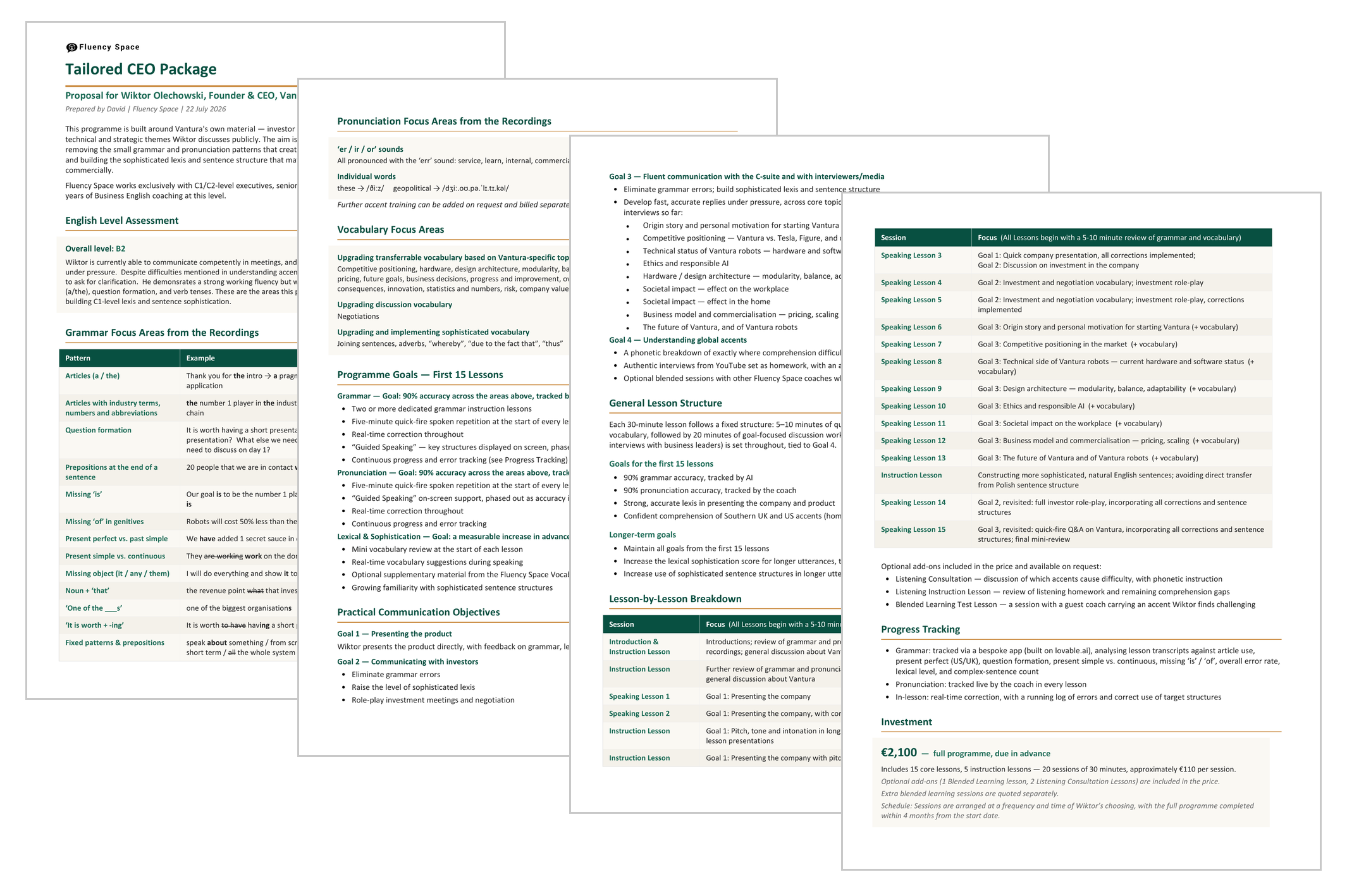
The Fluency Space CEO Package
Enjoyed this lesson? Take your business English further with a structured 3-month programme designed specifically for senior executives.
IN-DEPTH PROPOSAL BUILT WITH CARE
A Course Built around you
After your full English audit, we do a deep dive into your company, your role and your real communication goals - We then build a fully tailored program around them and send a proposal within 3 working days.

© Copyright Fluency Space. All Rights Reserved
OptimizePress Popup Overlay
the fluency space acadademy
Be one of the first 50 to join and get a huge discount!

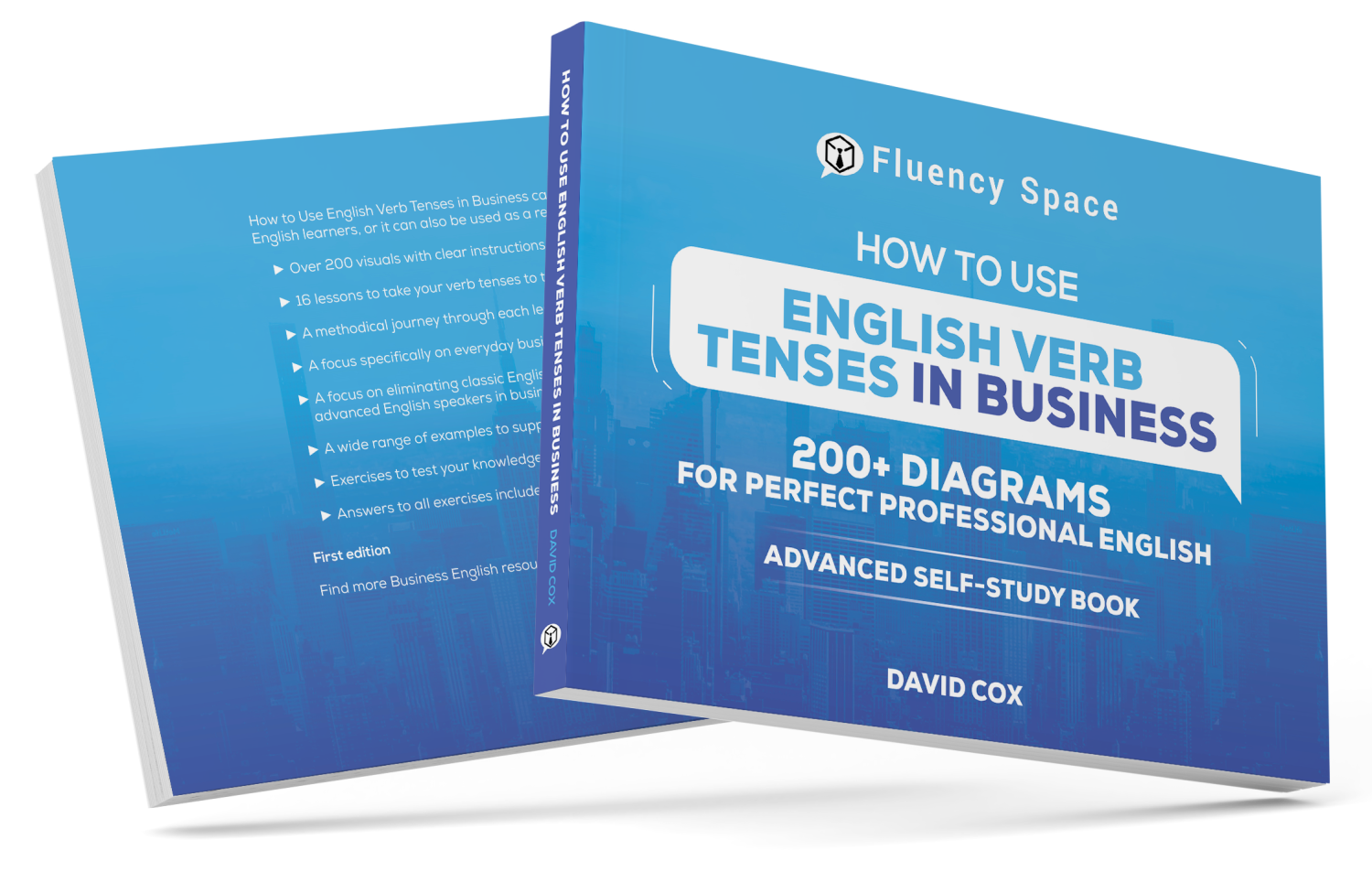
Your advanced English training center. Over 600 pages of PDFs. over 250 diagrams and hundreds of exercises. 32 Vocabulary lessons covering the 400 most important phrases for advanced Business, 2x monthly Adapted Business English texts, 2x monthly YouTube listening lessons, 'How to Use English Verb Tenses in Business' textbook.
All of this and much more for only $5.99 per month. Cancel anytime!