Business English Vocabulary · Lesson 1
Sound Professional When Discussing Research and Decisions
From carrying out research to reaching a consensus: the phrases senior professionals use to discuss options, weigh up the pros and cons and agree on a decision in meetings – clear, precise and easy for everyone to understand.
Homework Do all the exercises, then send your answers to your teacher at the bottom of the page.
ARead: before the decision
Read the text. Pay attention to the phrases in bold – you will need them in exercise B.
Why good decisions start with good research
Most bad business decisions don’t come from bad judgement. They come from bad information. Before a team commits to a new market, a new supplier or a new hire, someone has to carry out the research: actually doing the work of collecting the facts, the figures and the opinions that the decision will depend on.
At the start, the research should be comprehensive. It should cover every area that could matter, from costs and competitors to legal requirements and customer demand, so that nothing important is missing. Once the team knows which areas matter most, it can move on to in-depth research, looking at a smaller number of questions in much more detail.
Sometimes even that is not enough. If one option looks promising but the figures are unclear, the team may need to do a deep dive: a long, detailed investigation of that one specific area. And if something in the data looks strange, a good analyst doesn’t ignore it. They dig a little deeper, asking one more question or checking one more source until it makes sense.
When the research is complete, the team can weigh up the options, comparing them carefully to see which one is best. In practice, that means listing the pros and cons – the advantages and disadvantages – of each one. It also means agreeing which factors to take into account. Price, quality and delivery times are obvious, but a careful team will also take into consideration less visible factors, such as the effect on staff or on the company’s reputation.
BKey words from the text
Based on the context of the text, choose the phrase that matches each definition. Then complete the example sentence. You may need to change the form of the phrase.
CRead: making the decision
Now read the meeting. The phrases in bold are for exercise D. The underlined phrases are useful meeting phrases for exercise E.
Lisbon or Warsaw?
The leadership team of a growing software company has spent two months researching two possible locations for its new European office: Lisbon and Warsaw. Today, they need to make a final decision.
SaraChief Operating OfficerThanks, everyone. We’ve all seen the research, so today’s goal is simple: we need to settle on one city and close this discussion. Mark, where are you at the moment?
MarkSales DirectorHonestly, I’m leaning towards Lisbon. I haven’t completely made up my mind, but it’s the option I prefer right now. It’s easier to attract international salespeople there.
TomásFinance DirectorI understand that, but salaries and office rents are much lower in Warsaw. On cost alone, Warsaw wins.
PriyaHR DirectorCan I add something? We shouldn’t only think about the next twelve months. If we see the bigger picture, Warsaw also gives us access to a huge pool of engineers – and that’s what we’ll need in five years’ time.
SaraGood point. So, has anyone been able to pinpoint the one factor that matters most? If we can identify it exactly, everything else becomes easier.
TomásFor me, it’s hiring. The research helped us determine that we’ll need around forty engineers in the next three years. We now know that for certain, and Warsaw is far stronger for that.
MarkOK, I can see that. There are disadvantages – my team would prefer Lisbon – but looking at everything, I’d say the pros outweigh the cons.
SaraSo Warsaw has more advantages than disadvantages. Priya, any concerns?
PriyaI have some reservations about the timeline. Opening in six months feels very ambitious. But overall, the benefits outweigh the risks, so I wouldn’t stop the decision because of that.
SaraThen it sounds as if we’ve reached a consensus. Nobody is against it. So: Warsaw. Is everyone on board with that?
TomásI’m happy to go along with that.
MarkSame here. Let’s go with that.
SaraGreat. And just to make sure everyone is on the same page: we open in Warsaw next autumn, Priya leads the hiring, and Tomás updates the budget. I think all that research will pay off. We’re making this decision with real numbers, not guesses.
Bold = key words (exercise D)Underlined = meeting phrases (exercise E)
DKey words from the meeting
Based on the meeting, choose the phrase that matches each definition. Then complete the example sentence. You may need to change the form of the phrase.
EWhat would you say?
Read each situation from a meeting. Which phrase would you use?
FSay it better
Each sentence below is correct, but it sounds simple. Rewrite it using a phrase from this lesson, then compare your version with the model answer.
“We need to look at the good points and the bad points of each option.”
Use: weigh up
Show model answer
“We need to weigh up the pros and cons of each option.”
“I think I prefer Lisbon, but I’m not completely sure yet.”
Use: lean towards
Show model answer
“At the moment, I’m leaning towards Lisbon.”
“Everybody agrees, so let’s choose this option.”
Use: consensus and settle on
Show model answer
“We’ve reached a consensus, so let’s settle on this option.”
“There are more good things than bad things about this plan.”
Use: outweigh
Show model answer
“With this plan, the pros outweigh the cons.” or “The benefits outweigh the risks.”
“Something in this data is strange. We should look at it more.”
Use: dig a little deeper or do a deep dive
Show model answer
“Something in this data doesn’t look right. I think we should dig a little deeper.” For a bigger investigation: “We should do a deep dive into this data.”
“All our hard work on the research was worth it.”
Use: pay off
Show model answer
“All the research we carried out really paid off.”
GKey words in a new context
Complete the email with the phrases from the box. You may need to change the form of some of the verbs.
Use it well
Three phrases from this lesson that professionals often mix up.
Weigh up or outweigh?
Weigh up is what you do: you compare the options.
We need to weigh up the options.Outweigh is what one side does to the other: it is bigger or more important.
The benefits outweigh the risks.Comprehensive or in-depth?
Comprehensive research is wide: it covers every area.
In-depth research is deep: it looks at fewer areas in much more detail.
Start comprehensive, then go in-depth where it matters.Take into account
With a short object, put it in the middle. With a long object, put it at the end.
Please take that into account. Please take into account the fact that prices have risen.Take into consideration means the same and works in exactly the same way. It is slightly more formal.
Glossary
All the phrases from this lesson.
Doing the research
- to carry out (research)to do a piece of work, such as research, a survey or a test
- comprehensivecovering all the parts or areas of something
- in-depth researchresearch that looks at a topic in great detail
- to do a deep dive (into)to carry out a long, detailed investigation of one specific area
- to dig a little deeperto investigate something a little further, especially when something seems unclear
- to weigh upto compare options carefully before deciding
- pros and consadvantages and disadvantages
- to take into account / into considerationto think about a fact or factor when making a decision
Making the decision
- to lean towardsto slightly prefer one option, without having decided
- to see the bigger pictureto think about the whole situation and the long term
- to pinpointto identify something exactly
- to determineto find out or establish the facts, especially through research
- the pros outweigh the consthere are more advantages than disadvantages
- the benefits outweigh the risks / coststhe advantages are greater than the risks or costs
- a consensusgeneral agreement among all the people in a group
- to settle onto choose or decide on something after discussing the options
- to pay offto bring good results after work or investment
Meeting phrases
- Is everyone on board with that?checking that everyone supports a decision
- Is everyone on the same page?checking that everyone has the same understanding
- Let’s go with that.making the final decision
- I’m happy to go along with that.accepting a decision that wasn’t your first choice
- I have some reservations about that.politely saying you have doubts
Send your homework
When you have finished all the exercises, copy your answers and send them to your teacher.
- Type your name.
- Press Copy my answers.
- Paste them into an email or message to your teacher.
Knowing the phrase is step one. Using it in the meeting is step two.
One-to-one Business English coaching for C1/C2 executives and founders.

© Copyright Fluency Space. All Rights Reserved
OptimizePress Popup Overlay
the fluency space acadademy
Be one of the first 50 to join and get a huge discount!

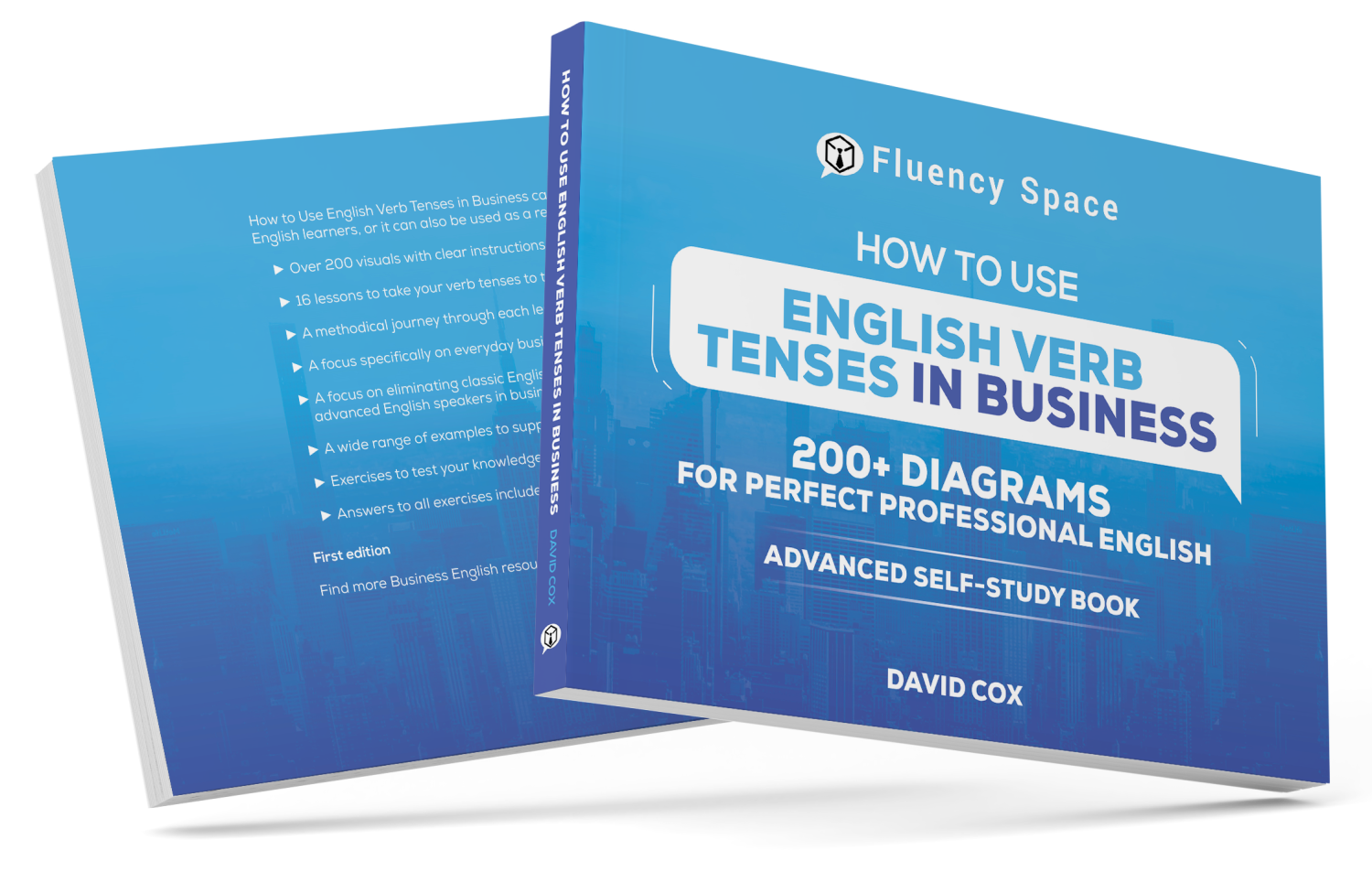
Your advanced English training center. Over 600 pages of PDFs. over 250 diagrams and hundreds of exercises. 32 Vocabulary lessons covering the 400 most important phrases for advanced Business, 2x monthly Adapted Business English texts, 2x monthly YouTube listening lessons, 'How to Use English Verb Tenses in Business' textbook.
All of this and much more for only $5.99 per month. Cancel anytime!