Business English Vocabulary · Lesson 22
Sound Confident When Making Offers and Closing Deals
From drawing up a proposal to splitting the difference: the phrases senior professionals use to make offers, negotiate firmly and close deals – confident, clear and easy for everyone to understand.
Homework Do all the exercises, then send your answers to your teacher at the bottom of the page.
ARead: making an offer
Read the email thread. Pay attention to the phrases in bold – you will need them in exercise B.
A new packaging contract
Tomás Novák, Sales Manager at a packaging company, wants to win a contract with Clara Weiss, Procurement Manager at a food producer.
Dear Clara,
Following our call last week, I have drawn up a proposal for supplying all your packaging next year – you will find the full document attached.
I believe we are offering very favourable terms: a 12% discount on our standard prices, free delivery and 60 days to pay.
I understand you will need some time to weigh up the offer and compare it with other suppliers. Please let me know your thoughts by 15 March.
Best regards,
Tomás
Dear Tomás,
Thank you for your proposal. I’m afraid we have decided to turn it down in its current form, as another supplier has offered us a lower price.
However, we would be happy to continue talking if you can improve your offer. The ball is in your court.
Kind regards,
Clara
Dear Clara,
On 16 March, I sent you a revised offer with a further 5% discount. As I haven’t heard back from you yet, I’m just chasing it up. Could you let me know where things stand?
Best regards,
Tomás
Dear Tomás,
Apologies for the slow reply. I have good news: we are closing in on a final decision, and your revised offer is now our first choice.
I just need to confirm a few details with our finance team, and I’ll get back to you by Friday. If everything is in order, I’m confident we can close the deal next week.
Kind regards,
Clara
BKey words from the emails
Based on the emails, choose the phrase that matches each definition. Then complete the example sentence. You may need to change the form of the phrase.
CRead: after the negotiation
Now read the conversation. The phrases in bold are for exercise D.
How did it go?
Daniel, an Account Manager, has just come back from a negotiation with a large supermarket chain, the company’s biggest customer. He is talking to his manager, Rita.
RitaHead of SalesSo, how did it go?
DanielAccount ManagerIt was tough. Their buyer really drives a hard bargain – she wanted 20% off our prices and 120 days to pay.
RitaDid she have the upper hand?
DanielAt the start, yes. She knows they buy a third of everything we produce, so she has a lot of leverage. If they stop ordering, we’re in serious trouble.
RitaSo what did you do?
DanielI made a few concessions: we’ll deliver for free, and I conceded on payment – 90 days instead of 60. But I didn’t move on price at first.
RitaGood. Did she try to push you to go lower?
DanielAll the time. In the end, I offered 8% and she asked for 15%, so we met halfway.
RitaSo you split the difference – 11.5%. I can live with that. Were you ever close to walking away?
DanielOnce. When she asked us to stop selling to their competitors, I said we would leave without a deal rather than accept that. After that, I felt we were in the driving seat – she needed the deal more than we did.
RitaWell done. And what about the hotel chain we’ve been talking to?
DanielHonestly, I think we should pull out of the deal. We’ve spent six months on it, they keep changing what they want, and we’re losing money on the trial.
RitaI agree. Sometimes you just have to cut your losses.
DKey words from the conversation
Based on the conversation, choose the phrase that matches each definition. Then complete the example sentence. You may need to change the form of the phrase.
ESay it better
Each sentence below is correct, but it sounds simple. Rewrite it using a phrase from this lesson, then compare your version with the model answer.
“We said no to their offer.”
Use: turn down
Show model answer
“We turned down their offer.” or “We turned their offer down.”
“We need to think about the good and bad points of the offer.”
Use: weigh up
Show model answer
“We need to weigh up the offer.”
“You want €50,000 and we want €40,000. Let’s agree on €45,000.”
Use: split the difference or meet halfway
Show model answer
“Why don’t we split the difference and say €45,000?” or “Let’s meet halfway at €45,000.”
“I’m writing again because you still haven’t answered my email about the invoice.”
Use: chase up
Show model answer
“I’m just chasing up my email about the invoice.”
“We are stronger than them in this negotiation.”
Use: the upper hand or the driving seat
Show model answer
“We have the upper hand in this negotiation.” or “We’re in the driving seat.”
“We’ve sent our offer. Now they have to decide.”
Use: the ball is in … court
Show model answer
“We’ve sent our offer, so the ball is in their court.”
FKey words in a new context
Complete the email with the phrases from the box. You may need to change the form of some of the words.
Use it well
Three things professionals often get wrong when they talk about offers and deals.
Where does the object go?
Turn down, draw up, chase up and weigh up can be split:
We turned down the offer. = We turned the offer down.With it or them, you must split them: We turned it down – not turned down it.
Get back to is never split: I’ll get back to you.
Who has the power?
Leverage – the power you have: We have a lot of leverage.
The upper hand – an advantage over the other side: have / gain the upper hand.
In the driving seat – in control of what happens next.
The ball is in your court – it’s your turn to act.
Walk away, pull out, cut your losses
Walk away – leave a negotiation with no agreement.
Pull out of – leave a deal or a project that has already started.
Cut your losses – the reason: to stop losing more money or time.
We pulled out of the project to cut our losses.Glossary
All the phrases from this lesson.
Making offers
- to draw upto prepare a written document, such as a plan or a contract
- favourable termsconditions of an agreement that are good for you
- to weigh upto consider the advantages and disadvantages before deciding
- to turn downto refuse an offer or a request
- the ball is in someone’s courtit is now their turn to act or decide
- to chase upto contact someone again to remind them about something
- to close in onto get very close to reaching a decision or an agreement
- to get back to someoneto reply to someone later, with more information
- to close a dealto reach a final agreement with a customer or partner
Negotiating
- to drive a hard bargainto negotiate firmly to get the best price or conditions
- the upper handan advantage that gives you more control
- leveragepower to influence someone or a situation
- to make concessions / concedeto give the other side something they want, to reach an agreement
- to push someone toto put pressure on someone to do something
- to meet halfway / split the differenceto agree on a point exactly between what each side wants
- to walk awayto leave a negotiation without an agreement
- in the driving seatin control of a situation
- to pull out of a dealto withdraw from a deal before it is completed
- to cut your lossesto stop something failing before you lose more
Send your homework
When you have finished all the exercises, copy your answers and send them to your teacher.
- Type your name.
- Press Copy my answers.
- Paste them into an email or message to your teacher.
Knowing the phrase is step one. Using it in the meeting is step two.
One-to-one Business English coaching for C1/C2 executives and founders.

© Copyright Fluency Space. All Rights Reserved
OptimizePress Popup Overlay
the fluency space acadademy
Be one of the first 50 to join and get a huge discount!

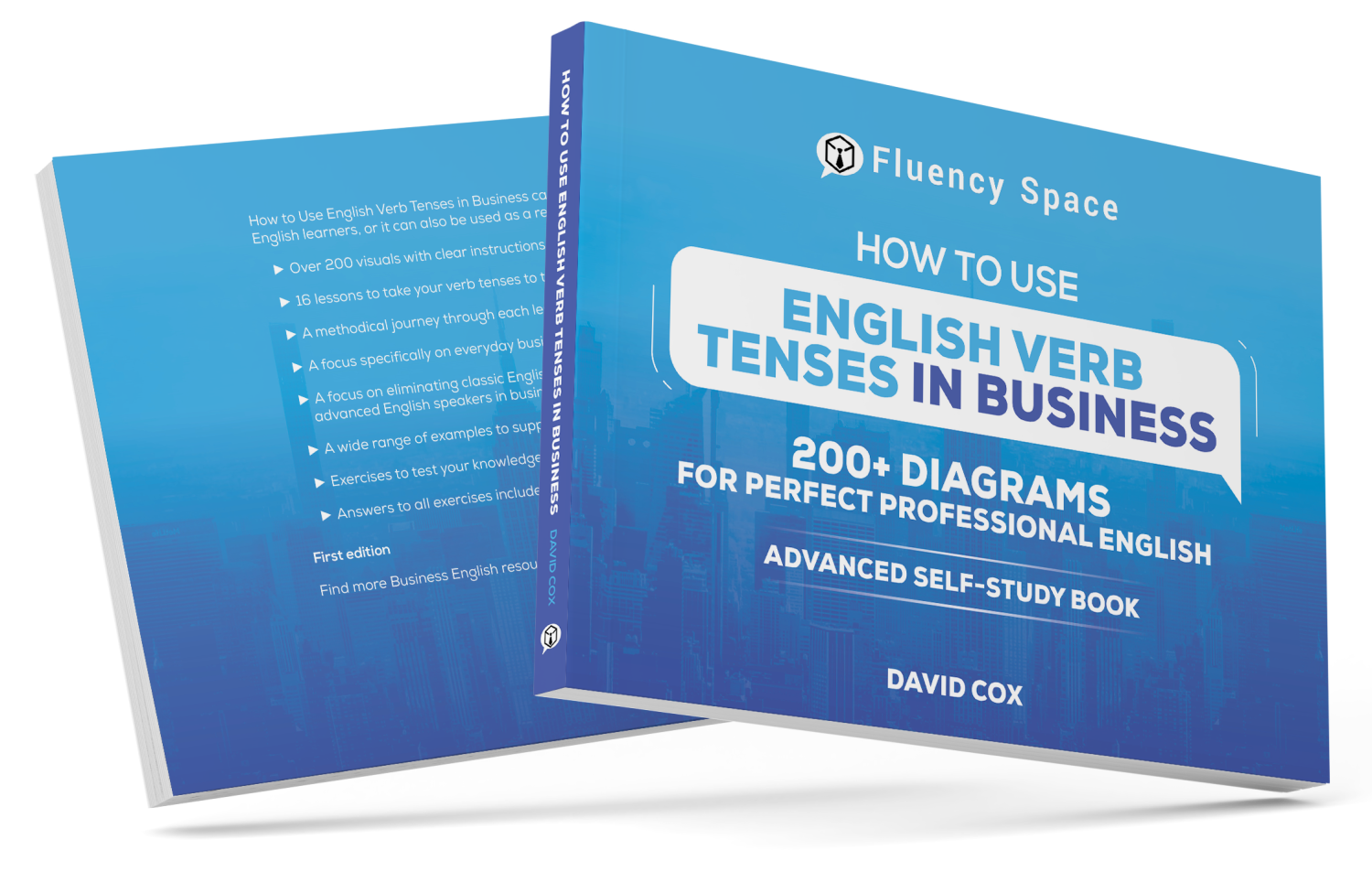
Your advanced English training center. Over 600 pages of PDFs. over 250 diagrams and hundreds of exercises. 32 Vocabulary lessons covering the 400 most important phrases for advanced Business, 2x monthly Adapted Business English texts, 2x monthly YouTube listening lessons, 'How to Use English Verb Tenses in Business' textbook.
All of this and much more for only $5.99 per month. Cancel anytime!