Business English Phrase Bank · Lesson 26
Sound Professional When Giving Presentations
A complete phrase bank for presentations: how to open, structure your talk, move between topics, handle questions and finish strongly – professional, natural and easy for everyone to understand.
Homework Do all the exercises, then send your answers to your teacher at the bottom of the page.
Starting your presentation
Phrases for greeting the audience, introducing yourself and explaining what you will cover.
Greeting the audience
Good afternoon. Thank you very much for coming today.
Introducing yourself
I’m going to introduce myself very briefly before we begin.
Some of you may know me already, but for those of you who don’t, I’m … from the … department.
I’m responsible for … / I’m involved in …
Introducing the presentation
Today, I’m going to be talking about …
I’m going to cover three main topics today.
I’m going to break this presentation down into four sections.
Firstly, I’m going to cover … Secondly, I’m going to discuss … Thirdly, I’m going to take a look at … Finally, I’m going to talk about …
Explaining how questions will work
- Questions any time
Feel free to interrupt if you have any questions during the presentation.
- Questions at the end
If you have any questions, if you could hold on to them until the end – we’ll have around ten minutes for questions after the presentation.
Introducing the first topic
So, let’s get straight into the first topic.
During the presentation
Phrases for making your points, staying on track, managing your time and moving from one topic to the next.
Making your points
- Sequencing
Firstly, … In addition, … Furthermore, … Moreover, … Finally, …
- Contrasting
On the one hand, … On the other hand, …
On the contrary, …
- Your opinion
As far as I’m concerned, …
Going back to an earlier point
Just going back to what I mentioned before, …
I just want to touch upon one extra point.
Going off topic
I’m just going to go off topic a little here.
Apologies, I’m digressing here. Let’s get back to the main point.
Running short of time
As we’re running a little short of time, I’m going to briefly run through the last few points, so that we still have some time for questions at the end.
Closing a topic and moving on to the next
That covers everything for that topic.
Before we move on, does anyone have any questions?
Let’s move on to …
This brings me nicely on to the next topic.
I’d now like to take a look at …
Finishing and taking questions
Phrases for summarising, inviting questions, dealing with difficult questions and ending on a strong note.
Summarising the main points
So, that brings my presentation to a close.
So, that concludes the final topic. Before we finish, I just want to recap everything that I’ve covered today.
I understand that we’ve covered quite a lot today, and it’s a lot to take in, so to summarise, …
So, what are the key takeaways from today’s presentation?
So, I hope you’re all now a lot clearer on …
Inviting questions
Thank you all for listening. I’m happy to answer any questions you may have.
Thank you all for listening. We have around ten minutes for questions, so if there’s anything you’d like me to clarify, I’m happy to answer.
Dealing with difficult questions
That’s an interesting question. I’m afraid I’m not the best person to ask, but I’ll look into it and get back to you.
We’ll send you the answer in the email with the presentation slides.
Ending the presentation
If there are no further questions, we’ll wrap things up there.
Thank you for all your questions.
Thank you all very much for attending, and have a nice afternoon.
AWhat would you say?
You are giving a presentation. Read each situation. Which phrase would you use?
BKey expressions you can use anywhere
These expressions from the phrase bank are useful far beyond presentations. Choose the expression that matches each definition. Then complete the example sentence. You may need to change the form of the expression.
CKey expressions in a new context
Complete the article with the expressions from the box. You may need to change the form of some of the words, and you will need one expression twice. The words in bold are for exercise D.
DKey words from the article
Based on the article, choose the word or phrase that matches each definition. Then complete the example sentence. You may need to change the form of the word.
Use it well
Three things professionals often get wrong when they present.
Break down, hold on to, touch upon
Break down can be split: break the presentation down. With it, you must split it: break it down – not break down it.
Hold on to and touch upon are never split: hold on to your questions, touch upon a point.
Touch on means the same as touch upon and is slightly less formal.
Moreover, furthermore, in addition
All three add another point, and all three sound more professional than also at the start of a sentence.
Put them at the beginning of the sentence, followed by a comma:
The system is cheaper. Moreover, it is faster.Moreover is the most formal, and often adds a stronger point.
Daunting, nerve-wracking, overwhelming
Daunting – how a task seems before you start: a daunting challenge.
Nerve-wracking – how it feels while you do it: a nerve-wracking interview.
Overwhelming – too much to deal with: an overwhelming amount of information.
Glossary
The key expressions from this lesson.
From the phrase bank
- to take into understand and remember information
- to break something downto divide something into smaller parts
- feel free toused to invite someone to do something
- to touch uponto mention something briefly
- to hold on to questionsto wait until the end to ask your questions
- to recapto repeat the main points
- takeawaysthe key points that people should remember
- to wrap things upto finish a meeting or a presentation
- to digressto leave the main subject for a short time
- moreover / furthermorein addition
From the article
- dauntingseeming difficult or frightening before you start
- to captivateto attract and hold someone’s interest completely
- a lasting impressionan effect that stays with someone for a long time
- to tailor toto adapt something for specific needs
- overwhelmingtoo great or intense to deal with easily
- to get bogged downto get too involved in details to make progress
- to flesh outto add more details to something
- nerve-wrackingmaking you feel very nervous
Send your homework
When you have finished all the exercises, copy your answers and send them to your teacher.
- Type your name.
- Press Copy my answers.
- Paste them into an email or message to your teacher.
Knowing the phrase is step one. Using it in the meeting is step two.
One-to-one Business English coaching for C1/C2 executives and founders.

© Copyright Fluency Space. All Rights Reserved
OptimizePress Popup Overlay
the fluency space acadademy
Be one of the first 50 to join and get a huge discount!

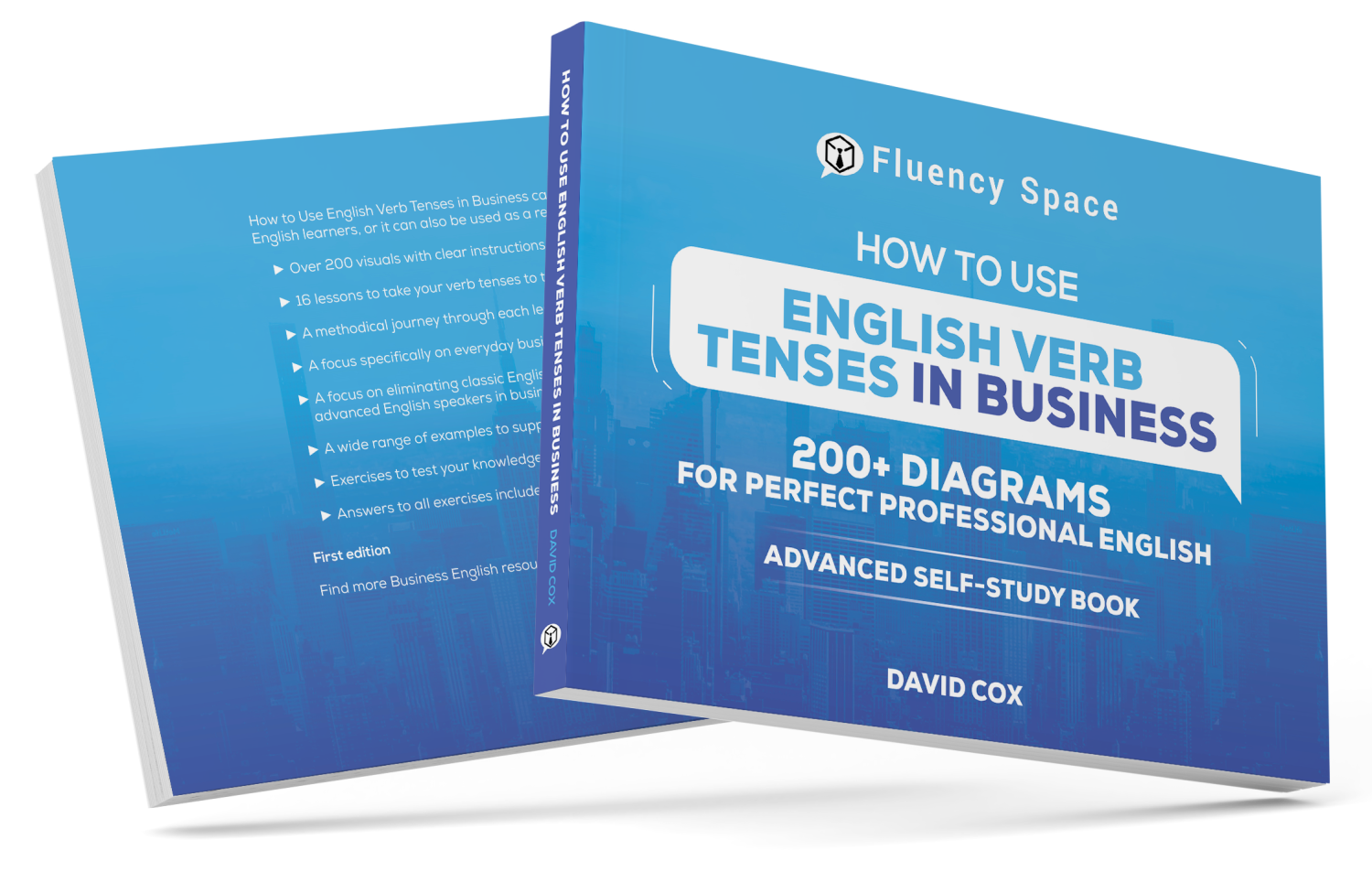
Your advanced English training center. Over 600 pages of PDFs. over 250 diagrams and hundreds of exercises. 32 Vocabulary lessons covering the 400 most important phrases for advanced Business, 2x monthly Adapted Business English texts, 2x monthly YouTube listening lessons, 'How to Use English Verb Tenses in Business' textbook.
All of this and much more for only $5.99 per month. Cancel anytime!