Business English Phrase Bank · Lesson 25
Sound Professional When Running Meetings
A complete phrase bank for chairing meetings: how to open the meeting, manage the discussion, give out tasks and finish on time – professional, natural and easy for everyone to understand.
Homework Do all the exercises, then send your answers to your teacher at the bottom of the page.
Opening the meeting
Phrases for welcoming people, explaining why you’re all there and introducing the agenda.
Greeting people
- Waiting for others
Hello everyone, it’s nice to see you all. We’re just waiting for one or two more people to arrive / join the call, and then we’ll get started.
- Everyone is here
Hello everyone. It looks like we’re all here, so let’s get started.
Hello everyone, and thank you all for coming today. It’s nice to see you all.
Explaining why you’re here
We’re here today to discuss …
I’ve called this meeting in order to discuss …
Mentioning the agenda
I hope everyone has had a chance to look at the agenda.
First of all, I’d just like to go through the agenda.
Introducing the first topic
So, the first item on the agenda is …
So, the first item to discuss is …
Managing the discussion
Phrases for getting updates, involving everyone, keeping the discussion on track and moving from one topic to the next.
Asking for updates
I’d like to get everyone’s update on where they are. Let’s go round the table / round everyone on the call, starting with John.
John, could you bring us up to speed on …?
John, could you give us the latest on …?
John, how is … coming along?
Asking for opinions and setting ground rules
John, what are your thoughts on this?
I want everyone to have a say on this.
Please can we make sure that we let everyone finish.
Asking for more detail
Could you expand a little on that, John?
Could you elaborate on that a little?
Keeping the discussion on track
- Going off topic
OK, we’re going a little off topic here. Let’s get back to the matter in hand.
- Controlling time
If we could keep all our points brief – we’re a little short on time.
Closing one topic and moving on to the next
Does anyone have anything else to add before we move on?
Are we all in agreement? I want to make sure that we’re all on the same page.
If we’re all on the same page, I think that covers everything for this topic.
Moving on to item number two / to the next topic, …
- A difficult topic
I think we need to bring up / raise the difficult issue of …
Closing the meeting
Phrases for managing the last few minutes, summarising, giving out tasks and ending the meeting.
Running out of time
It looks like we’re running a little short of time, so if we could keep everything brief from here.
Recapping
Just before we finish, I’d like to recap what we’ve discussed.
So, just to summarise, …
Delegating tasks and responsibilities
If we’re all on the same page, let’s discuss how we can set the wheels in motion.
start the processSo, John, if you could look into …
John, could you dig a little deeper into …?
John, would you mind taking a look at …? / If you wouldn’t mind taking a look at …
Are we all clear on our roles moving forward?
Fixing the next meeting
So, let’s fix the next meeting. Ideally, I’d like to fit another meeting in before …
Would Wednesday at 3 p.m. work for everyone?
Ending the meeting
Let’s bring the meeting to a close.
Let’s wrap things up there.
Thank you all very much for attending / joining the call today. See you next week.
AWhat would you say?
You are chairing a meeting. Read each situation. Which phrase would you use?
BKey expressions you can use anywhere
These expressions from the phrase bank are useful far beyond meetings. Choose the expression that matches each definition. Then complete the example sentence. You may need to change the form of the expression.
CKey expressions in a new context
Complete the article with the expressions from the box. You may need to change the form of some of the words, and you will need one expression twice.
Use it well
More ways to use some of the key expressions – plus four useful words from the article.
Moving forward
It introduces what will happen from now on. You can put it at the end of a sentence:
Are we all clear on our roles moving forward?…or at the beginning:
Moving forward, we need to secure funding as soon as possible.Bring up
Bring up an issue means the same as raise an issue, and it works in formal situations too.
With a noun, both positions are fine: bring up the issue or bring the issue up.
With it, it must go in the middle:
John brought it up last week – not brought up it.From the article
To hinder / to inhibit – to slow down or limit something. Both collocate with progress, growth, innovation, creativity, collaboration, performance.
To foster – the opposite: to encourage something to develop. Our brainstorming sessions really foster innovation.
A facet – one part or aspect of something: an important facet of the job.
Glossary
The key expressions from this lesson.
From the phrase bank
- the matter in handthe topic you are discussing at the moment
- to bring someone up to speed onto give someone the latest information
- to bring upto raise an issue so that people can discuss it
- to expand on / elaborate onto speak about something in more detail
- moving forwardfrom now on; in the future
- to look intoto try to find out more about something
- to have a sayto be involved in a decision and give your opinion
- on the same pageunderstanding and agreeing about what has been decided
- to bring something to a closeto end a meeting or a discussion
From the article
- to hinder / to inhibitto slow down or limit something
- to fosterto encourage something to develop
- a facetone part or aspect of something
Send your homework
When you have finished all the exercises, copy your answers and send them to your teacher.
- Type your name.
- Press Copy my answers.
- Paste them into an email or message to your teacher.
Knowing the phrase is step one. Using it in the meeting is step two.
One-to-one Business English coaching for C1/C2 executives and founders.

© Copyright Fluency Space. All Rights Reserved
OptimizePress Popup Overlay
the fluency space acadademy
Be one of the first 50 to join and get a huge discount!

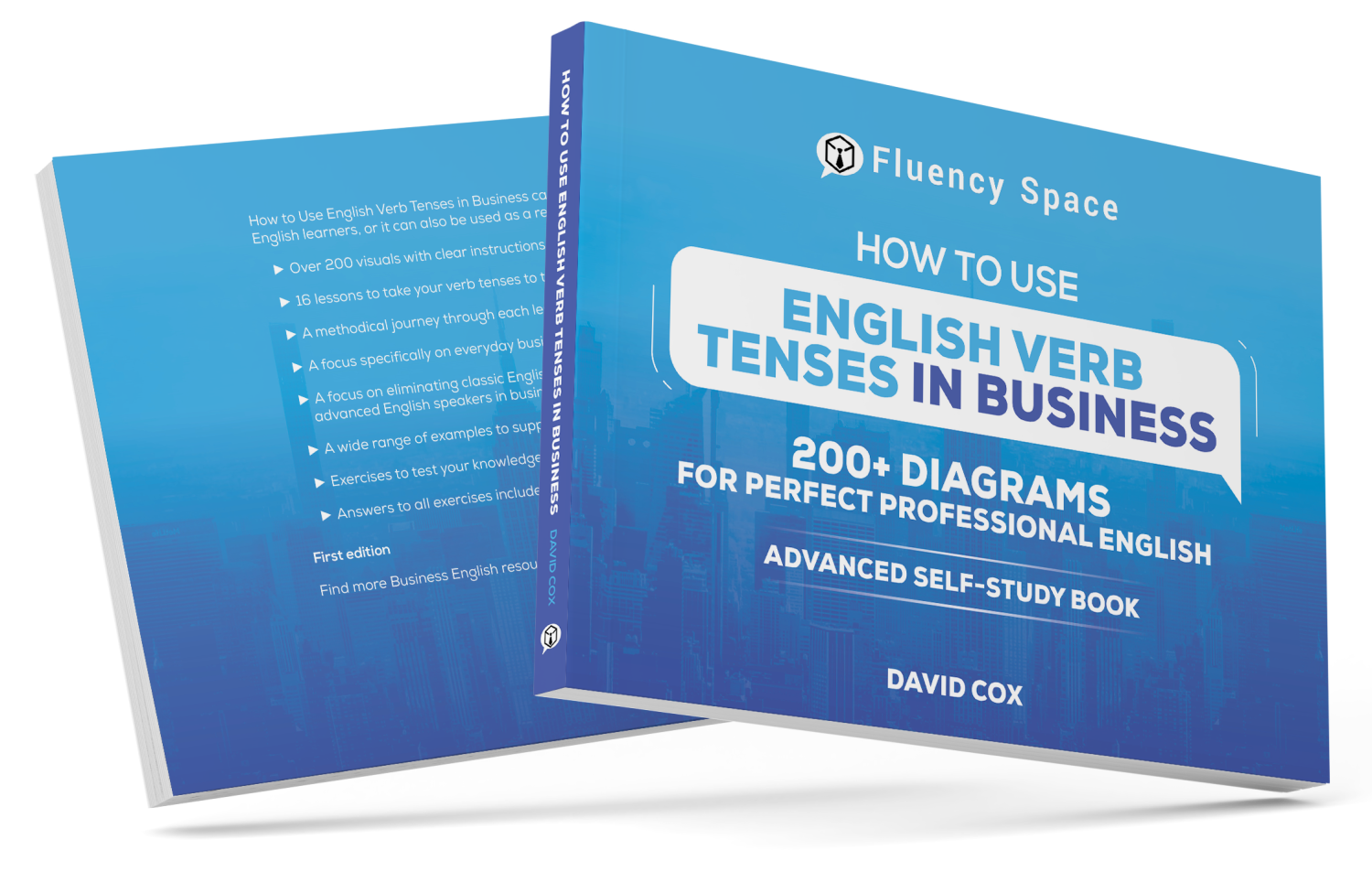
Your advanced English training center. Over 600 pages of PDFs. over 250 diagrams and hundreds of exercises. 32 Vocabulary lessons covering the 400 most important phrases for advanced Business, 2x monthly Adapted Business English texts, 2x monthly YouTube listening lessons, 'How to Use English Verb Tenses in Business' textbook.
All of this and much more for only $5.99 per month. Cancel anytime!