Business English Vocabulary · Lesson 8
Sound in Control When Discussing Deadlines and Workload
From falling behind schedule to spreading yourself too thin: the phrases professionals use to talk about busy periods, deadlines and workload – clear, precise and easy for everyone to understand.
Homework Do all the exercises, then send your answers to your teacher at the bottom of the page.
ARead: when work starts to pile up
Read the text. Pay attention to the phrases in bold – you will need them in exercise B.
Surviving the busy season
Every industry has its busy season. For accountants, it is the end of the tax year; for retailers, it is the weeks before Christmas. As the busy period picks up, the number of emails, meetings and requests grows week by week.
Soon there are more and more pressing tasks – urgent ones that have to be done immediately – so anything less urgent has to be put off until later. Managers set tight deadlines, and staff find themselves working on several tasks in parallel, switching between three or four projects at the same time.
If this continues for too long, people become overwhelmed: there is simply too much to do, and they no longer know where to start. The usual mistake is to keep saying yes to every new request. When you take on too much work, you spread yourself too thin, and every task gets a little less of your attention.
The solution is to prioritise. Decide what really matters, and be willing to drop the tasks that don’t – stop doing them completely, or give them to someone else. And if the whole team is overloaded, it may be time to bring in extra help, either by hiring new people or by borrowing them from another department.
BKey words from the text
Based on the context of the text, choose the phrase that matches each definition. Then complete the example sentence. You may need to change the form of the phrase.
CRead: a busy week
A team at a marketing agency is preparing for a client launch. Read their chat. The phrases in bold are for exercise D.
# nordex-campaign
DKey words from the chat
Based on the chat, choose the phrase that matches each definition. Then complete the example sentence. You may need to change the form of the phrase.
ESay it better
Each sentence below is correct, but it sounds simple. Rewrite it using a phrase from this lesson, then compare your version with the model answer.
“I’m very busy this week, and I don’t have much time.”
Use: up against it
Show model answer
“I’m a bit up against it this week.”
“I’ll do it later, when I have some time.”
Use: get round to
Show model answer
“I’ll get round to it this afternoon.”
“I have too many things to do, and I don’t know where to start.”
Use: overwhelmed
Show model answer
“I’m feeling a little overwhelmed at the moment.”
“You’re trying to do too many things at the same time.”
Use: thin
Show model answer
“I think you’re spreading yourself too thin.”
“We are later than we planned.”
Use: schedule
Show model answer
“I’m afraid we’ve fallen behind schedule.”
“We need some people from outside to help us.”
Use: bring in
Show model answer
“We need to bring in some extra help.”
FKey words in a new context
A Head of Finance is having a one-to-one with a senior analyst about his workload. Complete the conversation with the phrases from the box. You may need to change the form of some of the words.
Use it well
Three things professionals often get wrong when they talk about workload.
Careful with “I’ll get round to it”
It is friendly, but it can suggest the task is not a priority. With a client or a senior colleague, add a time:
I’ll get round to it this afternoon.It can also be followed by -ing:
I haven’t got round to replying yet.Behind, ahead of, on schedule
Later than planned: behind schedule. Earlier: ahead of schedule. Exactly as planned: on schedule.
Fall behind describes the change; be behind describes the situation.
We fell behind in May, so we’re still behind schedule now.Hectic, up against it or overwhelmed?
Hectic describes a time or a place, not a person: a hectic week (not I’m hectic).
A bit up against it – short of time; informal and temporary.
Overwhelmed – it feels like too much; stronger and more emotional.
Glossary
All the phrases from this lesson.
When work piles up
- to pick up(of business or activity) to increase; to become busier
- pressingurgent; needing to be dealt with immediately
- to put offto delay doing something until a later time
- to set a deadlineto decide when something must be finished
- (tasks) in parallelhappening at the same time
- overwhelmedfeeling that you have too much to deal with
- to take onto accept new work or responsibility
- to spread yourself too thinto try to do too many things at once
- to dropto stop doing or planning something
- to bring into employ or use someone from outside your team to help
Talking about your workload
- hecticvery busy and full of activity
- to come up(of a task or a problem) to appear unexpectedly
- to fall behind schedule / to be ahead of scheduleto be later / earlier than planned
- a bit up against ithaving a lot to do and not much time
- (tasks) on the goin progress and being worked on at the same time
- to pass something on toto give a task or information to another person
- I’ll get round to it.I’ll do it when I have time
- I’ll get back to you as soon as possible.I’ll reply very soon, with an answer
- to get on withto continue or start doing a task, without being distracted
Send your homework
When you have finished all the exercises, copy your answers and send them to your teacher.
- Type your name.
- Press Copy my answers.
- Paste them into an email or message to your teacher.
Knowing the phrase is step one. Using it in the meeting is step two.
One-to-one Business English coaching for C1/C2 executives and founders.

© Copyright Fluency Space. All Rights Reserved
OptimizePress Popup Overlay
the fluency space acadademy
Be one of the first 50 to join and get a huge discount!

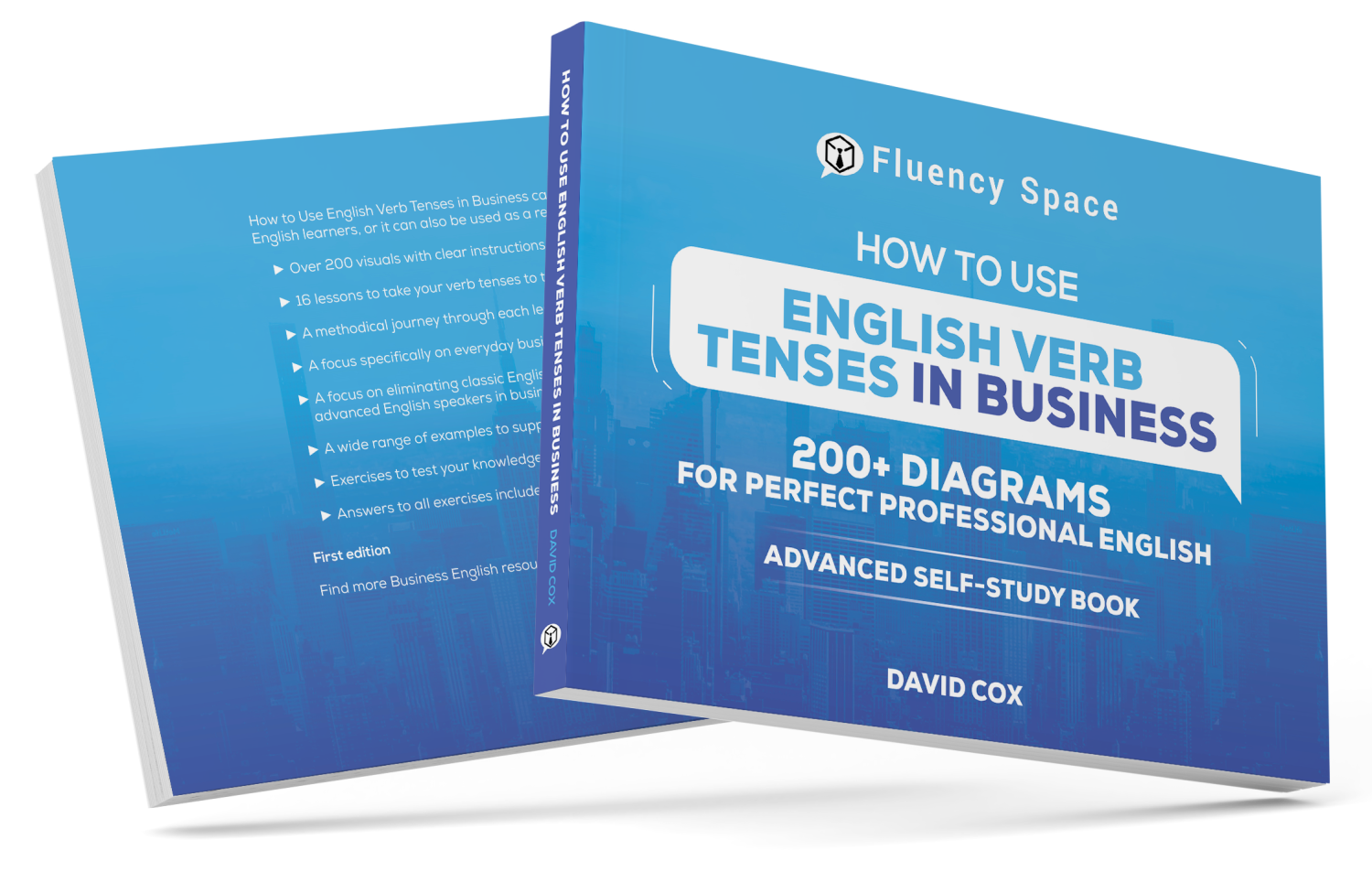
Your advanced English training center. Over 600 pages of PDFs. over 250 diagrams and hundreds of exercises. 32 Vocabulary lessons covering the 400 most important phrases for advanced Business, 2x monthly Adapted Business English texts, 2x monthly YouTube listening lessons, 'How to Use English Verb Tenses in Business' textbook.
All of this and much more for only $5.99 per month. Cancel anytime!