Marketing at 39,000 Metres: How Red Bull Turned Extreme Risk into Competitive Advantage
A C1 business English lesson on brand strategy and competitive advantage.
In 2012, a Red Bull-sponsored skydiver stepped off the edge of space and fell 39 kilometres back to Earth, live-streamed to millions worldwide. The event was a culmination of a strategy that began 25 years earlier, when Red Bull chose not to compete with Coca-Cola at all and invented an entirely new product category instead. This lesson uses that story to build sophisticated business English vocabulary and critical thinking for executives and senior professionals.
What business leaders can learn from the story
Red Bull's marketing shows that competitive advantage doesn't always come from outperforming rivals at their own game — it can come from refusing to play that game, and cultivating a new narrative entirely.
This C1 business English lesson explores brand strategy, risk-based marketing and the language of competitive positioning — essential vocabulary for senior professionals.
Download Lesson
Full lesson including all exercises, answer key and gap-fill. Print-ready format.
Warm up - Before starting the Business English lesson, discuss these with a partner or your teacher.
Have you ever tasted Red Bull, and what is your opinion on energy drinks?
Why do you think that the Red Bull brand is so well-known worldwide?
Can you think of any other brands that are famous for extreme sports or bold marketing stunts?
Would you personally ever try an extreme sport, such as skydiving or wingsuit flying? Why or why not?
Business English Lesson Text - Underlined phrases will appear in the exercises
What is the first thing that comes to mind when you think of Red Bull? Is it the sickly sweet taste of the drink, or is it something far more extreme like jumping from the edge of space, racing a Formula 1 car, diving off a cliff, or plummeting down a mountain?
What began in the 1980s as an overpriced, medicinal-tasting drink evolved into a global branding, sports and media empire without ever focusing on flavour or health claims.
Just how did Red Bull become so synonymous with risk, ambition and pushing limits?
Pushing the limits stage 1 – if no category exists for your product, why not invent one!
Before 1987, there was no such thing as an 'energy drink' in Western markets, so rather than competing with established soft drinks like Coca-Cola, Red Bull carved out a niche all for itself. By offering free samples at universities and nightclubs, targeting night-shift workers and extreme athletes, Red Bull started to sow the seeds for a whole new category of drink. Whether you were working all night, training for a marathon, or chasing a startup dream, Red Bull soon became the first port of call for those needing to push limits. It then built momentum by sponsoring underground sports and making "energy" central to its identity. It was now time to set its sights on the sporting elites…
Pushing the limits stage 2 – Instead of sponsoring teams, own them instead!
Red Bull then embedded its brand into elite competition by buying sports teams, even expanding into more extreme sports in order to feed into the brand image. The company founded Red Bull Racing in order to gain a foothold in Formula 1, later consolidating its influence by adding another team – AlphaTauri. In football, it bought FC Red Bull Salzburg, RB Leipzig and the New York Red Bulls. By owning teams, facilities and branding environments, Red Bull embeds branding into the club's core identity, and turns competitive sport into a sustained brand platform rather than a temporary advertising slot. It was then time to build a platform for consumers to watch these teams in action…
Pushing the limits stage 3 – Instead of just advertising, build your own media empire!
Red Bull Media House was founded in 2007, producing content such as action sports, music and adventure on YouTube and streaming platforms. Instead of interrupting audiences with ads, it attracts them by creating content that consumers actively seek out and share. When you control the narrative infrastructure, marketing becomes a long-term asset rather than a recurring expense. Now for the icing on the cake…
Pushing the limits stage 4 – Instead of sponsoring events, create your own instead!
Red Bull creates its own extreme headline-grabbing events designed for maximum cultural impact. The most dramatic has been Red Bull Stratos, where a pro skydiver jumped from 39 kilometres above Earth. The event was live-streamed globally. From a business perspective, this was not merely a stunt; it was strategic brand storytelling at scale.
The now-retired Red Bull Air Race brought high-speed planes to global cities; Red Bull Rampage showcases extreme mountain biking, and other events include Red Bull Cliff Diving and the Red Bull BC One breakdancing contest.
Red Bull has even dipped its toes into numerous music, esports and cultural festivals. The brand does not wait for media moments — it manufactures them. Content draws attention; attention drives sales; sales finance further teams, events and media production. Through calculated risk management, bold positioning and long-term brand investment, Red Bull has engineered a branding machine that feeds itself. Its famous slogan, "Red Bull gives you wings," reinforces this value proposition, communicating benefit rather than flavour, selling transformation, not refreshment – an iconic brand synonymous with energy, risk-taking and ambition.
1987
The year that Red Bull launched
5
Professional sports teams owned across F1 and football
2007
The year Red Bull Media House was founded
39000m
The height from which a pro skydiver jumped for Red Bull Stratos
Business English Lesson Vocabulary - Key Words from Context
Match each word to its definition and complete the example sentences in the exercise which can be found in the downloadable PDF.
Comprehension - Answer these questions in your own words
QUESTION 1
What strategy did Red Bull use before 1987 to build its brand, and how was this different from what other drinks companies were doing at the time?
QUESTION 2
According to the article, why did Red Bull decide to buy sports teams rather than simply sponsor them?
QUESTION 3
True or False: Red Bull Media House was set up primarily to run advertisements for Red Bull products. Explain your answer.
QUESTION 4
What made Red Bull Stratos significant from both a sporting and a business perspective?
QUESTION 5
Based on the whole article, how does Red Bull’s approach to marketing create a ‘self-reinforcing’ cycle? Use examples from the article to support your answer.
Business English Lesson Vocabulary in a New Context - Fill in the gaps with words from the vocabulary section
Brand Strategy
When a new business enters a crowded market, its early sales can feel like they are (1) _________________ before the brand has had time to establish itself. The challenge is to (2) _________________ of long-term loyalty early rather than chasing short-term profits. One of the most effective ways to do this is to (3) _________________ rather than competing head-on with larger, better-funded rivals. Once a company begins to (4) _________________ in its target market, the focus often shifts to (5) _________________ that position. A strong brand becomes (6) _________________ in the customer's daily life — it becomes the (7) _________________ whenever someone needs that product or service. At this point, the brand has become (8) _________________ with quality in the customer's mind. And when a new campaign then exceeds all expectations, that is truly (9) _________________.
Discussion - Business insights and takeaways from the text
How important do you believe that the product itself is in relation to marketing and branding? Has this article changed your opinion in any way?
To what extent do you believe that this strategy could work for other brands and products across other sectors?
What do you believe are the best methods that a brand can use to gain exposure currently?
From great successes to one epic failure. Check out our lesson on Mark Zuckerberg's Metaverse brand.
Check out more innovative branding with our lesson on excellent brand strategies from the 2026 World Cup.
Have you enjoyed this Business English Lesson on brand strategy, extreme risk and competitive advantage? Explore more free C1 lessons in our Leadership and Brand & Strategy categories.
Lesson Creator

David Cox
I am a passionate linguist with over 14 years' experience with high level professionals. In this lesson you will learn:
Want to work through this lesson with me?
Advanced Premium Course
The Fluency Space CEO Package
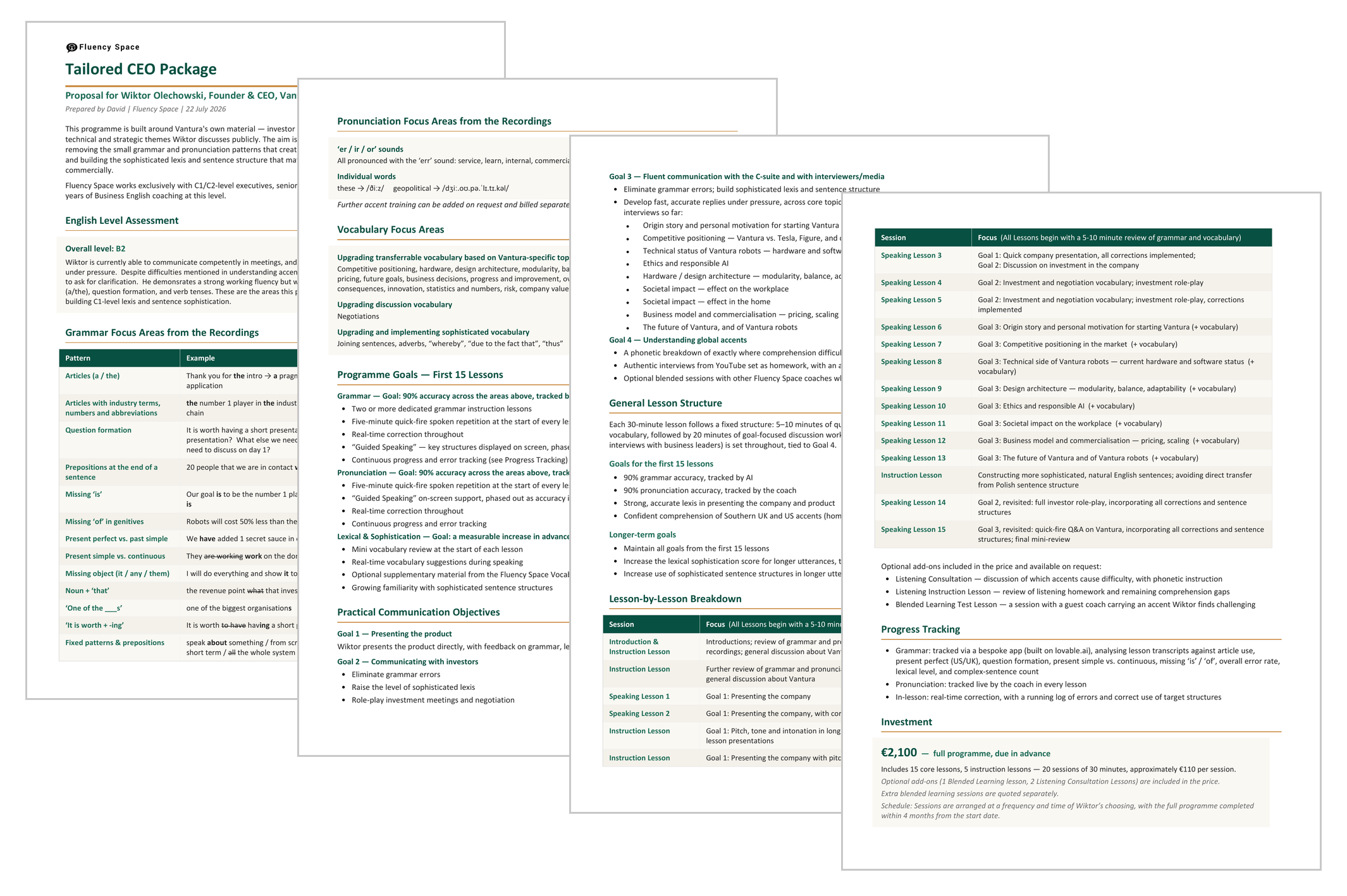
Enjoyed this lesson? Take your business English further with a structured 3-month programme designed specifically for senior executives.
IN-DEPTH PROPOSAL BUILT WITH CARE
A Course Built around you
After your full English audit, we do a deep dive into your company, your role and your real communication goals - We then build a fully tailored program around them and send a proposal within 3 working days.

© Copyright Fluency Space. All Rights Reserved
OptimizePress Popup Overlay
the fluency space acadademy
Be one of the first 50 to join and get a huge discount!

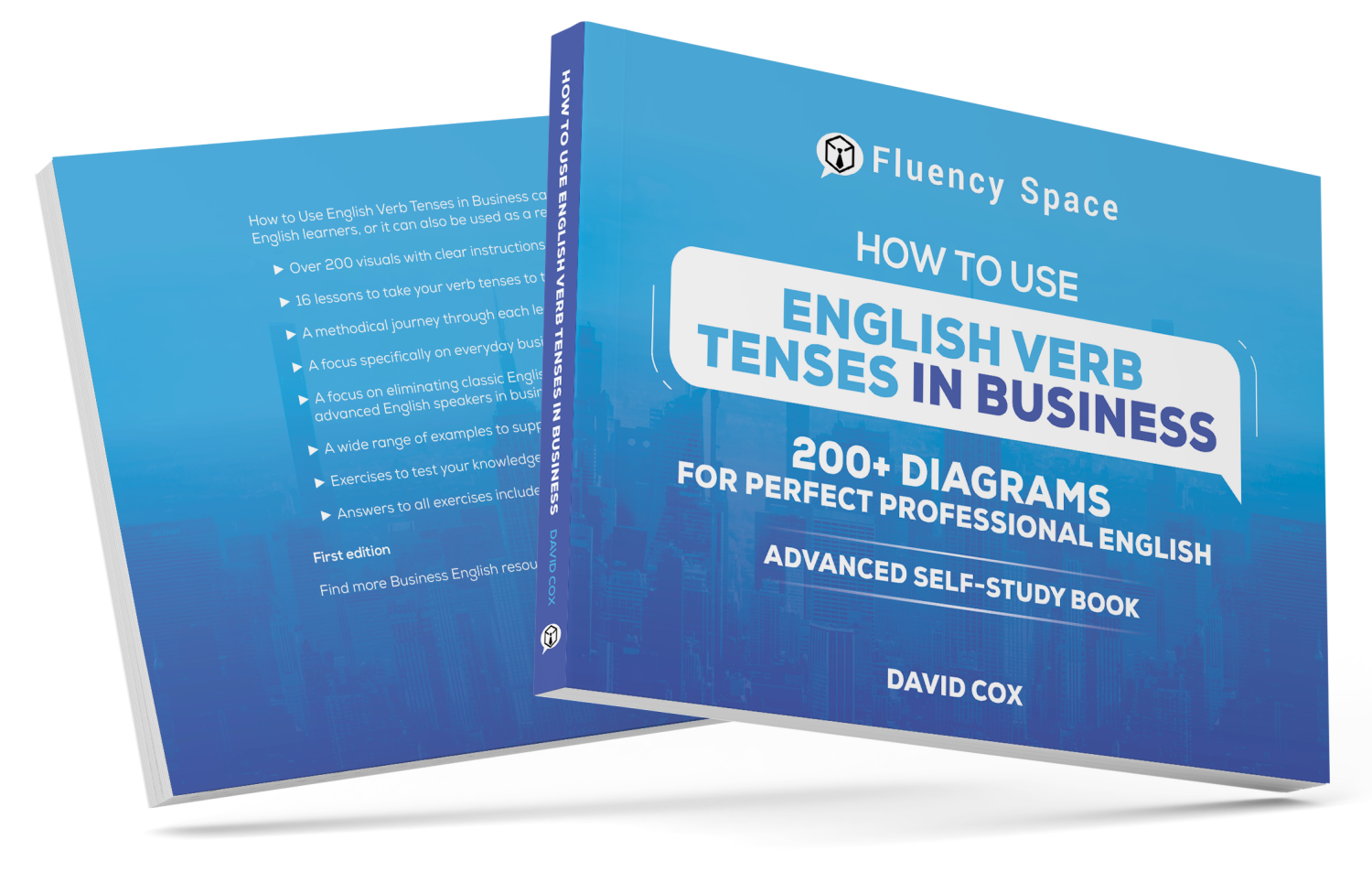
Your advanced English training center. Over 600 pages of PDFs. over 250 diagrams and hundreds of exercises. 32 Vocabulary lessons covering the 400 most important phrases for advanced Business, 2x monthly Adapted Business English texts, 2x monthly YouTube listening lessons, 'How to Use English Verb Tenses in Business' textbook.
All of this and much more for only $5.99 per month. Cancel anytime!