The metaverse: the $80 billion world nobody wanted to live in
A C1 business English lesson on corporate strategy and market failure
In 2021, Mark Zuckerberg renamed his entire company after a product barely anyone used. By 2026, $80 billion had been lost. This lesson uses that story to develop sophisticated business English vocabulary and critical thinking for executives and senior professionals.
What business leaders can learn from the metaverse collapse
The metaverse's failure is a masterclass in what happens when a company prioritises vision over consumer behaviour. This C1 business English lesson explores complacency, the cold start problem, and the language of corporate pivots — essential vocabulary for senior professionals discussing strategy, technology and market research at the highest level.
Download Lesson
Full lesson including all exercises, answer key and gap-fill. Print-ready format.
Warm up - Before starting the Business English lesson, discuss these with a partner or your teacher.
Do you ever use any Meta products such as Facebook or Instagram?
What is your opinion on Mark Zuckerberg and the Meta company?
Have you ever heard of the Metaverse or the idea of living in a virtual world?
When a company loses $80 billion on a project, who should be held accountable?
Business English Lesson Text - Underlined phrases will appear in the exercises
In October 2021, Mark Zuckerberg proudly announced that the future of human civilisation was a place called the metaverse. With Covid-19 still keeping much of the world indoors, life had migrated online to an unprecedented degree, and the idea of a richer, more immersive digital existence seemed not just appealing but logical.
The idea was simple: instead of sitting at your desk for a video call, you could put on a pair of VR goggles and find yourself in a virtual boardroom, represented by an avatar. You could attend concerts, browse shops, and dress your digital self in clothes from Gucci or Ralph Lauren — purchased with real money. Zuckerberg believed in this so deeply that he renamed his entire company after it.
Such was the hype that McKinsey predicted the metaverse would generate up to $5 trillion in value by 2030. Corporations rushed to appoint chief metaverse officers for fear of being left behind. Virtual real estate was already selling for real money, with prime locations fetching up to $450,000. Then the platform actually opened its doors.
When Meta's metaverse opened in December 2021, early adoption was underwhelming, and many potential users were reluctant to pay $400 for a headset just to get in. The early experience was described as walking through a lonely, uninhabited world. For a time, avatars didn't even have legs, which drew widespread mockery on social media.
By 2022, Meta's metaverse had only 200,000 monthly active users. Vishal Shah, VP of the Metaverse, noted that employees weren't bothering to use it anymore — a glaring red flag that Zuckerberg failed to act upon. By March 2026, the project had accumulated over $80 billion in losses and Meta finally pulled the plug on the idea.
Evidence suggests that consumers simply want technology to augment their real lives rather than replace them. Zuckerberg's glaring misjudgement shows that you cannot get away with failing to carry out market research, regardless of how much capital you have to throw at a product.
The metaverse also suffered from what analysts call a cold start problem: a virtual world needs people in it to be appealing, but people only join when it is already appealing. Zuckerberg overcame this masterfully with Facebook, but failed to get the metaverse off the ground. Potentially through complacency after previous successes, he discovered that $80 billion is not enough.
Another flaw in the project was the VR headsets — awkward and bulky. However, they have since found a loyal following among gamers, and the technology has been repurposed in the slimmer Ray-Ban Meta AI glasses. In other words, the metaverse could be seen as an expensive pivot towards something more valuable. Zuckerberg has now set his sights on "personal superintelligence." The technology has changed. The ambition has not.
$80bn
Total losses accumulated by Reality Labs since 2020.
200k
Monthly active users by 2022, against a target of 500,000.
$5trn
Value predicted by McKinsey by 2030 — never materialised.
$450k
Price paid for a virtual plot of land next to Snoop Dogg.
Business English Lesson Vocabulary - Key Words from Context
Match each word to its definition and complete the example sentences. Full Business English lesson with the exercise can be found in the downloadable PDF.
Comprehension - Answer these questions in your own words
QUESTION 1
What were two reasons why early adoption of the metaverse was underwhelming when it launched in December 2021?
QUESTION 2
What is the "cold start problem" and how did it affect the metaverse?
QUESTION 3
True or false: the article suggests that the $80 billion spent on the metaverse was entirely wasted. Explain your answer.
QUESTION 4
What does Zuckerberg's shift from the metaverse to "personal superintelligence" suggest about his underlying business ambition?
Business English Lesson Vocabulary in a New Context - Fill in the gaps with words from the vocabulary section
When a bold new idea comes along, early enthusiasm can be ______________. Yet the road from a promising concept to a commercially viable product is rarely smooth. Many ventures that generate early excitement fail to _________________ in any meaningful way. Sometimes the technology exists; what is missing is a genuine consumer need. In other cases, _________________ sets in after early success, and leaders stop questioning whether the strategy is still working.
A _________________ in many failed ventures is the assumption that throwing money at a problem is a substitute for understanding consumers. The wisest leaders respond by being willing to _________________ — changing course before the losses become unmanageable. The most resilient leaders _________________ the next opportunity and find ways to _________________ their existing technology to build something genuinely more valuable.
Discussion - Business insights and takeaways from the text
Was the metaverse ahead of its time — or does its failure say something fundamental about human nature?
When a company loses $80 billion on a project, who should be held accountable?
Can you think of a technology in your own industry that failed because it changed human behaviour rather than enhancing it?
You've heard about a catastrophic failure, so why not take a look at an epic success with our Red Bull lesson?
Do you think Mark Zuckerberg should have quit his metaverse project before he lost so much money? If so, check out our sunk cost fallacy lesson.
Have you enjoyed this Business English Lesson on corporate strategy? Explore more free C1 lessons in our Leadership and Brand & Strategy categories.
Lesson Creator

David Cox
I am a passionate linguist with over 14 years' experience with high level professionals. In this lesson you will learn:
Want to work through this lesson with me?
Advanced Premium Course
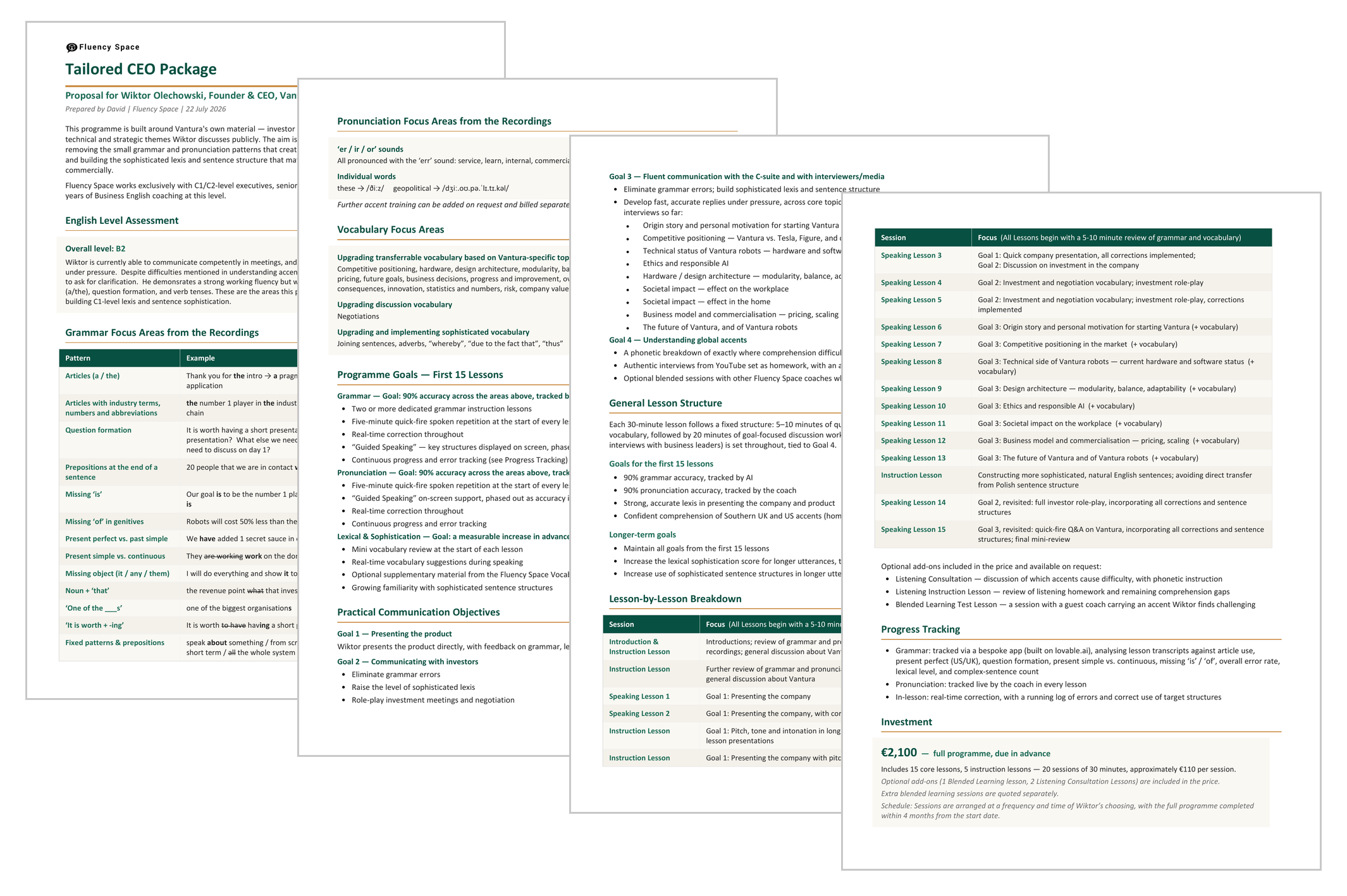
The Fluency Space CEO Package
Enjoyed this lesson? Take your business English further with a structured 3-month programme designed specifically for senior executives.
IN-DEPTH PROPOSAL BUILT WITH CARE
A Course Built around you
After your full English audit, we do a deep dive into your company, your role and your real communication goals - We then build a fully tailored program around them and send a proposal within 3 working days.

© Copyright Fluency Space. All Rights Reserved
OptimizePress Popup Overlay

the fluency space acadademy
Be one of the first 50 to join and get a huge discount!

Your advanced English training center. Over 600 pages of PDFs. over 250 diagrams and hundreds of exercises. 32 Vocabulary lessons covering the 400 most important phrases for advanced Business, 2x monthly Adapted Business English texts, 2x monthly YouTube listening lessons, 'How to Use English Verb Tenses in Business' textbook.
All of this and much more for only $5.99 per month. Cancel anytime!