Nothing to See Here: The Brands That Won the World Cup Without Kicking a Ball
A C1 business English lesson on corporate sponsorship and marketing
In June 2026, FIFA made 16 famous stadiums disappear — at least in name. Gillette became Boston. Levi's became San Francisco Bay Area. MetLife became New York New Jersey. Behind the football, a $1.8 billion sponsorship drama was taking place. This lesson uses that story to develop sophisticated business English vocabulary and critical thinking for executives and senior professionals.
What business leaders can learn from the story
The 2026 World Cup de-branding story is a masterclass in the power of exclusivity — and in what happens when brands are forced to be creative when things don't go their way. This C1 business English lesson explores sponsorship strategy, creative marketing and the language of brand management — essential vocabulary for senior professionals discussing marketing and corporate values at the highest level.
Download Lesson
Full lesson including all exercises, answer key and gap-fill. Print-ready format.
Warm up - Before starting the Business English lesson, discuss these with a partner or your teacher.
Which sports do you enjoy the most?
What is the biggest and most popular sport in your country?
Have you ever visited a major sporting event before, and did you enjoy it?
Many world cup tickets were bought for over $1000 - how much do you think a football ticket should cost?
Business English Lesson Text - Underlined phrases will appear in the exercises
The football World Cup in the USA, Canada and Mexico is now in full swing, and the football drama in the biggest sporting event in the world has not disappointed. Some of the big teams have really hit the ground running by winning their opening games, while others have been slow off the mark, failing to measure up to their usual high standards.
But behind all the drama, the highs and lows of what is happening on the pitch, there is another drama taking place in the stadium.
Around each stadium, there is a physical barrier, and when you step inside you enter what really appears to be a completely new world run by FIFA, the organisers of the tournament. It is a world full of confusing names and sticky tape.
Football in 2026 is a hugely lucrative business, and the World Cup alone this year is set to generate around $9 billion, and around 6 billion “engagements” (times when people consume World Cup content) are expected for the tournament.
It means that sponsorship is big business, and the official sponsors who have contracts with FIFA are taking the event very seriously.
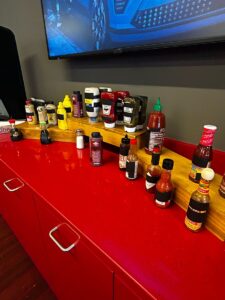
As soon as you enter any stadium, all commercial material not from official sponsors is strictly forbidden, and organisers have gone to great (and highly amusing) lengths to get rid of any trace of any unofficial branding on any scoreboards, seats, uniforms and clocks. In San Francisco, you may have to guess what sauce you are putting on your hotdog, as all sauce bottles have hidden brand names!
All US stadiums have had to change their names for the tournament, and even Google Maps has had to toe the line so that fans don’t end up in the wrong place.
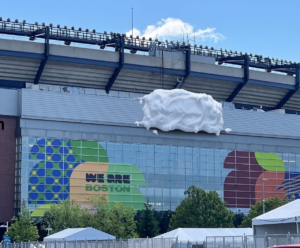
Some unfortunate FIFA employees have had to tape over the name “Gillette” on 65 878 seats at the stadium normally known as the Gillette stadium in Boston, and the huge Gillette sign has been unceremoniously covered with a big white sheet. Refusing to take it on the chin, Gillette launched a highly successful Instagram post, editing a photo of the covered signage to make the white sheet look like shaving cream — a joke so obvious, and so perfectly on-brand, that it needed no caption.
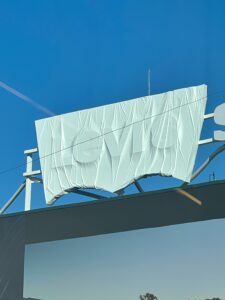
Levi's went one step further, covering up its own logo on Instagram. The caption? "Welcoming the world to the beautiful [redacted] stadium!" The brand pointed out what everyone could already see: a white sheet cut in the exact shape of the Levi's batwing is, technically, still a Levi's batwing. Levi's even drove a mobile billboard reading "NOTHING TO SEE HERE" around the stadium, with the hashtag #DefinitelyNotLevis.
Not every brand had to put up with the ugly white sheet. Despite not paying for sponsorship, Mercedes-Benz was able to get away with keeping its giant symbol on the roof of the stadium named after the company in Atlanta, because it was simply too huge to cover.
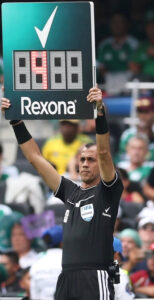
It isn’t just the unofficial partners having fun. Australian deodorant brand Rexona have positioned their logo directly under the armpits of all referees and referee assistants. Despite remaining hidden throughout most of the action, the logo appears every time the referee raises his arm. The company clearly has faith that after the referee has chased Kylian Mbappé around the pitch for 90 minutes, he will still have dry armpits.
$9bn
Revenue set to be generated from the World Cup.
6bn
Active engagements with World Cup content.
65 878
Seats with a taped-over "Gillette" logo.
16
Stadiums have changed their names for the tournament.
Business English Lesson Vocabulary - Key Words from Context
Match each word to its definition and complete the example sentences. Full Business English lesson with the exercise can be found in the downloadable PDF.
Comprehension - Answer these questions in your own words
QUESTION 1
What is FIFA’s de-branding policy, and why does it exist?
QUESTION 2
True or False: Mercedes-Benz paid FIFA for the right to keep its logo on the stadium roof in Atlanta. Explain your answer.
QUESTION 3
How did Gillette and Levi’s each turn FIFA’s de-branding requirements to their advantage?
QUESTION 4
The article implies that Rexona’s marketing at the tournament is particularly brave. Why?
Business English Lesson Vocabulary in a New Context - Fill in the gaps with words from the vocabulary section
A Big Sponsorship Mistake
“Thank you all for coming. As you know, it has been a difficult few months for this club. Signing with a fast food company seemed like a (1) ________________ deal at the time — the money was good and we moved quickly. But we were (2) ________________ when it came to doing our research, and the reaction from our fans was immediate and very negative.
We had promised our supporters a club that stands for health, performance and community. A fast food brand simply didn’t (3) ________________ to those values, and the press made sure everyone knew about it.
We have (4) ________________, we have apologised publicly, and now we are moving forward. But I want to be very clear about one thing — we cannot (5) ________________ making the same mistake again. The damage to our reputation took months to repair, and another poor decision like this could be permanent.
So from today, things are going to be different. Any new partner will be expected to (6) ________________ with every part of our values agreement — no exceptions. Our team has already started talking to several potential sponsors, and I can tell you that we have really (7) ________________ on this. We have spoken to over twenty companies in the past two weeks alone. We are not prepared to (8) ________________ another reputational crisis, and we will go to every length necessary to make sure we get this right.”
Discussion - Business insights and takeaways from the text
FIFA earns an estimated $1.8 billion in marketing revenue from the 2026 World Cup. Do you think its de-branding policy is justified, or does it go too far?
Levi's and Gillette both turned a negative situation into a successful marketing opportunity. Can you think of other examples where a brand has benefited from a restriction or setback?
From a sports club's perspective, what types of sponsors would be considered appropriate, and what criteria would you use to evaluate a potential partnership?
What are the risks of choosing the wrong sponsor, and how difficult do you think it is for a club to walk away from a lucrative deal that conflicts with its values?
This lesson was inspired by an article in The Independent, June 2026: https://www.independent.co.uk/sport/football/fifa-world-cup-levis-lumen-mercedes-brands-sponsors-b3000085
Have you enjoyed this Business English Lesson on corporate sponsorship and marketing? Explore more free C1 lessons in our Leadership and Brand & Strategy categories.
Lesson Creator
David Cox
I am a passionate linguist with over 14 years' experience with high level professionals. In this lesson you will learn:
Want to work through this lesson with me?
Advanced Premium Course
The Fluency Space CEO Package
Enjoyed this lesson? Take your business English further with a structured 3-month programme designed specifically for senior executives.
IN-DEPTH PROPOSAL BUILT WITH CARE
A Course Built around you
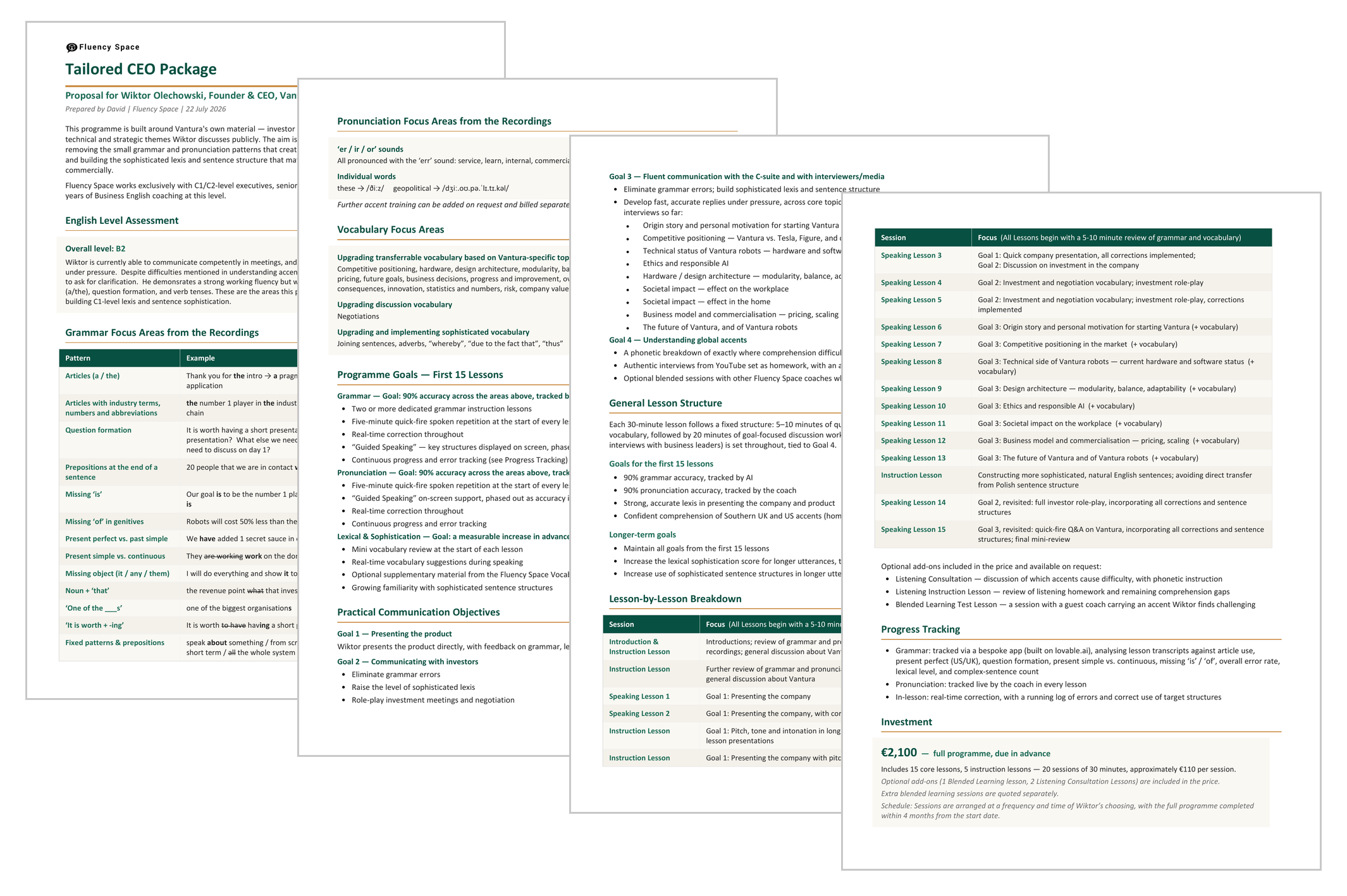
After your full English audit, we do a deep dive into your company, your role and your real communication goals - We then build a fully tailored program around them and send a proposal within 3 working days.

© Copyright Fluency Space. All Rights Reserved
OptimizePress Popup Overlay
the fluency space acadademy
Be one of the first 50 to join and get a huge discount!

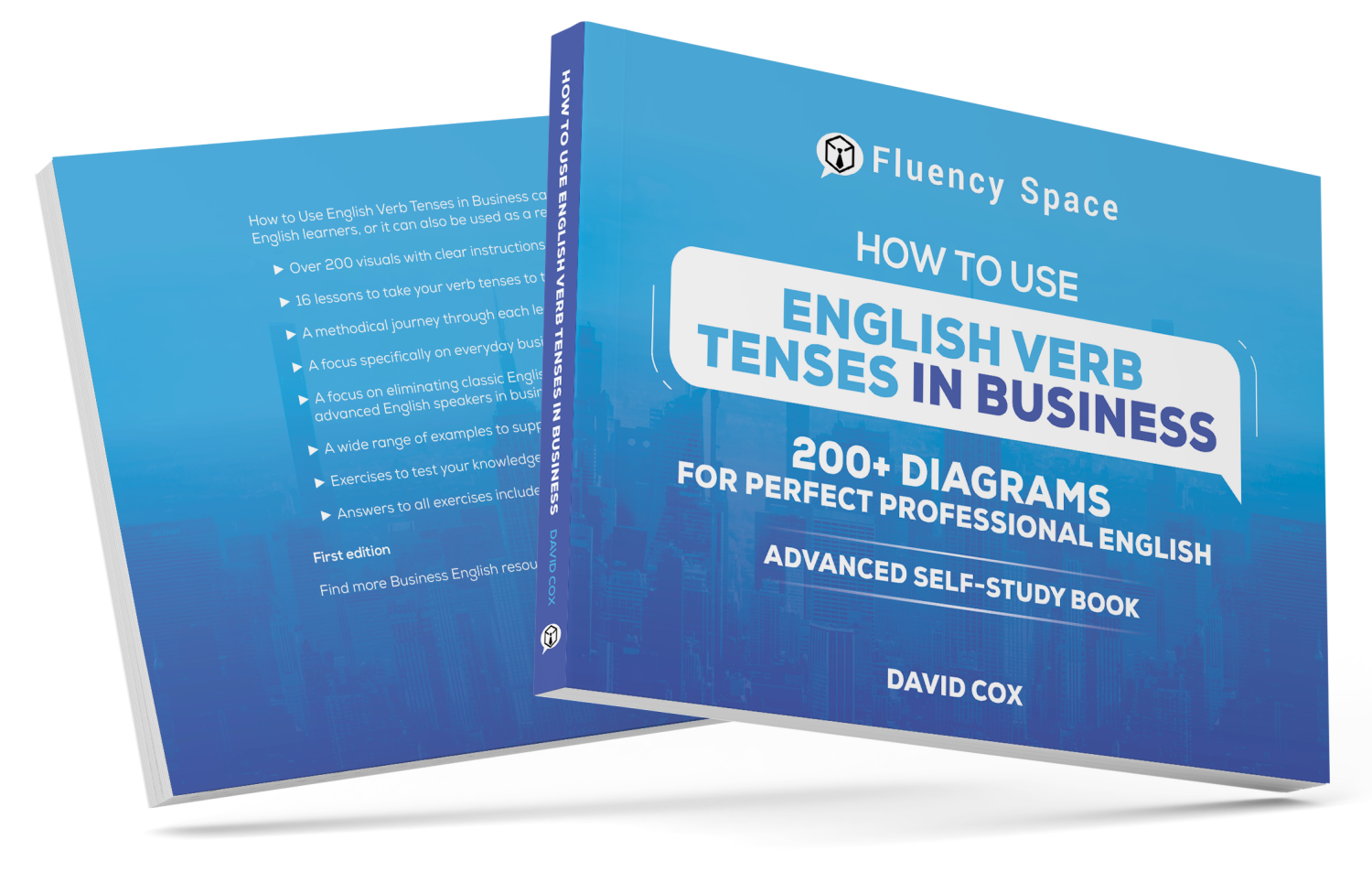
Your advanced English training center. Over 600 pages of PDFs. over 250 diagrams and hundreds of exercises. 32 Vocabulary lessons covering the 400 most important phrases for advanced Business, 2x monthly Adapted Business English texts, 2x monthly YouTube listening lessons, 'How to Use English Verb Tenses in Business' textbook.
All of this and much more for only $5.99 per month. Cancel anytime!