The Greatest Product Pitch of All Time? The Reggae Reggae Sauce Story
A C1 business English lesson on pitching, authenticity and investment.
In 2007, a reggae musician walked onto a TV business show with a guitar and a homemade Jamaican sauce, and sang his pitch to a panel of millionaire investors. His figures were wrong and his projections were wide of the mark, yet he left with £50,000 investment from which he built a branding empire. This lesson uses that story to build sophisticated business English vocabulary and critical thinking for executives and senior professionals.
What business leaders can learn from the story
Levi Roots' pitch shows that investors do not only back numbers — they back people, and a credible personal story can carry a proposal further than a flawless spreadsheet. This C1 business English lesson explores pitching, negotiation and the language of investment and brand building — essential vocabulary for senior professionals presenting ideas, securing buy-in and communicating with conviction at the highest level.
Download Lesson
Full lesson including all exercises, answer key and gap-fill. Print-ready format.
Warm up - Before starting the Business English lesson, discuss these with a partner or your teacher.
Have you ever tried Jamaican cuisine before? What are your thoughts on it?
What are the most popular international cuisines in your country?
Have you ever had to pitch to investors or potential clients before in your role?
What do you think makes a good sales pitch or business pitch?
Business English Lesson Text - Underlined phrases will appear in the exercises
Success stories often start in unexpected places, and Levi Roots is the perfect example. From cooking his Jamaican sauce in his home kitchen to acquiring a big investment, his fame shows that even the most unlikely entrepreneur can build an empire. Arriving in the UK from Jamaica at just 11 years old with no money, Levi Roots is now worth approximately $30 million, overcoming 16 years of rejection to reach the top.
In his early days, Roots became a reggae musician and was well-known in the community for his tasty homemade sauce. Despite the sauce’s popularity, Roots could only produce so much from his small home kitchen, and he had no formal business knowledge. He approached several banks to invest in the product, but he was always rejected.
But in 2006, his luck changed. Roots was seen by a television producer at a food trade show, who invited him to appear on the BBC’s ”Dragons’ Den”, a UK television series where aspiring entrepreneurs pitch their business ideas to a group (or ‘panel’) of wealthy
investors—known as "Dragons"—in hopes of acquiring funding.

This scary group of investors silently watches the aspiring entrepreneurs intensely as they demonstrate their ability to grow their business and provide a big return on investment. The Dragons often dig deep into the financial projections and business models, expecting entrepreneurs to have their figures on point. Negotiations can be very intensive, with deals made or lost in just a few minutes. At any moment, a Dragon can say they are ‘out’, but if they are ‘in’, they negotiate against other interested Dragons to get the best deal for themselves.
In one of the bravest moves in UK TV history, Roots entered the room with his guitar, and to the complete surprise of the investors, started singing. The Dragons were immediately sceptical, but then Roots’ charm and songwriting started to resonate with them, forcing a smile from some of the more serious investors. The Dragons still criticised his pitch, noticing that some of his projected growth figures were way wide of the mark. Roots also said he had an order for 2.5 million litres of the sauce, which in reality was only 2500 litres, even more wide of the mark.
Despite being sceptical at the start, two investors named Peter Jones and Richard Farleigh saw the potential in the product. Attracted by Levi’s compelling personality and authenticity, they invested £50,000 in return for 40% of his company.
With new investment, Reggae Reggae Sauce became a household name, and demand increased rapidly across the UK. Roots capitalized on Peter Jones’ extensive business experience and influential retail contacts to get a deal with a major UK supermarket, gaining a foothold in the UK food sector.
Roots then sold over a million bottles in his first year, but it didn’t stop there. With the support of Peter Jones, the Reggae Reggae brand introduced over 50 Caribbean-inspired products. He then capitalized on his growing personal brand by publishing cookbooks, opening restaurants, and even making television appearances.
So apart from taking opportunities and getting out of your comfort zone, what else can aspiring entrepreneurs learn from Roots’ story? Maybe the answer lies in authenticity. Staying true to his personality, and sharing his culture and story instead of following business norms was a compelling asset in building a brand that resonated with both investors and people.
“I thought I was quite rubbish in the Dragons’ Den, myself. But even if you are rubbish, you’ve got to be you, because people are invested in whoever you are. Perhaps if I had got all my numbers right and I was all business-like, I wouldn’t have got the investment.”
16
Years of rejection that Levi Roots faced before success
£50 000
Investment that Levi Roots' pitch was able to acquire
40%
of the company that investors own
£30m
Levi Roots' estimated net worth today
Business English Lesson Vocabulary - Key Words from Context
Match each word to its definition and complete the example sentences. Full Business English lesson with the exercise can be found in the downloadable PDF.
Comprehension - Answer these questions in your own words
QUESTION 1
Why was Levi Roots unable to capitalize on his sauce’s popularity in the days before he
went on Dragon’s Den?
QUESTION 2
List some reasons for which appearing on TV’s Dragon’s Den could make an aspiring
entrepreneur nervous.
QUESTION 3
TRUE OR FALSE - Aspiring entrepreneurs are expected to talk about the current state of
their company’s finances on Dragon’s Den.
QUESTION 4
TRUE OR FALSE - If a Dragon is interested in a pitch, they are guaranteed a stake in the
company.
QUESTION 5
TRUE OR FALSE - All Dragons liked Levi Roots’ honesty in the den.
QUESTION 6
TRUE OR FALSE - Levi Roots managed to change the opinions of some of the dragons in
the den.
QUESTION 7
What 3 lessons can entrepreneurs learn from Levi Roots’ story?
QUESTION 8
Based on these lessons, what do you think the phrase ‘stay true to’ means?
QUESTION 9
What does Levi Roots think would have decreased his chances of acquiring investment
in the den?
Business English Lesson Vocabulary in a New Context - Fill in the gaps with words from the vocabulary section
Starting a New Business
After being rejected for an excellent job at the final stage of long interview process last year, I decided that it was finally time to start my own business. I had always (1) ___________________ to start my own business, and I thought that this would be the best
way to (2) ___________________ the disappointment from the interview. Unfortunately, I had no financial support from family or friends, because they were all a little (3) ___________________ about the idea, so I knew that I had to (4) ___________________ all of the skills, knowledge and investment for myself.
I carried out (5) ___________________ research into the best platforms for building my own site and posting (6) ___________________ content for social media that would hold the attention of my target audience. At the beginning, my content didn’t really (7) ___________________ with my audience because my targeting was slightly ___________________ . However, after testing my content (8) ___________________ across different audiences and locations, I finally (9) ___________________ my first clients.
After I had (10) ___________________ in the market with my first few clients, I was able to (11) ___________________ on my popularity by obtaining positive reviews to put onto my site. I then started to (12) ___________________ clients very quickly, and I now make much more than I would have done if I had got the job I applied for 1 year earlier!
Discussion - Business insights and takeaways from the text
Levi Roots' figures were wrong, yet two Dragons still invested. What do you think this suggests about how investors actually make decisions?
The article suggests that Peter Jones' retail contacts potentially mattered even more than the money he brought to the table. How important are contacts, connections and networking in your industry?
The article argues that authenticity made the brand. Can authenticity be managed strategically, or does it stop being authentic once it becomes a tactic? How do companies you know balance a founder's personality with the need for professional, consistent messaging?
Levi Roots spent 16 years getting rejected by banks before television gave him a platform. What does this say about determination and managing rejection? Is there a point at which someone should give up?
For another branding masterclass, check out our advanced Business English lesson on Red Bull's brand based on extreme risk.
For more marketing sensations, take a look at our lesson on extreme marketing during the 2026 football world cup.
Have you enjoyed this Business English Lesson on industry disruption and market strategy? Explore more free C1 lessons in our Leadership and Brand & Strategy categories.
Lesson Creator

David Cox
I am a passionate linguist with over 14 years' experience with high level professionals. In this lesson you will learn:
Want to work through this lesson with me?
Advanced Premium Course
The Fluency Space CEO Package
Enjoyed this lesson? Take your business English further with a structured 3-month programme designed specifically for senior executives.
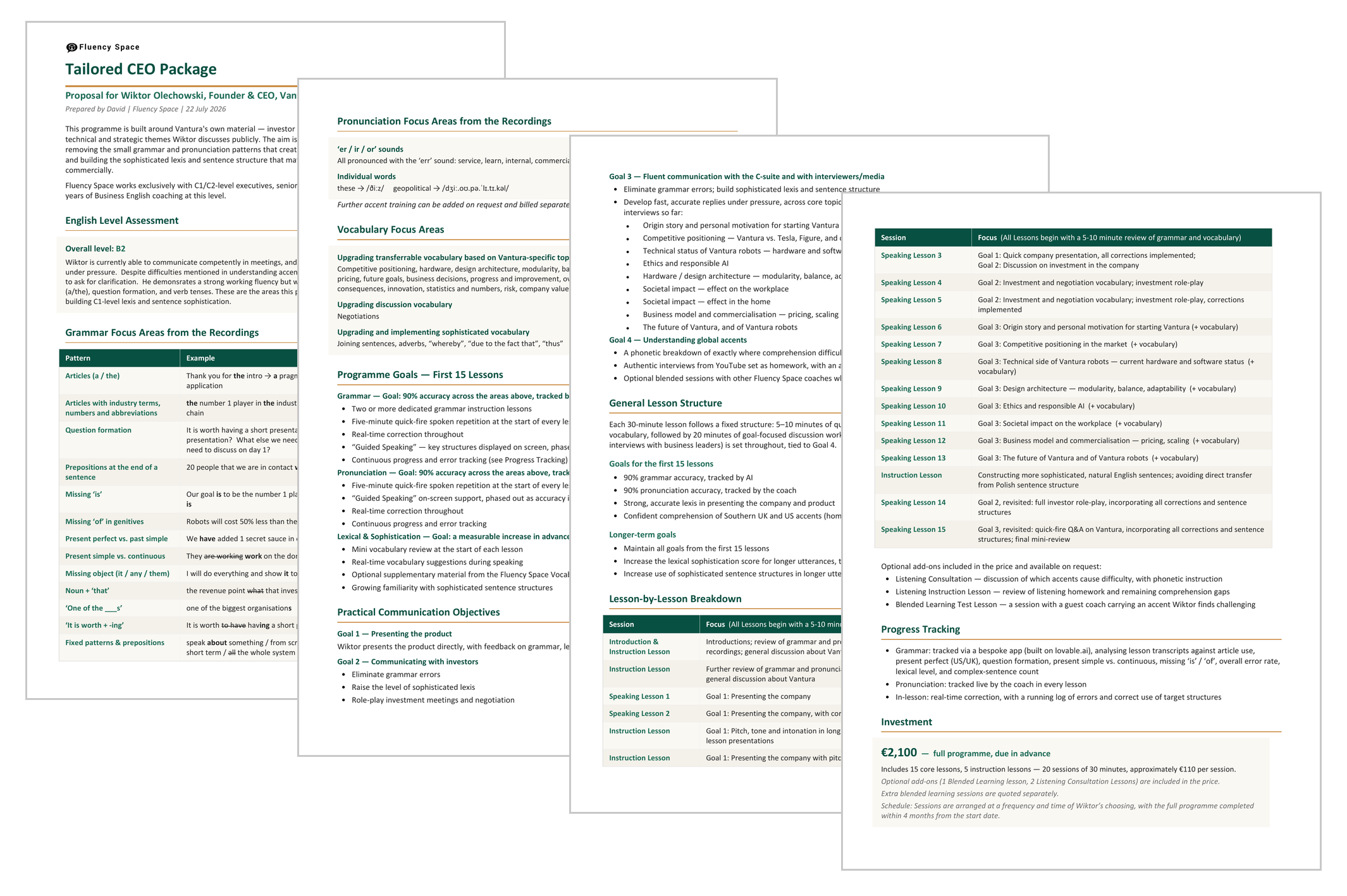
IN-DEPTH PROPOSAL BUILT WITH CARE
A Course Built around you
After your full English audit, we do a deep dive into your company, your role and your real communication goals - We then build a fully tailored program around them and send a proposal within 3 working days.

© Copyright Fluency Space. All Rights Reserved
OptimizePress Popup Overlay

the fluency space acadademy
Be one of the first 50 to join and get a huge discount!

Your advanced English training center. Over 600 pages of PDFs. over 250 diagrams and hundreds of exercises. 32 Vocabulary lessons covering the 400 most important phrases for advanced Business, 2x monthly Adapted Business English texts, 2x monthly YouTube listening lessons, 'How to Use English Verb Tenses in Business' textbook.
All of this and much more for only $5.99 per month. Cancel anytime!