Raising a Glass to England's Unlikely Boom
A C1 business English lesson on climate change, disruption and market strategy
In June 2026, an English sparkling wine beat almost 17,000 competitors from 58 countries to take the top prize at the world's largest wine competition — for the second year running. Behind the trophy, a €480 million shift in French investment was already under way, as Champagne's own producers began quietly buying land in Kent and Hampshire. This lesson uses that story to build sophisticated business English vocabulary and critical thinking for executives and senior professionals.
What business leaders can learn from the story
England's wine boom shows how real disruption happens — not through a single dramatic announcement or event, but through a slow shift in underlying conditions that major players can either ignore or adapt early. This C1 business English lesson explores market disruption, competitive response and the language of risk and opportunity — essential vocabulary for senior professionals discussing industry change at the highest level.
This lesson was inspired by the Decanter Wine Awards: https://www.decanter.com/decanter-awards/success-for-english-wine-at-dwwa-2026/
Download Lesson
Full lesson including all exercises, answer key and gap-fill. Print-ready format.
Warm up - Before starting the Business English lesson, discuss these with a partner or your teacher.
Is wine produced in your country?
What are the most prestigious wine-producing nations from what you have heard?
What are your thoughts on English food and drink?
Can you imagine English wine ever becoming popular?
Business English Lesson Text - Underlined phrases will appear in the exercises
It is fair to say that Britain's food and drink industry has never really inspired the world. However, the 2026 Decanter World Wine Awards have handed them an unexpected argument. Could English wine be about to rewrite that reputation —
and is the traditional wine map itself on the verge of a complete overhaul?
A Win at the World's Largest Wine Competition
At the Decanter World Wine Awards 2026, the world's largest wine competition, an English sparkling wine surprised everyone by winning "Best in Show." It was the second year running that England had claimed the top prize, and this time the prize went to a Balfour Blanc de Blancs from Kent.
Approximately 17,000 wines from over 58 countries were tested by 245 experts. Only fifty wines — 0.3% of entries — were awarded Best in Show. Furthermore, the success didn't stop there for England: four other wines all won medals of their own. One regional chairperson of the competition claimed that English sparkling wine was even on a par with French Champagne. A separate Decanter tasting of 66 English sparkling wines rated eleven of them as outstanding.
So could England be gaining a foothold on the international wine stage? Decanter claims that global standards in wine are improving every year, and tradition in winemaking holds a lot of sway with experts and consumers when choosing which bottle to buy. However, for a country better known for its bland cuisine, England has certainly caught the world's attention.
England's Wine Industry is Growing Fast
The numbers point to a huge boom on the English wine scene. England has stepped up production by 55% in 2025, producing around 16.5 million bottles — nearly 3 times what the country produced in 2017. Vineyards are now prevalent across the whole of the UK, with over 1,100 registered, making the UK the fastest growing wine region on the planet.
This is no longer just a hobby for rich landowners who can afford to plough money into something very likely to flop. The industry now employs roughly 10,000 people, and forecasts point to 25–29 million bottles a year by 2032, with English and Welsh wine potentially worth £1bn by 2040.
Why Climate Change Is Reshaping Where Wine Can Be Made
It is widely accepted that this boom can be attributed to a warming climate. Southern England's soils belong to the same ancient formation as the Champagne region in France, so the soils themselves have always been on a par with France in terms of quality — but they were missing the weather. Grapes thrive in warm, sunny days and cool nights that preserve acidity, so for anyone who has ever visited Britain, it will come as no surprise to hear that the warm, sunny days are the part that has been missing.
That is now changing rapidly: average temperatures in southern England have risen to levels similar to Champagne's climate in the 1980s, while the island landscape and closeness to the sea allow for long growing seasons and cool nights that
sparkling wine depends on.
Champagne's Loss Is England's Gain
The rising temperatures facilitating England's wine production are unfortunately inhibiting production in the Champagne region itself. 2021 brought devastating spring frosts, which are becoming more prevalent across the region, and hail destroys huge areas on a yearly basis. In 2026, Burgundy and Champagne have suffered heatwaves of up to 44°C, leaving harvests on the verge of failure. Excessive heat causes grapevines to shut down photosynthesis and dries out the soil, so grapes lose acidity and gain excessive sugar, leading to higher, unbalanced alcohol levels. Climate models suggest that by 2050, up to 85% of Champagne's current vineyard land could become unsuitable for its traditional grape varieties.
This has led to some French wine producers taking extreme measures and offering a further vote of confidence to English wine. Taittinger, one of French Champagne's grandest houses, has ploughed £17 million into opening vineyards in southern England, launching its English label Domaine Evremond in 2024. Another sophisticated label, Pommery, has spent eight years gaining a foothold on the south coast of England, progressing from buying grapes, to buying land, to planting its own grapevines. Since 2018, nearly £480 million has flowed into English wine.
The Future of the Global Wine Map
England's rise is not an isolated story. As climate conditions shift, other unlikely regions are on the rise, from China to Wales and even Scandinavia. Whether any of
them can translate good reviews into lasting reputations is another question. Wine remains an industry where history and prestige count for as much as what is in the glass, and England's sparkling wines can never legally use the Champagne name
that still holds most sway in the category. So next time you are searching for a good bottle, you know where to look — maybe even pair it with a nice plate of fish
and chips.
0.3%
Proportion of nearly 17,000 wines awarded Best in Show
55%
Rise in English wine production in 2025 alone
1,100+
Registered vineyards now in the UK
16.5m
Bottles of wine produced in UK in 2025
Business English Lesson Vocabulary - Key Words from Context
Match each word to its definition and complete the example sentences. Full Business English lesson with the exercise can be found in the downloadable PDF.
Comprehension - Answer these questions in your own words
QUESTION 1
According to the article, why is England's Best in Show win at the DWWA 2026 considered statistically significant?
QUESTION 2
What role does climate change play in both England's rise and Champagne's difficulties?
QUESTION 3
How have French Champagne houses responded to changing conditions, and what does this suggest about the future?
QUESTION 4
According to the article, what limits England's ability to fully capitalise on its improving wine quality?
Business English Lesson Vocabulary in a New Context - Fill in the gaps with words from the vocabulary section
Entering into a New Market
"Thank you all for coming. I'll be direct: our expansion into the Nordic market needs a complete (1) ______________________, because something is not working. When we launched, we were confident we could quickly (2) ______________________ there due to our reputation in other regions. Six months in, though, growth has been slower than we projected, and the feedback we're getting suggests that loyalty to established local brands still (3) ______________________ with consumers — people are choosing what they already trust, not what's new. It isn't all bad news. We did (4) ______________________ our marketing spend significantly last quarter, and to be fair, the early quality issues are now far less (5) ______________________ than they were. Still, we (6) ______________________ nearly half a million into setting up the regional office, and I'm not willing to watch that investment (7) ______________________ without a proper plan in place. Looking at the data more closely, much of the slowdown can be (8) ______________________ something fairly simple: people just don't know who we are yet. That's a solvable problem. Stronger local partnerships, in my view, would go a long way to (9) ______________________ faster brand recognition, and that's where I think we should focus our energy next."
Discussion - Business insights and takeaways from the text
Do you think traditional industries can survive without adapting to change, or is disruption inevitable?
"Prestige matters more than quality in many industries." To what extent do you agree or disagree with this statement?
Could you ever imagine yourself enjoying a Chinese or Scandinavian wine?
If the wine map is likely to shift, to what extent do you think that the food map might shift as well? Is there a possibility that agricultural challenges could change the face of the food industry or national cuisines?
For more climate discussion, check out our lesson on the most underrated invention in economic history.
From the epic success of English wine to the epic failure of Mark Zuckerberg's Metaverse. Check out another C1 English lesson.
Have you enjoyed this Business English Lesson on industry disruption and market strategy? Explore more free C1 lessons in our Leadership and Brand & Strategy categories.
Lesson Creator

David Cox
I am a passionate linguist with over 14 years' experience with high level professionals. In this lesson you will learn:
Want to work through this lesson with me?
Advanced Premium Course
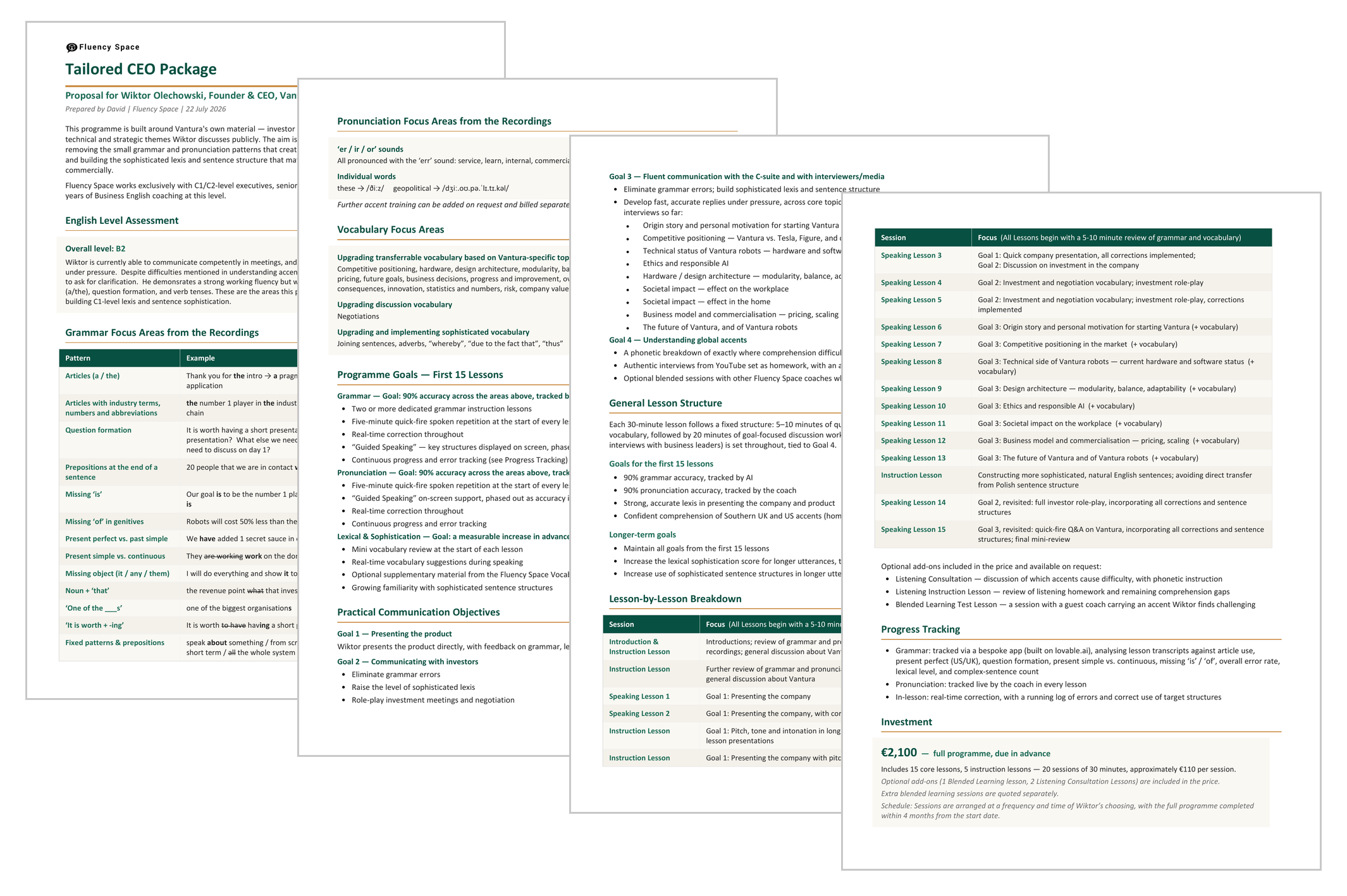
The Fluency Space CEO Package
Enjoyed this lesson? Take your business English further with a structured 3-month programme designed specifically for senior executives.
IN-DEPTH PROPOSAL BUILT WITH CARE
A Course Built around you
After your full English audit, we do a deep dive into your company, your role and your real communication goals - We then build a fully tailored program around them and send a proposal within 3 working days.

© Copyright Fluency Space. All Rights Reserved
OptimizePress Popup Overlay
the fluency space acadademy
Be one of the first 50 to join and get a huge discount!

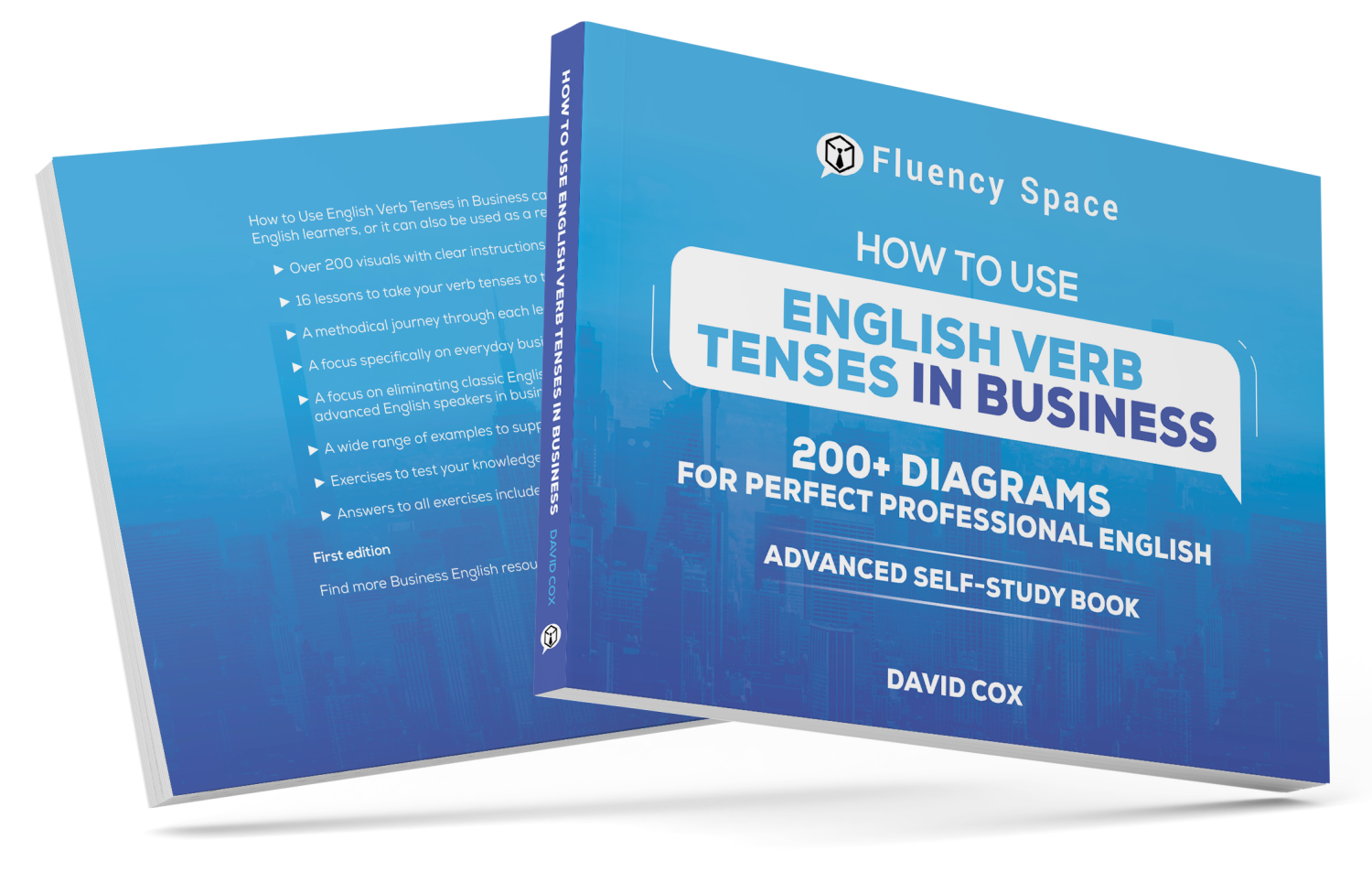
Your advanced English training center. Over 600 pages of PDFs. over 250 diagrams and hundreds of exercises. 32 Vocabulary lessons covering the 400 most important phrases for advanced Business, 2x monthly Adapted Business English texts, 2x monthly YouTube listening lessons, 'How to Use English Verb Tenses in Business' textbook.
All of this and much more for only $5.99 per month. Cancel anytime!