The Most Underrated Invention in Economic History
A C1 business English lesson on climate, productivity and global competitiveness
When Lee Kuan Yew was asked what had turned Singapore from a resource-poor island into one of the world's wealthiest nations, he gave a one-word answer that caught most people off guard: air-conditioning. This lesson looks at that claim through the economics of the 20th century, Europe's record-breaking 2026 heatwaves, and Mario Draghi's recent report on EU competitiveness — and asks what it all means for the executives and senior professionals trying to lead through a warming world.
What business leaders can learn from the story
This analysis is really a story about overlooked factors that determine where growth is possible. For decades, economic development was contained to areas with temperate climates, so was this by accident? Research shows that heat genuinely stifles productivity, sleep, and cognitive performance at significant rates. As Europe contends with soaring summer temperatures, the lesson from Singapore's example is that the countries who design deliberately around their environment tend to be the ones who get ahead. This C1 business English lesson explores climate adaptation, competitive strategy, and the language of risk and productivity — vocabulary that senior professionals need when discussing long-term business resilience at the highest level.
Download Lesson
Full lesson including all exercises, answer key and gap-fill. Print-ready format.
Warm up - Before starting the Business English lesson, discuss these with a partner or your teacher.
How well does your office deal with extreme heat?
What effect do you think hot weather has on your own productivity?
Business English Lesson Text - Underlined phrases will appear in the exercises
In 1965, Singapore became an independent nation with no natural resources, a tiny domestic market, and a tropical climate that made outdoor work extremely brutal during daytime hours. Within a single generation, it became one of the richest countries on earth. When Lee Kuan Yew, Singapore's first prime minister, was asked in 2009 what had enabled this transformation, many expected a lecture on trade policy or education reform, but they were caught off guard by the simplicity of his answer.
He pointed to air conditioning. "It changed the nature of civilisation by making development possible in the tropics," he said. "The first thing I did upon becoming prime minister was to install air conditioners in buildings where the civil service worked. This was key to public efficiency."
It may seem strange to claim that a country's rapid growth stems from one simple appliance, but the historical evidence supports him. When air conditioning spread through American offices in the 1950s and 60s, one study found that employees who moved into cooled buildings saw their productivity rise by 24 per cent.
Has climate in fact shaped economic growth over the last century?
Before air-conditioning, the cities that spearheaded modern economic development all shared a mild climate — London, Paris, New York, Tokyo. However, the fastest-growing megacities today have to contend with much hotter conditions: Bangkok, Lagos, Jakarta, Dubai. What changed was not geography but the ability to control indoor temperature.
In summer 2026, Europe is breaking all kinds of temperature records. The continent is struggling to deal with what appears to be a new normal of blazing hot summers and soaring temperatures. Only around 20 per cent of European homes have air conditioning, against 80 to 90 per cent in the United States — a statistic I can certainly agree with, having spent most of the summer so far complaining about my flat. Europe may have to act fast, as its average temperature is already 1.5°C above 1960s levels, soaring faster than the global average.
Temperature and Productivity - What the data tells us
Research from the Financial Times suggests that hot temperatures can take their toll on sleep quality, which declines rapidly after night temperatures climb past 23°C. Furthermore, stifling temperatures in the classroom often stifle students' performance and lead to consistently lower test scores on hot days. Office productivity follows a similar curve, peaking around 21°C and deteriorating steadily from there — a curve which, if you're reading this from an air-conditioned office in the US, may explain why your European counterparts seem so slow off the mark in summer!
Europe's Competitiveness Problem
Much has been said recently about Europe potentially falling behind in terms of competitiveness. In a recent report by Mario Draghi, former President of the European Central Bank, he pointed out a widening productivity gap between the
EU and the US, a near-total absence of new European companies reaching the scale of America's tech giants.
He proposed solutions around breaking down innovation barriers, attracting investment, and fostering education. He did not mention air conditioning, but if heat genuinely stifles cognitive performance, sleep, and output at the rates the research suggests, then a continent that is so slow off the mark in adopting cooling technology is putting itself at a severe disadvantage.
A Balanced View
None of this means air conditioning is a simple fix. Thought leaders in sustainable urban design point out that AC-dependent societies can lose something valuable: American cities built around climate control often have a much less vibrant street life than their southern European counterparts, and people who become accustomed to constant 22°C indoor environments suffer more when they step outside. It could also be said that air-conditioning could foster inequality, as those who can't afford it would be at a real disadvantage.
The more honest conclusion is that air conditioning works best as one part of a broader adaptation strategy rather than a silver bullet capable of solving every problem. Cities in hot climates that retain vibrant public life — Chengdu, Barcelona — tend to pair cooling technology with shaded public spaces, trees, and a working day structured around the heat, rather than relying on AC alone to compensate for poor urban design. For Europe, the lesson from Singapore's example is not simply "install more air conditioners," though in the short term that would help. It is that comfort, in a warming world, is an economic input rather than a luxury — and that the countries who design deliberately around their climate, as Lee Kuan Yew did, tend to be the ones who get ahead.
24%
Productivity rise after US offices first got air-conditioning
20%
homes in Europe which currently have air-conditioning
90%
homes in the USA which currently have air-conditioning
1.5°C
Europe's current temperature rise above 1906s levels
Business English Lesson Vocabulary - Key Words from Context
Match each word to its definition and complete the example sentences. Full Business English lesson with the exercise can be found in the downloadable PDF.
Comprehension - Answer these questions in your own words
QUESTION 1
According to Lee Kuan Yew, what role did air conditioning play in Singapore's development?
QUESTION 2
How has the geography of the world's fastest-growing cities changed over time, and why?
QUESTION 3
What connection does the article draw between this summer's heatwaves and Mario Draghi's report on EU competitiveness?
QUESTION 4
What criticisms are raised against relying too heavily on air conditioning?
Business English Lesson Vocabulary in a New Context - Fill in the gaps with words from the vocabulary section
A Difficult Meeting about Office Conditions
"Thank you all for coming. I want to address something directly: our European offices have been (1) ___________________ rising temperatures with no proper air conditioning, and it's clearly started to (2) ___________________ on staff wellbeing and output. Several of you have (3) ___________________ that our American (4) ___________________ simply don't face this issue, since most US offices are cooled as standard. I'll admit we were (5) ___________________ by how quickly this became a problem — energy costs were (6) last year, so we delayed the investment, and that delay (7) ___________________ from our reluctance to spend during a difficult quarter. I don't think a single new air conditioning unit is (8) ___________________ though — we also need to (9) ___________________ a culture of flexible working hours during heatwaves. We were (10) ___________________ on this compared to our competitors, but I want facilities to (11) ___________________ this project from next quarter, so we don't (12) ___________________ creativity and focus any further than we already have."
Discussion - Business insights and takeaways from the text
Do you think your country invests enough in adapting to rising temperatures? Why or why not?
"Comfort is an economic input rather than a luxury." To what extent do you agree or disagree with this statement?
What other inventions, in your view, have quietly reshaped where and how people are able to work?
For more on productivity, check out our Business English lesson on the 80/20 principle.
Investing in air-conditioning will be a huge expense for Europe. Check out our lesson on the sunk cost fallacy to work out if it is really worth it! Alternatively, check out some more European homes which certainly lack air-conditioning in our upper-intermediate Business English lesson on buying a house in Italy for just €1.
Have you enjoyed this Business English Lesson on strategy, productivity and global affairs? Explore more free C1 lessons in our Strategy and Global Affairs categories.
Lesson Creator

David Cox
I am a passionate linguist with over 14 years' experience with high level professionals. In this lesson you will learn:
Want to work through this lesson with me?
Advanced Premium Course
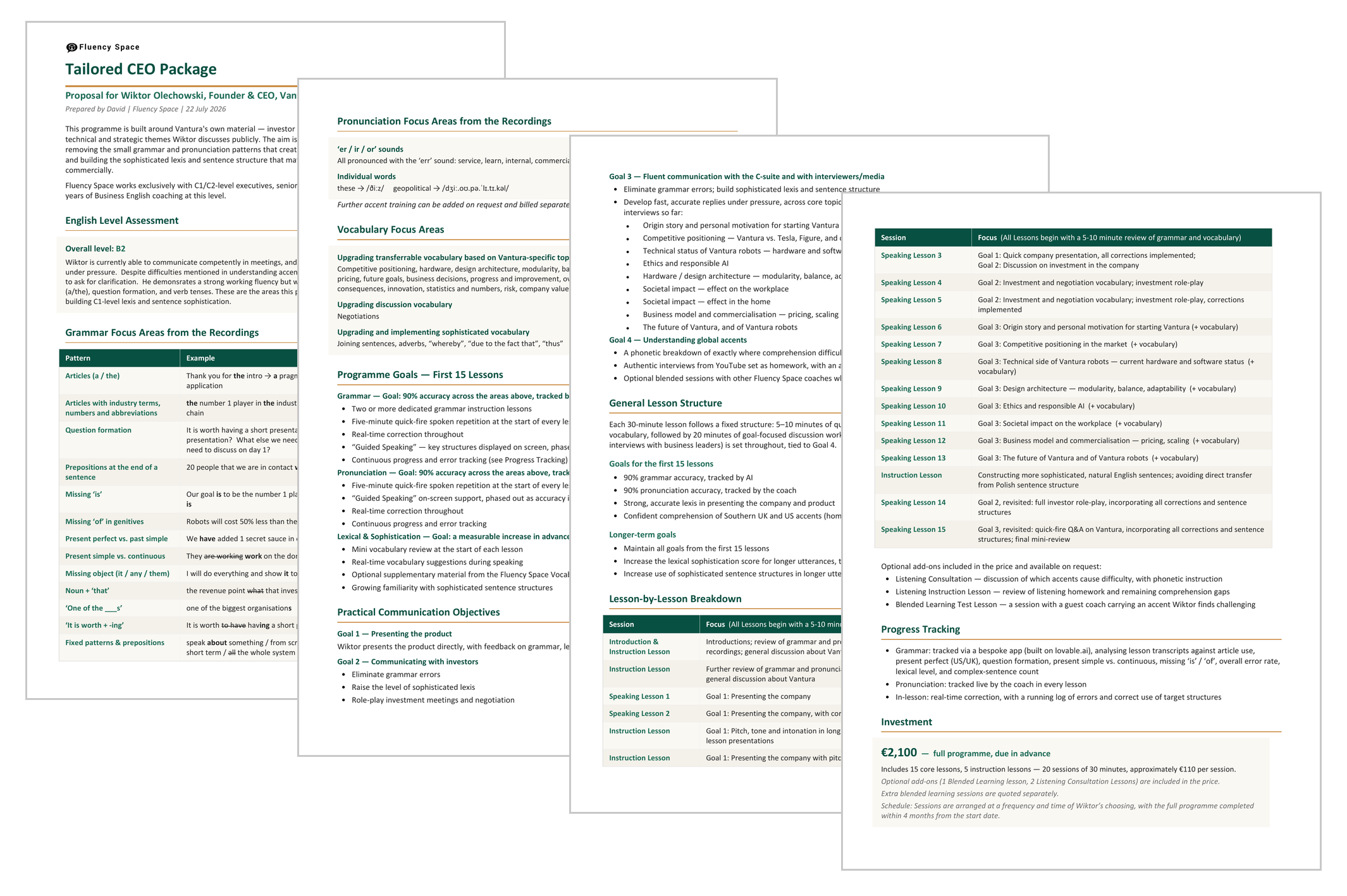
The Fluency Space CEO Package
Enjoyed this lesson? Take your business English further with a structured 3-month programme designed specifically for senior executives.
IN-DEPTH PROPOSAL BUILT WITH CARE
A Course Built around you
After your full English audit, we do a deep dive into your company, your role and your real communication goals - We then build a fully tailored program around them and send a proposal within 3 working days.

© Copyright Fluency Space. All Rights Reserved
OptimizePress Popup Overlay
the fluency space acadademy
Be one of the first 50 to join and get a huge discount!

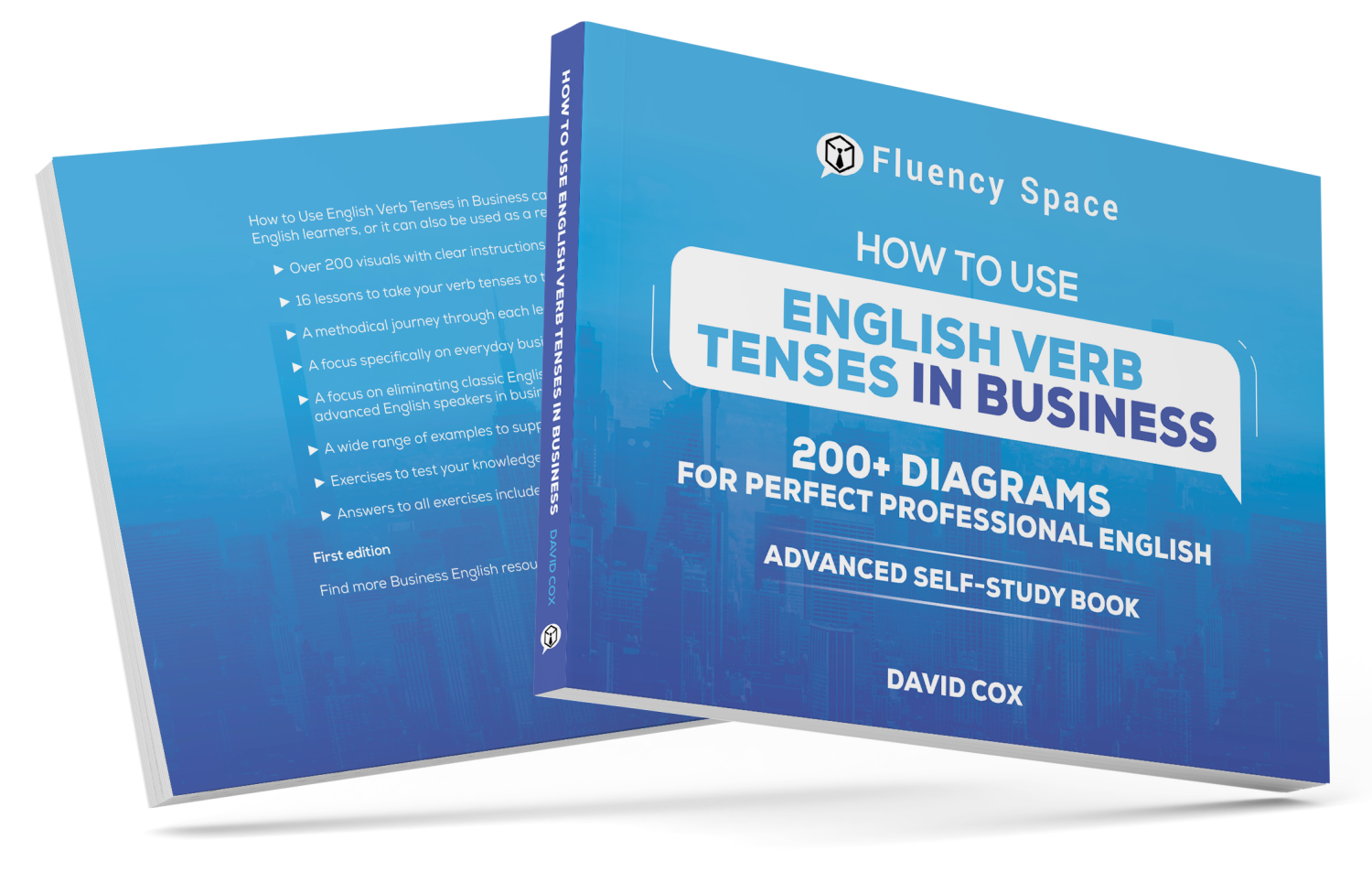
Your advanced English training center. Over 600 pages of PDFs. over 250 diagrams and hundreds of exercises. 32 Vocabulary lessons covering the 400 most important phrases for advanced Business, 2x monthly Adapted Business English texts, 2x monthly YouTube listening lessons, 'How to Use English Verb Tenses in Business' textbook.
All of this and much more for only $5.99 per month. Cancel anytime!