A House in Italy for €1: Is it too Good to be True?
A B2 business English lesson on investment, risk and hidden costs.
In 2008, the mayor of a shrinking Sicilian town began offering abandoned houses to buyers from abroad for almost nothing, and the idea spread across Italy. Today, dozens of towns advertise homes for as little as €1, but the headline price rarely tells the whole story... This lesson uses this concept to build practical business English vocabulary and critical thinking for professionals who need to weigh up opportunities, costs and risks.
What business leaders can learn from the story
The €1 house scheme shows that an attractive headline price is only the starting point, and that the real cost of an investment may lie in what comes after the purchase. This B2 business English lesson provides essential vocabulary for professionals discussing investments, negotiating with stakeholders and making the case for or against a new venture.
Download Lesson
Full lesson including all exercises, answer key and gap-fill. Print-ready format.
Warm up - Before starting the Business English lesson, discuss these with a partner or your teacher.
Have property prices in your city risen in recent years? How has this affected people you know?
What do you think are the main advantages and disadvantages of living in a small town?
What would you consider to be the advantages and disadvantages of buying a house vs. renting a house?
Would you ever consider moving to a small
village in another country?
Business English Lesson Text - Underlined phrases will appear in the exercises
With property prices soaring in many parts of the world, it may be of some comfort to know that somewhere it is possible to buy a house for as little as €1.
You might assume that such cheap homes are located in really unattractive areas, but that is far from the truth. In fact, many of them are beautiful villages in rural Italy. Sedini is a picture-perfect hilltop town of white-stone houses with incredible views over a peaceful valley, close to the beach. Montieri is a historic pre-Roman town surrounded by forest, popular with cyclists, hikers and mountain bikers.
Where does the idea come from?
The idea is generally credited to an Italian art critic named Vittorio Sgarbi. In 2008 he became mayor of a small town called Salemi, which appeared to be shrinking fast, so he started offering Salemi’s empty, crumbling buildings to buyers from abroad almost for free. His scheme drew new people to the town, boosted local construction work, filled empty houses and brought restaurants, bars and cultural life back to Salemi.
The scheme soon spread to other towns in desperate need of a population boost. Many rural towns in Italy were, and still are, suffering from severe population decline and crumbling houses. Italy’s population of about 60 million is forecast to fall by 2 million by 2040, which is often attributed to an ageing population, record-low birth rates, and young people seeking work in bigger cities. Population decline has already left nearly 30% of Italian homes unoccupied with no-one to fill them.
Do they really cost €1?
Before you start booking your flights to Italy ready to spend your hard-earned euro, there are many factors to be wary of. Houses often go to an auction, where €1 is only the starting price, with many of the more popular homes selling for over €10 000. As the homes are old, rustic (simple, country-style) buildings, buyers are required to renovate a purchased property within three years, a huge task considering many homes have no stable floors, damaged walls, dangerous stairs and damp.
Plus there is endless paperwork, as anyone who has dealt with Italian bureaucracy will know, as well as legal fees adding up to €2500, so if you’re hoping to pay with a euro you found behind the sofa, it may be advisable to prepare a contingency budget.
So has anyone really bought a house for €1 and lived the Italian dream?
In a recent YouTube documentary, an Australian man named Samir found himself in Mussomeli completely by accident during a train strike. He came across a local painter who showed him a house which had been empty for 57 years. At first glance, the house looked beyond repair, with crumbling walls, floors and a few dead pigeons inside, but Samir wasn’t put off and saw an opportunity. He decided to purchase four houses, two of them for €1, and paid around €8000 in total before renovating them himself.
Not all stories are as successful as Samir’s. Some projects have houses in such a poor state that they are failing to draw any interest, and as Europe’s climate is heating up faster than other parts of the world, some potential buyers have been put off by Italy’s recent summer temperatures.
For the towns themselves, the benefits can be significant. Montieri has sold about 70 houses and gained roughly 30 new businesses, and tourism is increasing. There is, however, the danger that the arrival of too many foreigners may cause such towns to lose their character and heritage. Sambuca has been nicknamed Sicily’s “Little America”, but elderly men in the town say the newcomers respect its heritage and have brought it back to life. In Sedini, some long-term residents remain wary of outsiders, but the alternative is potentially worse. As one writer put it, the real choice facing these towns is whether to open their doors and risk changing, or keep them shut and slowly disappear.
Business English Lesson Vocabulary - Key Words from Context
Match each word to its definition and complete the example sentences. Full Business English lesson with the exercise can be found in the downloadable PDF.
Comprehension - Answer these questions in your own words
QUESTION 1
According to the text, who is credited with starting the €1 house scheme, and what effect did it have on Salemi?
QUESTION 2
What reasons does the article give for Italy’s falling population?
QUESTION 3
According to the article, why might a €1 house end up costing much more than €1?
QUESTION 4
What danger do newcomers pose to these towns, and how do elderly residents of Sambuca feel about them?
Business English Lesson Vocabulary in a New Context - Fill in the gaps with words from the vocabulary section
Relocating to Sicily
Elena (Managing Director):
Mark, I think it’s time we looked seriously at the property in Sicily. Office rents in Milan have (1) ____________________ over the last two years, and a converted building in a quieter town could (2) ____________________ clients who want a change of scene. While I was researching, I (3) ____________________ several towns that offer tax incentives to businesses that are (4) ____________________ to relocate.
Mark (Finance Director):
I like the idea, but we should (5) ____________________ moving too fast. I’d (6) ____________________ that a building that old hides serious structural problems, and renovation work, legal fees and paperwork could easily (7) ____________________ far more than the purchase price. If we go ahead, I’d want a (8) ____________________ budget of at least 20% before we sign anything.
Discussion - Business insights and takeaways from the text
Would you consider buying a €1 house in Italy, either as a home or as a business investment? What would attract you to the idea, and what might put you off?
The article suggests that Peter Jones' retail contacts potentially mattered even more than the money he brought to the table. How important are contacts, connections and networking in your industry?
Is it better for a declining town to welcome newcomers and risk losing its character, or to protect its traditions and risk slowly disappearing?
What is the situation with regard to the birth rate and the ageing population in your country? What are the reasons for such trends in your opinion, and should governments aim to reverse them?
If Italy doesn't take your fancy as a place to live, how about some further picturesque towns and vineyards in our advanced Business English lesson on England's unlikely wine boom.
Purchasing houses and moving to different countries are big decisions which require a lot of consideration. Check out our guide to decision-making in our advanced Business English lesson on the sunk-cost fallacy.
Have you enjoyed this Business English Lesson on industry disruption and market strategy? Explore more free C1 lessons in our Leadership and Brand & Strategy categories.
Lesson Creator

David Cox
I am a passionate linguist with over 14 years' experience with high level professionals. In this lesson you will learn:
Want to work through this lesson with me?
Advanced Premium Course
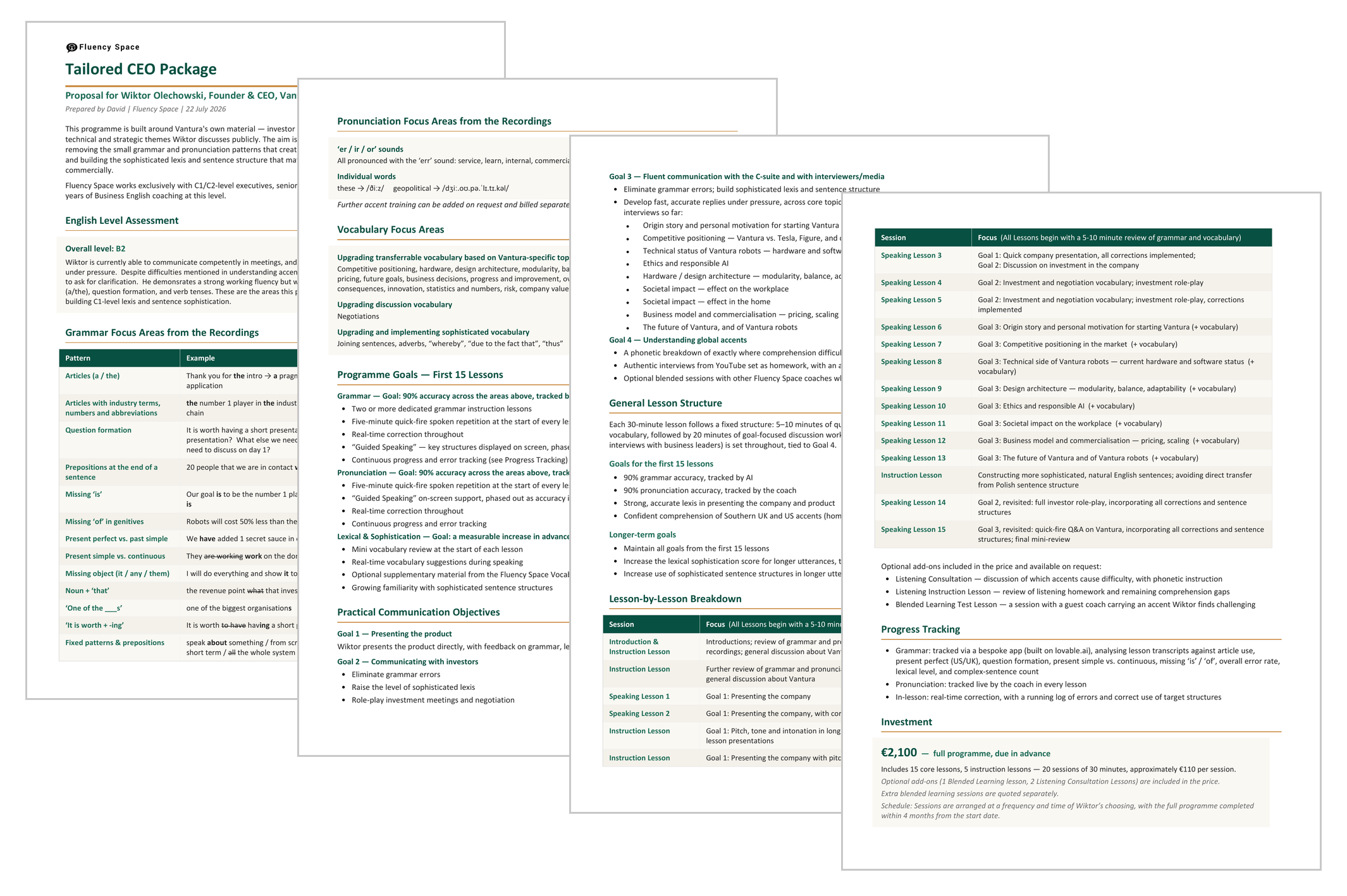
The Fluency Space CEO Package
Enjoyed this lesson? Take your business English further with a structured 3-month programme designed specifically for senior executives.
IN-DEPTH PROPOSAL BUILT WITH CARE
A Course Built around you
After your full English audit, we do a deep dive into your company, your role and your real communication goals - We then build a fully tailored program around them and send a proposal within 3 working days.

© Copyright Fluency Space. All Rights Reserved
OptimizePress Popup Overlay
the fluency space acadademy
Be one of the first 50 to join and get a huge discount!

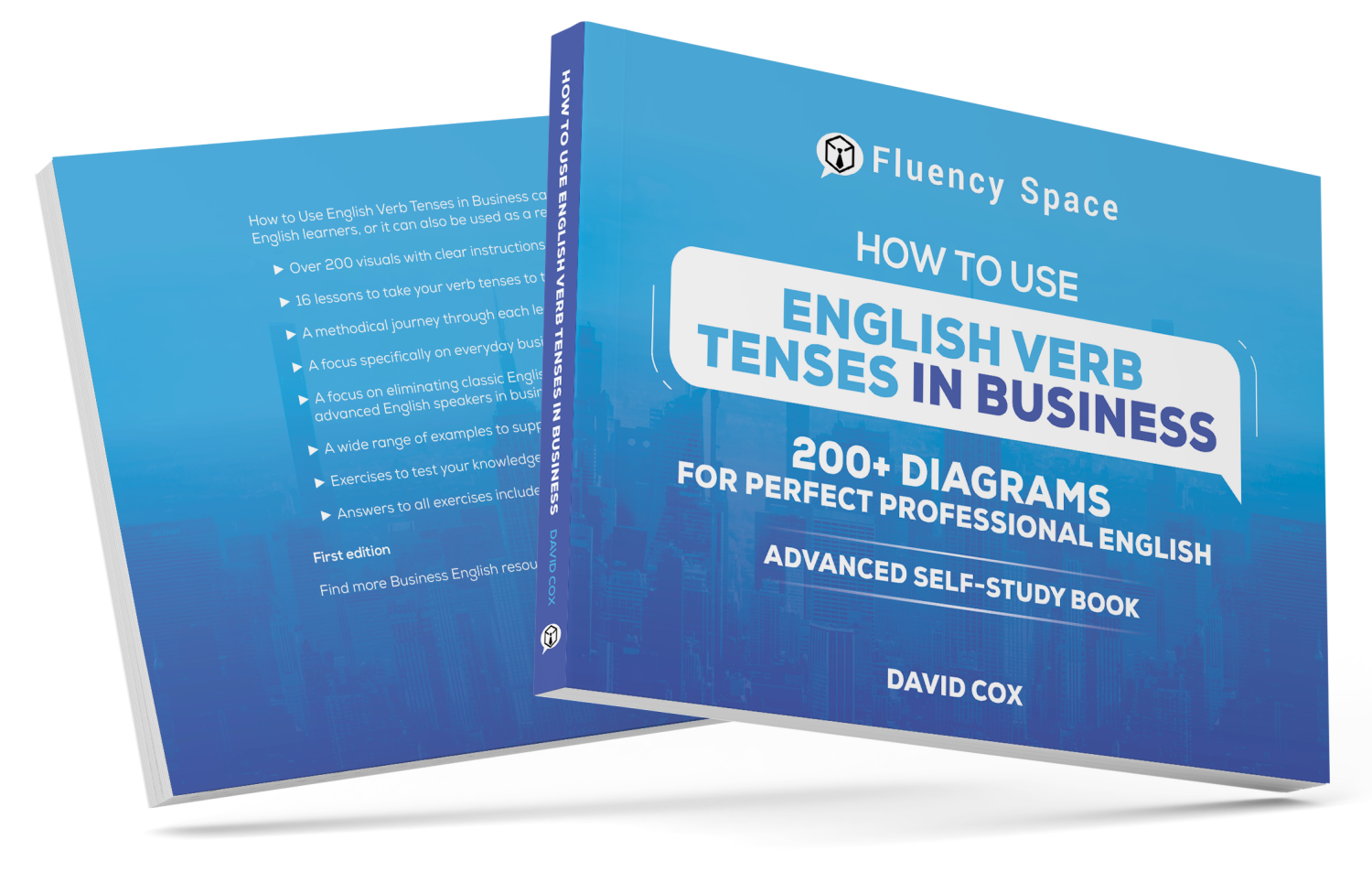
Your advanced English training center. Over 600 pages of PDFs. over 250 diagrams and hundreds of exercises. 32 Vocabulary lessons covering the 400 most important phrases for advanced Business, 2x monthly Adapted Business English texts, 2x monthly YouTube listening lessons, 'How to Use English Verb Tenses in Business' textbook.
All of this and much more for only $5.99 per month. Cancel anytime!