The Death of the Entry-Level Job: From Pyramid to Diamond
A C1 business English lesson on AI, corporate structure and the future of graduate careers.
Is the traditional career ladder — study hard, get a degree, start at the bottom, work your way up — is being quietly dismantled by the very technology meant to make businesses more efficient. This lesson explores some alternative potential corporate structures to build sophisticated business English vocabulary and critical thinking for executives and senior professionals.
What business leaders can learn from the story
The disappearance of the entry-level job isn't just a story about graduates struggling to find work — it's an early signal of a structural shift moving up the organisation. Companies that assume AI can permanently replace their least experienced staff may be about to learn the same lesson some of their competitors already have.
This C1 business English lesson explores corporate hierarchy, workforce economics and the language of organisational change with essential vocabulary for senior professionals.
Download Lesson
Full lesson including all exercises, answer key and gap-fill. Print-ready format.
Warm up - Before starting the Business English lesson, discuss these with a partner or your teacher.
How has your job changed since the introduction of AI? Has it got easier?
To what extent has your productivity increased since the introduction of AI?
To what extent do you believe that entry-level jobs have changed over the past 2 years?
What career path would you choose if you were graduating today?
Business English Lesson Text - Underlined phrases will appear in the exercises
For generations, the path into a career followed a reassuringly simple logic: study hard, get a degree, land an entry-level job, and work your way up. Companies had to compete to draw the best fresh graduates, and if you were willing to carry out some pretty repetitive tasks to begin with, there was often a place for you at the bottom. However, it appears as if something is changing rather dramatically.
The pyramid that built the middle class
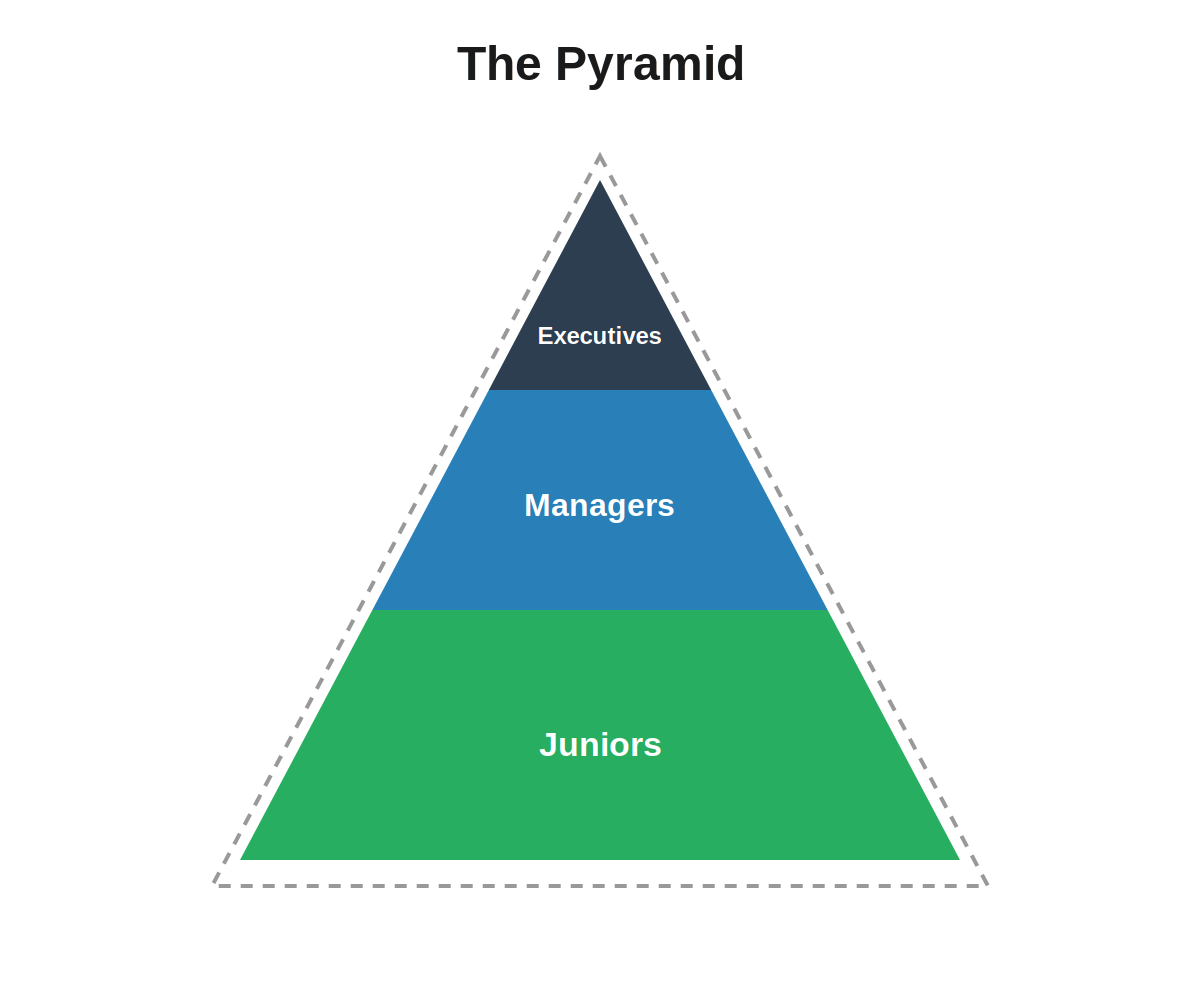
For most of the 20th century, companies were organised in a pyramid structure with a small number executives at the top, a broader level of managers in the middle, and a wide base of juniors at the bottom. These entry-level employees entered data into spreadsheets, scheduled meetings, proofread reports and kept the operation running. It was unglamorous work, but it was essential. For the young professionals, they learned how businesses functioned, and they picked up valuable new skills along the way.
Enter AI — and the disappearing base
Unless you've been living under a rock, you'll know AI now drafts the emails, writes up the documents and crunches the data that used to land on a junior's desk. Which raises an uncomfortable question: what exactly is a graduate for and are they dispensable? In the US, graduates are now more likely to be unemployed than the workforce as a whole. Of those lucky enough to find employment, nearly 43% work in roles that never required a degree in the first place. Startups now only bring in graduates to fill 6% of roles, and even people with over 7 years' experience now fill up entry level roles once reserved for those straight out of university.
The disappearing middle
With graduates slowly squeezed out, it seems inevitable that the pyramid is becoming a thing of the past. But what is happening to the managers in the middle? Managerial roles fell by over 6% between 2022 and 2025, and management now accounts for nearly a third of all layoffs, up from a fifth just a few years ago.
That might suggest middle management is heading the same way as the entry-level, but the picture is less clear than the stats suggest. AI may generate options brilliantly, but often only within the framework that the human offers it. Left-field suggestions are often lacking, as AI still remains relatively keen to go along with whatever the human suggests. It also struggles to make the kind of judgment calls that actually run a business. So for now at least it seems as if human oversight is still indispensable, but no-one really knows for how long.
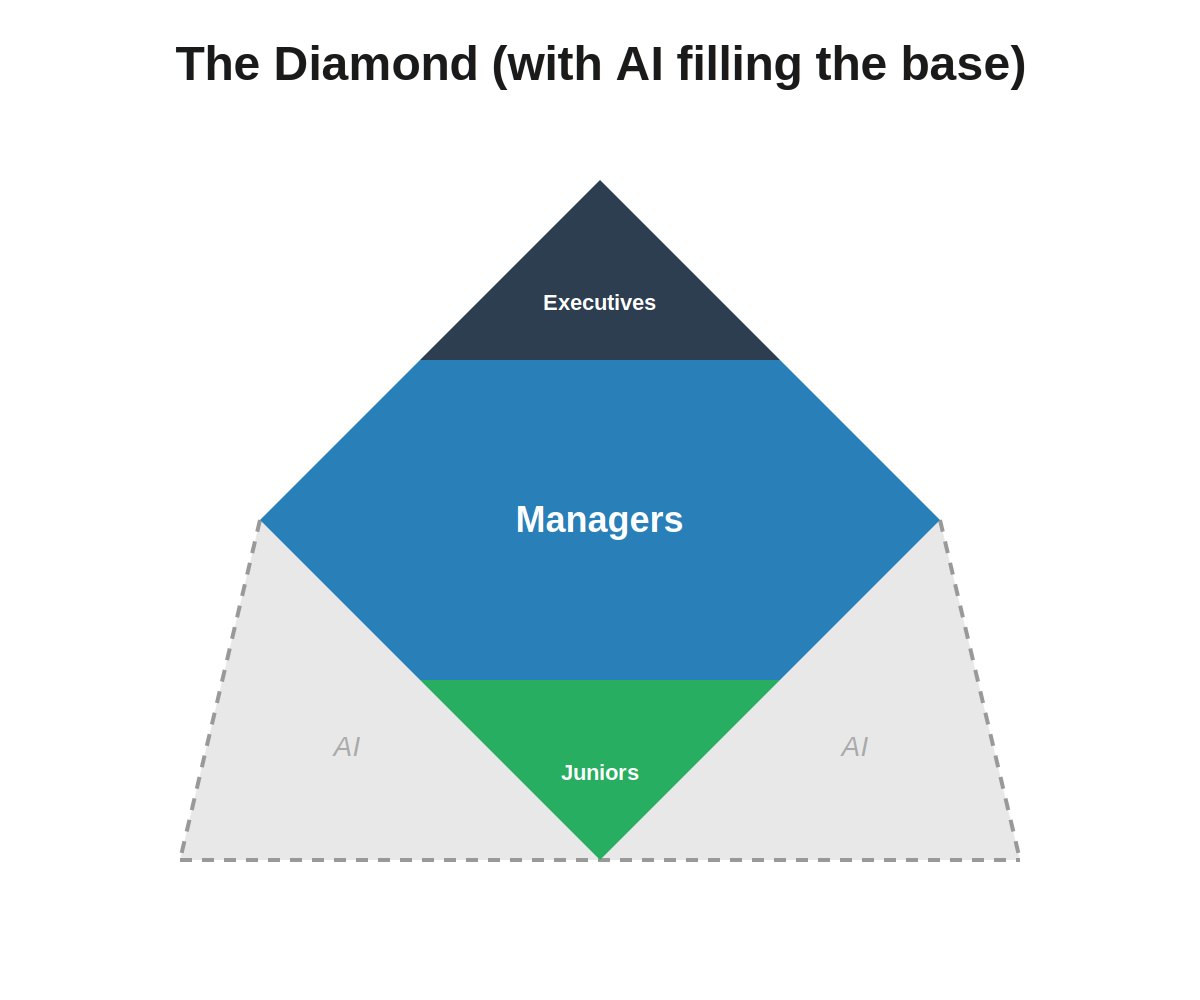
If AI still proceeds only in whichever direction it is nudged, we will continue to require human judgment on AI decisions, meaning we may see something like a diamond: a thick section of middle managers, each running a very small, AI-augmented team of juniors. There may already be evidence for this, as one survey found over a third of employers had already rehired more than half the roles they had eliminated, most within six months.
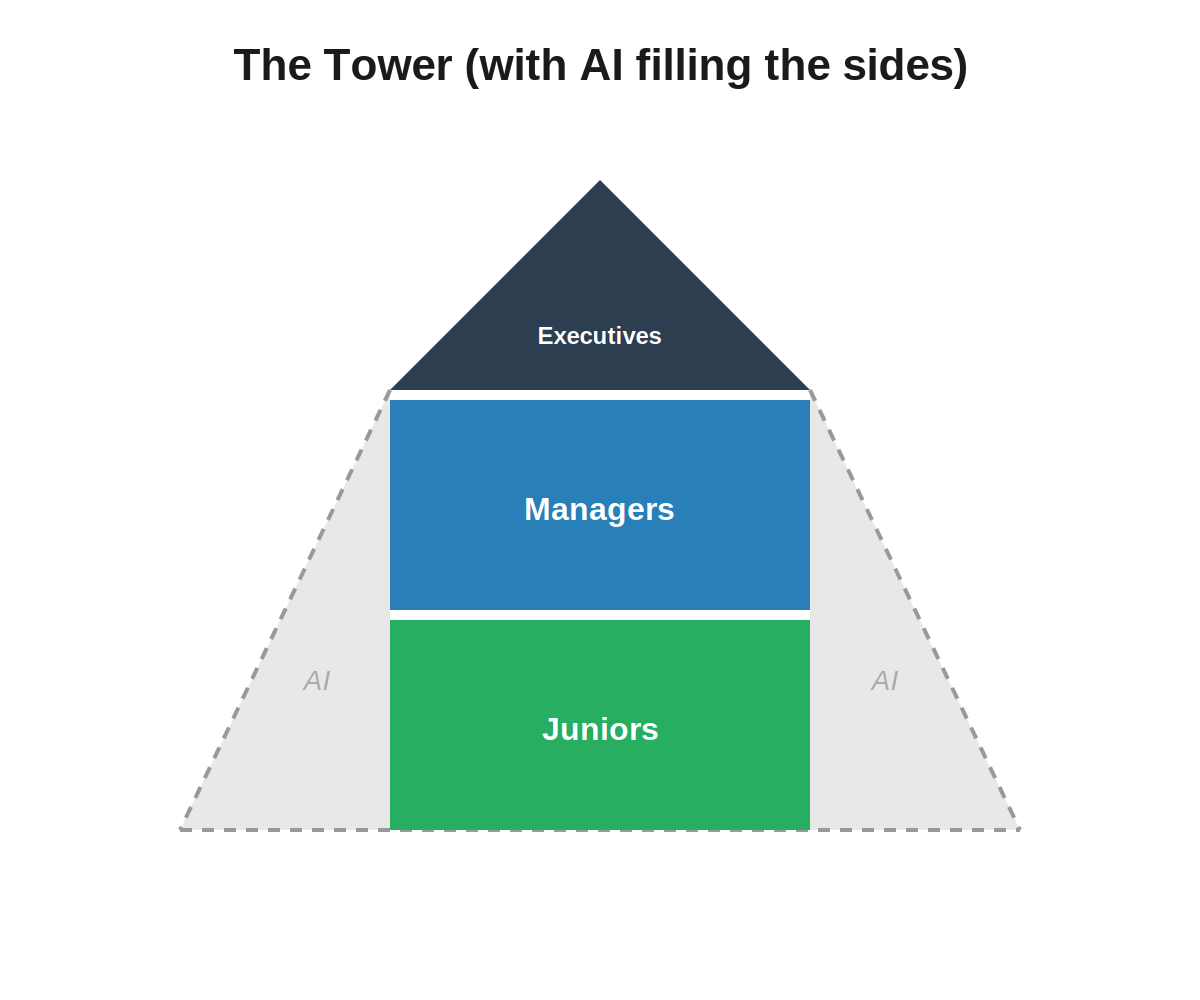
But if the layoffs in middle management keep going, and AI keeps closing that judgment gap, the diamond may turn into something closer to a tower, with executives, managers and juniors all compressed to a similar size. The technology is too new, and moving too fast, to say which one wins out. But for the graduate stuck at the bottom of the pecking order, the outlook is much the same: much fewer opportunities for entry.
The Dilemma for Businesses
With everything we have covered, not hiring graduates is now seen as rational behaviour for many businesses. Training a junior employee is expensive because companies must spend money to train them before they see any ROI — and there is no guarantee that person won't leave after they are trained. So it now makes much more sense to hope that a competitor will take on a new graduate and invest in training them while you use AI to carry out all the entry level tasks. When you then need an experienced middle-manager, you can always take ready-trained talent from your competitors.
Of course, if nobody wants to take on the burden of training a junior, who will only work slower than AI anyway, then there will eventually be no experienced middle managers left to hire. This could potentially lead to a decrease in productivity as opposed to the increase that we have been promised with AI.
Reasons for cautious optimism
None of this is inevitable, and the picture is not entirely gloomy. The AI tools squeezing graduates out of entry-level jobs are also making it easier and cheaper to start something of their own. AI tools that would have required a team to operate five years ago are now accessible to a single motivated person, and the skills acquired could look very attractive to potential employers looking for middle managers.
Instead of starting at the bottom, new graduates may need to embrace a more entrepreneurial mindset, start on their own, and then find a way in further up the pecking order as a middle manager.
5.7%
Recent graduate unemployment in the US
6.1%
decline in managerial roles between 2022 and 2025
6%
of startup roles now go to graduates, down from around 30%
43%
of employed graduates are in roles that never needed a degree
Business English Lesson Vocabulary - Key Words from Context
Match each word to its definition and complete the example sentences in the exercise which can be found in the downloadable PDF.
Comprehension - Answer these questions in your own words
QUESTION 1
According to the text, what were entry-level employees traditionally responsible for in the “pyramid” structure, and what did they gain from doing this work?
QUESTION 2
What evidence does the article give that middle management, not just entry-level roles, might also be shrinking?
QUESTION 3
According to the article, why does AI’s “well-documented flaw” mean that human oversight might still be indispensable?
QUESTION 4
What does the article suggest graduates could do instead of starting at the bottom of a traditional company hierarchy?
Business English Lesson Vocabulary in a New Context - Fill in the gaps with words from the vocabulary section. Some words may appear twice in the text.
Rethinking the Graduate Scheme
Amara (Head of Recruitment)
It feels almost (1) ___________________ that we’ll need to rethink the graduate scheme this year. We used to (2) ___________________ brilliant candidates straight out of university, but more of them are being (3) ___________________ before they even reach interview stage, and I don’t want us to lose that pipeline for good. Where exactly do we now sit in (4) ___________________ when it comes to attracting graduate talent compared to our competitors?
Dev (COO):
I hear you, but let’s not get (5) ___________________ into a decision we haven’t properly tested. If we bring graduates back in without a clear plan, junior hires could easily be (6) ___________________ again the moment budgets tighten. I’d rather pilot it with one team first, make sure a senior reviewer stays (7) ___________________ to every decision they make, and reassess where the scheme sits in (8) ___________________ once we’ve seen the results.
Discussion - Business insights and takeaways from the text
Do you think AI’s tendency to be “too eager to please” is a temporary limitation, or could it always be a barrier to fully automating judgment-based roles? Why?
If you were a new graduate today, would you rather compete for one of the shrinking entry-level jobs, or try to build something of your own? What would influence your decision?
This lesson shows the difficulties that Gen Z are facing in the modern workplace. We look at how Gen Z are affected in our C1 Business English lesson: Unmanageable or Misunderstood? The Real Reason Managers are Firing Gen Z.
Check out another invention capable of transforming the modern workplace in our Business English lesson about the most underrated invention in economic history.
Have you enjoyed this Business English Lesson on AI? Explore more free C1 lessons in our AI and innovation categories.
Lesson Creator

David Cox
I am a passionate linguist with over 14 years' experience with high level professionals. In this lesson you will learn:
Want to work through this lesson with me?
Advanced Premium Course
The Fluency Space CEO Package
Enjoyed this lesson? Take your business English further with a structured 3-month programme designed specifically for senior executives.
IN-DEPTH PROPOSAL BUILT WITH CARE
A Course Built around you
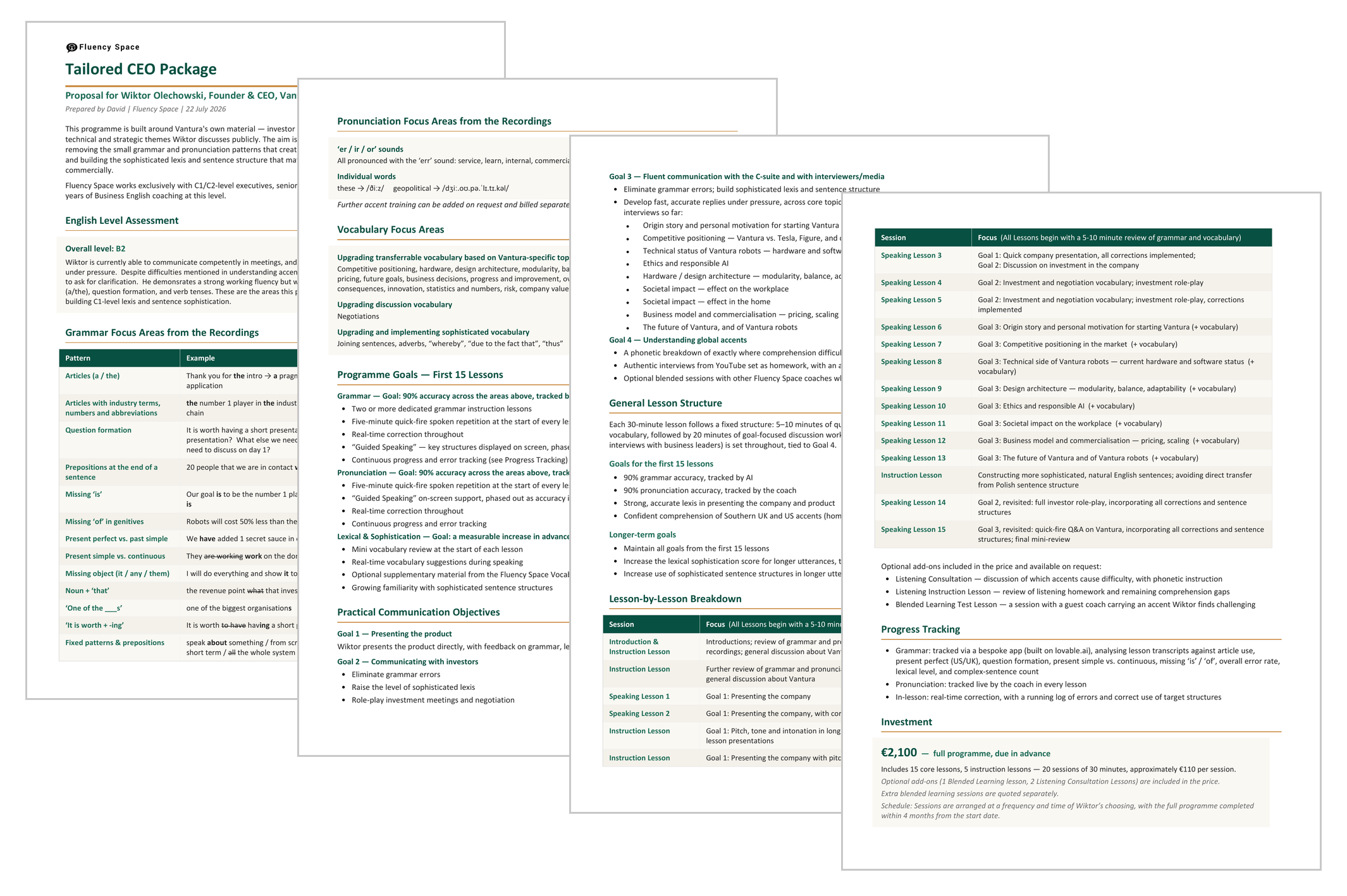
After your full English audit, we do a deep dive into your company, your role and your real communication goals - We then build a fully tailored program around them and send a proposal within 3 working days.

© Copyright Fluency Space. All Rights Reserved
OptimizePress Popup Overlay
the fluency space acadademy
Be one of the first 50 to join and get a huge discount!

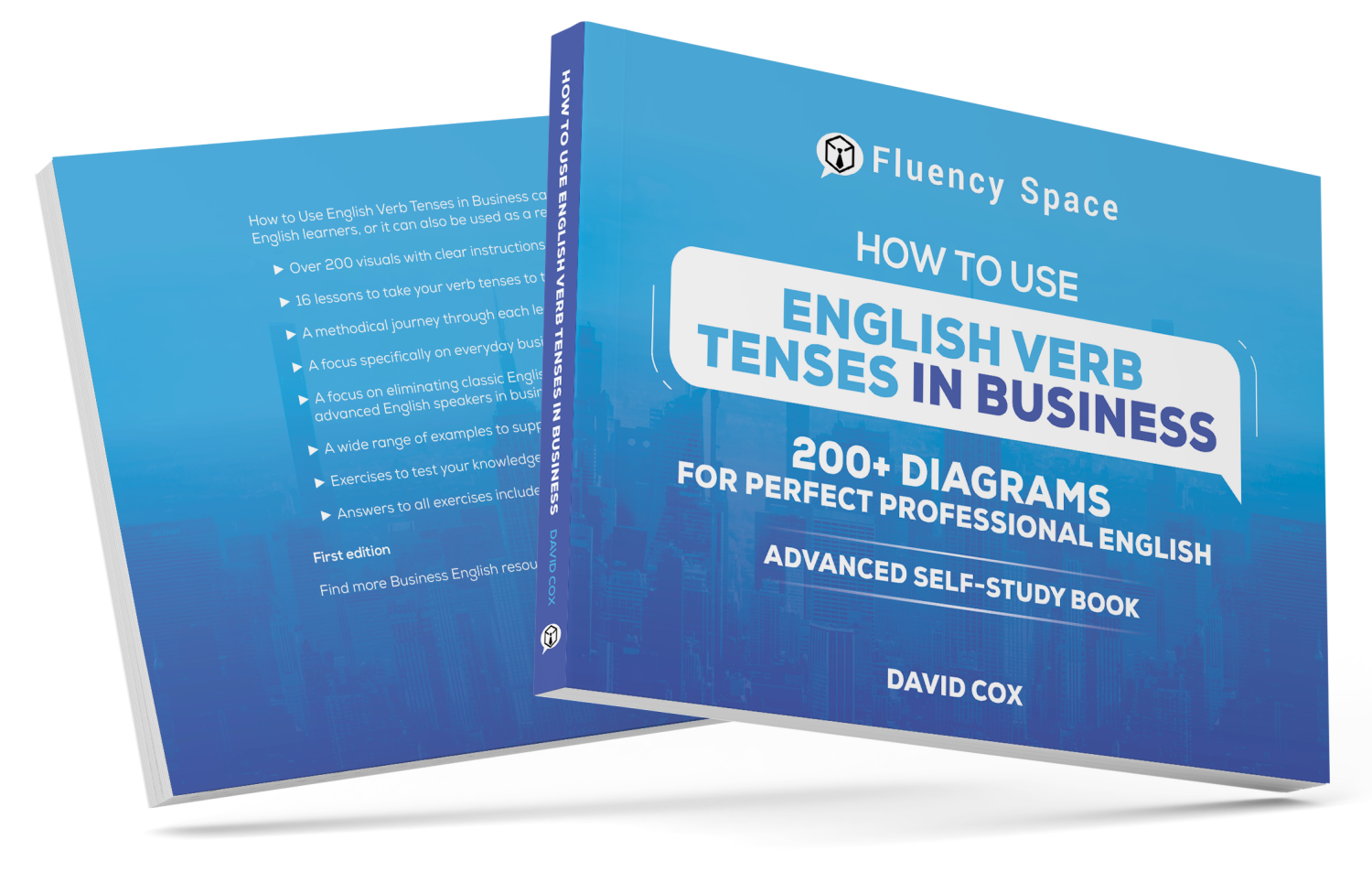
Your advanced English training center. Over 600 pages of PDFs. over 250 diagrams and hundreds of exercises. 32 Vocabulary lessons covering the 400 most important phrases for advanced Business, 2x monthly Adapted Business English texts, 2x monthly YouTube listening lessons, 'How to Use English Verb Tenses in Business' textbook.
All of this and much more for only $5.99 per month. Cancel anytime!