Exercises
Modal verbs of possibility quiz
How sure are you? Practise must, can’t, might, could and should for possibility and deduction – about the present, the future and the past – with business examples.
Quick rules
must
I’m sure it’s true.
She must be in a meeting – her phone is off.
can’t
I’m sure it isn’t true. (Not ‘mustn’t’.)
That can’t be right – the figures don’t add up.
might / may / could
It’s possible.
The shipment might arrive late.
should
It’s likely – we expect it.
The new system should be ready by Monday.
+ have + past participle
The same meanings, about the past.
They can’t have read our proposal.
1. Sure or not sure?
Must, can’t – or something less certain?
2. Possible, likely or expected?
Might, could, may – or should?
3. Talking about the past
Modal + have + past participle.
4The client still hasn’t replied. They (might / miss) our reminder.
5The presentation went really well. You (must / prepare) for days!
6Peter’s still in Madrid, so he (can’t / be) at the meeting yesterday.
Check a section to see your score here.
More practice
Correct on paper is not the same as natural in the boardroom
One-to-one Business English coaching for C1/C2 executives and founders.
When using the modal verb 'could', do you every wonder what could have happened if you had done something differently in the past? Use some modal verbs of possibility in our Business English reading lesson on the sunk cost fallacy. What about using 'could' or 'might' to discuss what might happen in the future? Talk about the future of the world's most popular industries in our advanced reading lesson about the great English wine boom.
Advanced Premium Course
The Fluency Space CEO Package
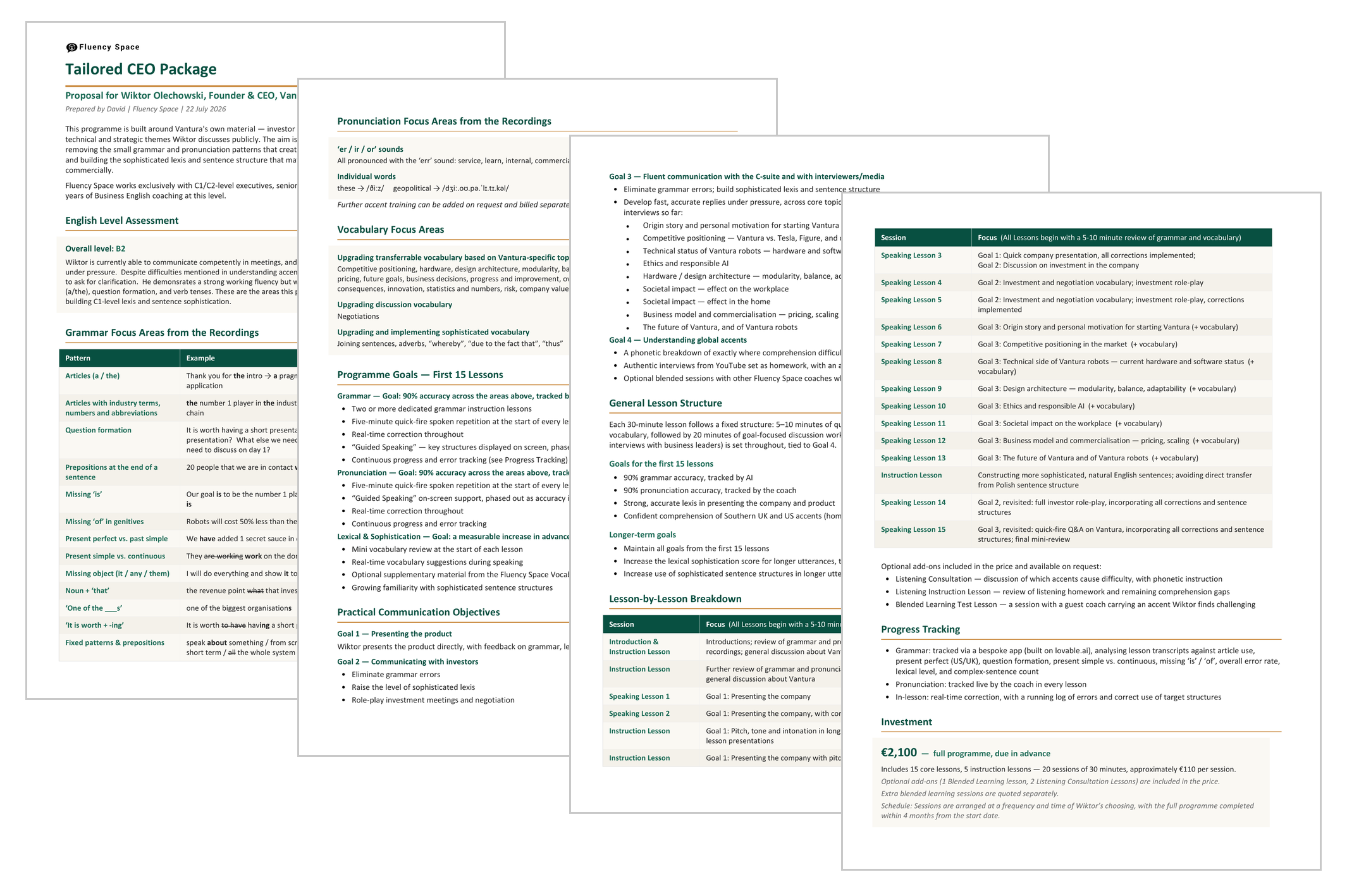
Enjoyed this lesson? Take your business English further with a structured 3-month programme designed specifically for senior executives.
IN-DEPTH PROPOSAL BUILT WITH CARE
A Course Built around you
After your full English audit, we do a deep dive into your company, your role and your real communication goals - We then build a fully tailored program around them and send a proposal within 3 working days.

© Copyright Fluency Space. All Rights Reserved
OptimizePress Popup Overlay
the fluency space acadademy
Be one of the first 50 to join and get a huge discount!

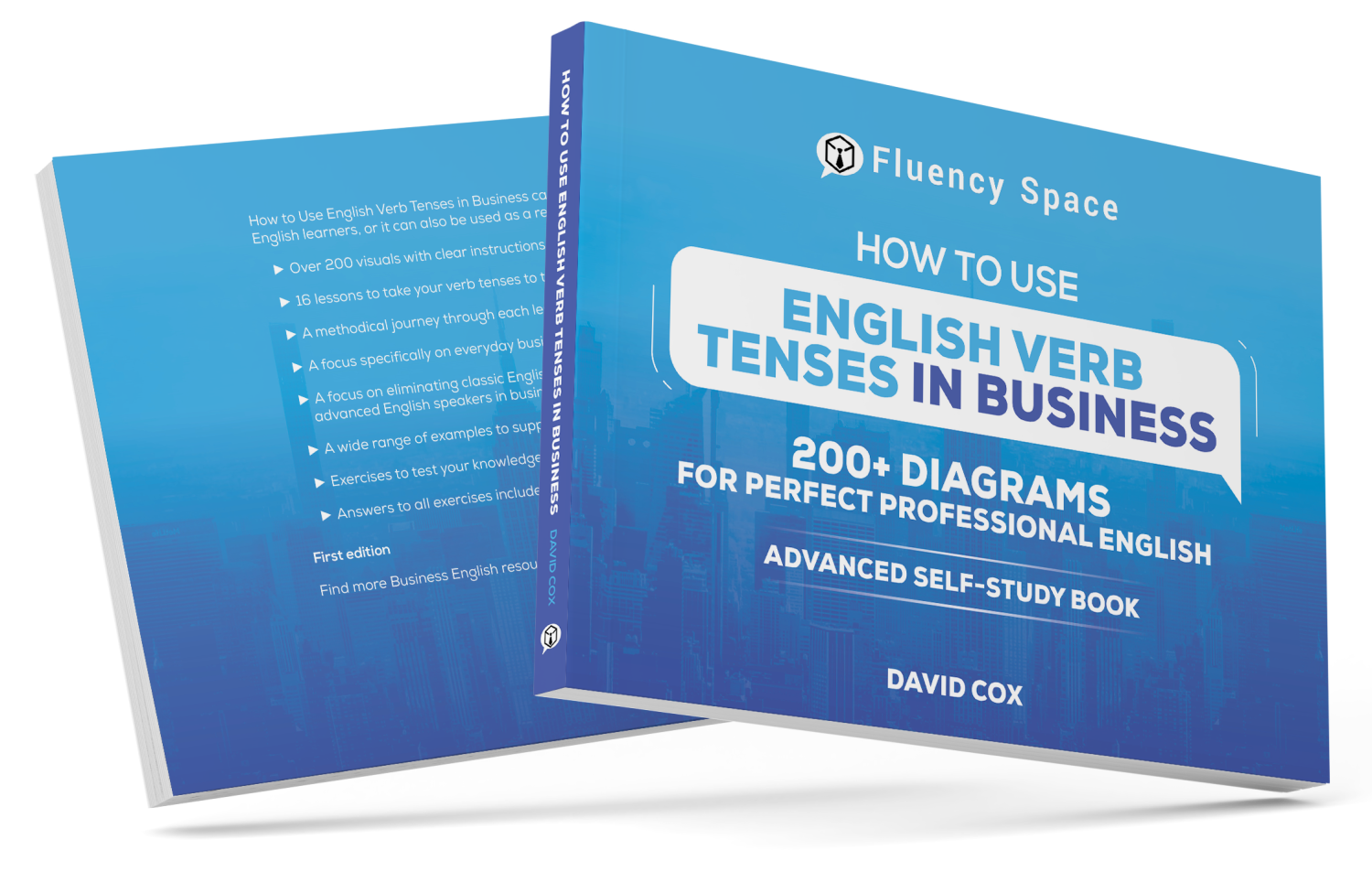
Your advanced English training center. Over 600 pages of PDFs. over 250 diagrams and hundreds of exercises. 32 Vocabulary lessons covering the 400 most important phrases for advanced Business, 2x monthly Adapted Business English texts, 2x monthly YouTube listening lessons, 'How to Use English Verb Tenses in Business' textbook.
All of this and much more for only $5.99 per month. Cancel anytime!