C1 Business English · Global economy
Approaches to Employment around the World: What Would You Prefer for Your Work Life?
From Europe’s four-day week to China’s 996 and Japan’s salaryman, working cultures around the world look very different. This C1 Business English lesson compares five approaches to employment and builds vocabulary for discussing work culture, targets and business growth.

Homework Do all the exercises, then send your answers to your teacher at the bottom of the page.
What business leaders can learn from the story
There is no single right way to work. Every model in this article solves one problem and creates another: long hours can drive fast growth but burn people out, while shorter weeks protect well-being but need careful planning. Leaders who understand these trade-offs, and the expectations their international teams and partners bring with them, make better decisions about how their own people work.
AWarm up
Before starting the Business English lesson, discuss these with a partner or your teacher.
- How many hours do you usually work in a week? If you could change one thing about your working week, what would it be?
- Do you answer work emails or calls in the evening or at weekends? Is this expected in your company or your country?
BRead the text
Approaches to Employment around the World
The 4-Day Work Week
How would you like to work only 4 days per week with the same salary? The 4-day workweek is gaining traction in Europe, parts of Asia, and Oceania, and it can benefit more than just employee well-being. A recent study found that 52% of workers felt more productive, and 90% of participating companies decided to keep the model after the trial, so there’s no need for business owners to worry!
Despite its popularity, some have reservations about the long-term benefits. Tighter schedules can increase tiredness and stress. Coordination with clients, colleagues, or partners across time zones can be challenging. As the movement is still in its infancy, it is difficult to estimate the long-term challenges which could appear.
996 - China and Silicon Valley
Dream of working at the forefront of Chinese tech? The reality may shock you. China’s crazy 996 work culture - working from 9am to 9pm, six days a week - has been common since the 2010s, during a boom in the Chinese tech sector. After numerous deaths from the work schedule, as well as numerous protests, it became illegal in 2021. However, it is still common in tech hubs such as the city of Shenzhen.
As China tries to reduce its excessive work culture, some American firms are starting to welcome it with open arms. Some AI startups have started advertising positions with a 70-hour per week schedule. With the race for AI supremacy truly underway, enthusiasm for the 996 appears to be growing among Gen-Z, inspired by stories of digital entrepreneurs such as Steve Jobs, and driven by a desire to attain global AI dominance.
Public Sector Prestige - UAE, Qatar, Bahrain, Saudi Arabia, Oman
What if your job could give you a beautiful home for free? Unfortunately, you would have to be an Emirati citizen, and citizenship is almost unattainable for outsiders. In the UAE, as well as many other Gulf countries, public-sector roles can come with free housing, transport allowances, excellent free health care, pensions, and educational benefits for children. Due to the region’s oil riches, government budgets aren’t tight, and pride is taken in the standard of public infrastructure.
Many Emiratis prefer public roles because of their high reputation, the steady salary and excellent benefits are superior to the private sector’s fluctuating pay, longer hours, or lesser certainty. By contrast, the private sector in the UAE is mainly populated by expats—who constitute around 89% of the population. In order to attract more Emiratis to the private sector, the UAE government is currently offering generous monthly salary top-ups!
Right to Disconnect - Australia, France, Belgium
In order to reduce the constant flow of work emails after 6pm, the “Right to Disconnect” is a movement gaining traction in Europe and Australia. This allows employees to ignore work-related communications—emails, calls, texts—outside contracted working hours, without fear of adverse consequences or penalties.
Employees can enjoy better work-life balance, reduced stress and greater job satisfaction. Employers could potentially benefit too, with lower turnover, improved morale, and even gains in productivity since rested employees tend to perform better.
The Salaryman - Japan
After World War II, the “salaryman” was at the forefront of Japan’s economic miracle: the suited office worker who spent their whole life at the company. Based on the promise of lifetime employment, the role demanded long hours, complete loyalty, sacrifice, and a collective mindset that made their job part of their identity.
Evenings often extended beyond the office to compulsory drinking sessions, where business relationships were deepened over alcohol. Such a working pattern still exists in many traditional Japanese companies today.
CKey words from context
Based on the context of the article, can you match the words in the box to the definitions listed below? Then add the word into the example sentence. You may need to change the form of the word to fit the meaning of the sentence.
DComprehension
Can you answer the questions below about the text? Then compare your answer with the model answer.
Which of the attitudes to work are currently gaining popularity?
Show model answer
- The 4-day work week is gaining traction in Europe, parts of Asia and Oceania.
- The Right to Disconnect is gaining traction in Europe and Australia.
- 996 is becoming more popular among some American AI startups and Gen-Z workers, even though China is trying to reduce it.
Which attitudes to employment are described as bringing benefits to both employers and employees?
Show model answer
- The 4-day work week: it helps employee well-being, 52% of workers felt more productive, and 90% of companies decided to keep it.
- The Right to Disconnect: employees get better work-life balance, less stress and greater job satisfaction, while employers may see lower turnover, better morale and higher productivity.
Which attitudes to employment have helped economic growth according to the article?
Show model answer
- 996 became common during the boom in China’s tech sector, and some US AI startups now use it to compete in the race for AI.
- The salaryman was at the forefront of Japan’s economic miracle after World War II.
Based on the article, which region of the world could be considered to have the most relaxed attitude to work?
Show model answer
Europe. The 4-day work week and the Right to Disconnect are both gaining traction there, and both focus on reducing working time and protecting employees’ free time. (You could also argue for the Gulf’s public sector, where jobs offer a steady salary and excellent benefits – but only for citizens.)
If you could only choose one, which of these employment styles would you like to work within as an employee or employer?
Show model answer
Your own answer. For example: “As an employer, I would choose the 4-day work week. Although some people have reservations about it, it seems to help companies attract and keep good staff, and the results so far suggest productivity does not suffer.”
In your opinion, which of the employment styles will we still see 10 years in the future?
Show model answer
Your own answer. For example: “I think the Right to Disconnect will become standard in many countries, because burnout is a growing problem. However, I believe 996-style hours will still exist in very competitive industries such as AI, at least while the movement towards shorter weeks is still in its infancy.”
EKey words in a new context
Below you can find a text. Can you fill in the gaps in the paragraph with the words and phrases from the box below?
Glossary
Key words from the article.
- to gain tractionto start to become successful or popular
- to have reservationsto have uncertainty or doubt
- a tight schedule / budgethaving limited time or financial resources
- in its infancyat a very early stage of development
- at the forefrontleading or in the most advanced position
- numerousmany, a large number of
- excessivemore than is reasonable or necessary
- to attainto achieve something, often through effort
- attainablerealistic and achievable
- to constituteto make up a part of a whole
- adverseharmful or negative in effect
- mindseta particular way of thinking or approach
Send your homework
When you have finished all the exercises, copy your answers and send them to your teacher.
- Type your name.
- Press Copy my answers.
- Paste them into an email or message to your teacher.
Knowing the word is step one. Using it under pressure is step two.
One-to-one Business English coaching for C1/C2 executives and founders.

© Copyright Fluency Space. All Rights Reserved
OptimizePress Popup Overlay
the fluency space acadademy
Be one of the first 50 to join and get a huge discount!

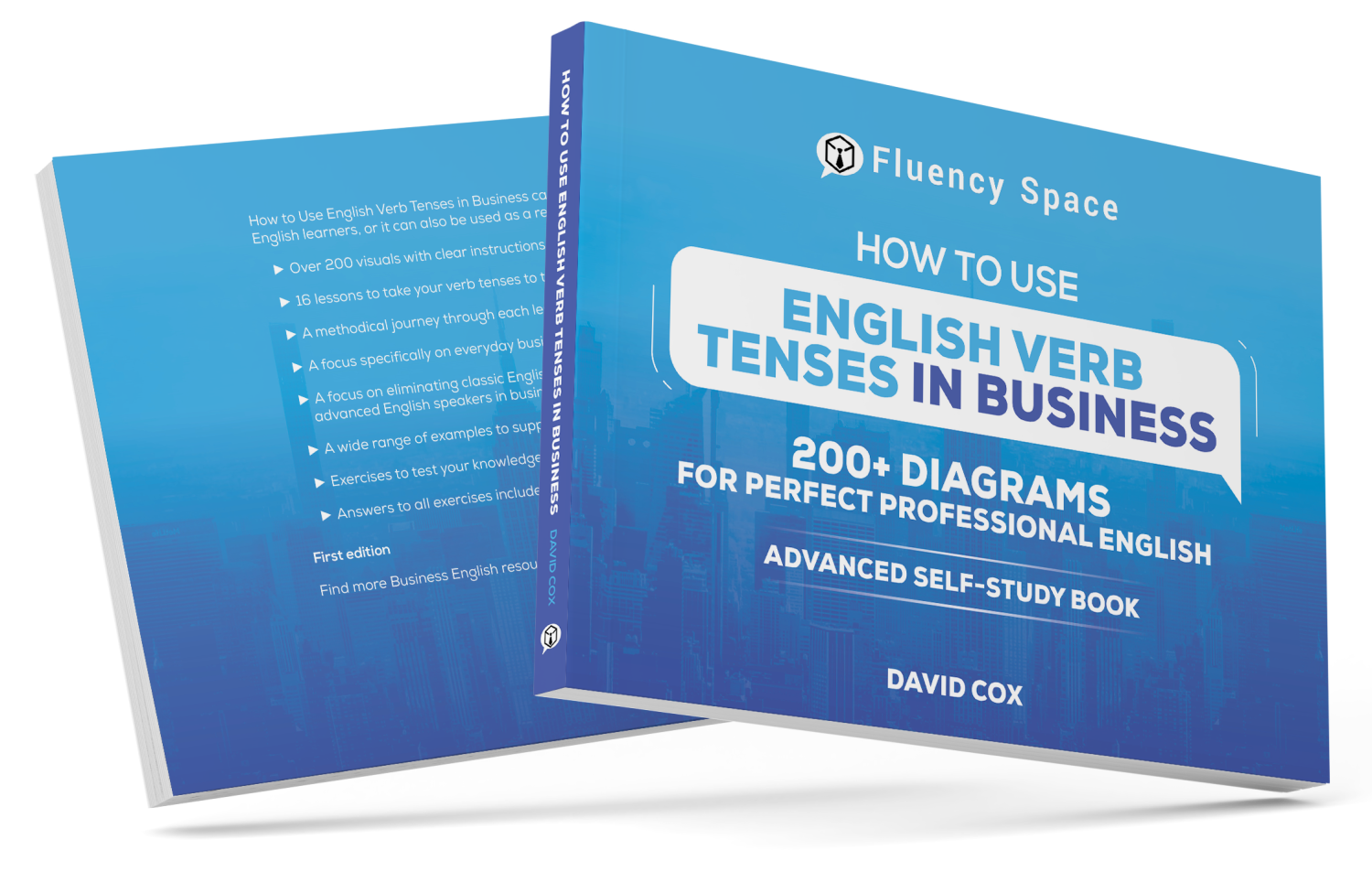
Your advanced English training center. Over 600 pages of PDFs. over 250 diagrams and hundreds of exercises. 32 Vocabulary lessons covering the 400 most important phrases for advanced Business, 2x monthly Adapted Business English texts, 2x monthly YouTube listening lessons, 'How to Use English Verb Tenses in Business' textbook.
All of this and much more for only $5.99 per month. Cancel anytime!