C1 Business English · AI and Ethics
Project Panama: Why AI Is Hungry for Old Books
An AI company bought millions of second-hand books, cut them up and scanned them to train its chatbot. This C1 Business English lesson uses the story to build vocabulary for discussing risk, ethics, secrecy and the future of content.

Homework Do all the exercises, then send your answers to your teacher at the bottom of the page.
What business leaders can learn from the story
Anthropic’s story shows how a shortcut taken to save time and money can turn into a much bigger problem later, and how hard it is to keep a strategy secret for long. For leaders, the lesson is that the quickest route is rarely the cheapest one in the long run, and that in a world full of AI-generated content, a distinctive human voice is becoming a real competitive advantage.
AWarm up
Before starting the Business English lesson, discuss these with a partner or your teacher.
- How often do you like to read, and do you prefer fiction or non-fiction?
- Do you prefer reading paper books or reading on a screen? Why?
BRead the text
Project Panama: Why AI Is Hungry for Old Books
- the spine (of a book) the narrow edge of a book where the pages are joined together, which usually shows the title
Have you ever wondered where large language models such as Claude or ChatGPT get their information from?
Of course, information is abundant and easy to obtain on the open internet. However, for well-researched information written by experts in their field, AI companies need to get their hands on copyrighted books.
Anthropic, the company behind Claude, was facing the same hurdle as millions of teenagers in the early days of the internet: it wanted copyrighted material but didn’t want to pay for it. Back then, before Spotify existed, the solution was to sit in your bedroom illegally downloading songs. Anthropic chose the same solution, only on a much bigger scale. Over two years, it downloaded more than seven million pirated books from so-called “shadow libraries” online.
Just as I got nervous in 2003 after downloading 3 movies illegally, Anthropic seems to have had a similar moment with its seven million books. It decided that it was time to deviate from its highly efficient but legally very risky strategy.
Legally, it wasn’t possible to buy digital books and feed them straight into the model. If you buy an ebook, you are licensing it rather than owning it, so you can’t get away with reselling it, copying it or moving it freely. In order to stay on the right side of the law, therefore, Anthropic took a different route: it bought millions of physical second-hand books.
The company spent over 10 million dollars on what an internal document called an “effort to destructively scan all the books in the world”. An industrial cutting machine cut off the spine of each book, and the individual pages were fed through high-speed scanners to extract the information. It is estimated that anywhere between 500,000 and two million books were scanned within six months.
After being scanned, the books had served their purpose. Once the office recycling bin was full (which presumably took about four minutes), the company called in an industrial recycling firm to collect what was left. Anthropic went to great lengths to keep the plan under wraps, but everything changed when a group of authors took Anthropic to court over its earlier piracy. Thousands of pages of documents were made public during the case, and the secret was out. The project even had a top-secret code name: Project Panama.
Anthropic isn’t the only AI company hungry for books. Since April 2026, small second-hand booksellers in the US, Europe and beyond have reported a surge in unusual orders, including thousands of books on completely unrelated topics, from agricultural manuals to racing biographies. One seller said he had gone from selling around 20 books a week to several hundred, but admitted he was torn about the situation, even though his profits had surged significantly.
The morality of this could be called into question, not only because of the huge waste caused by the practice, but also because old, treasured, rare books could disappear forever if the last available copy ends up under a cutting machine. Anthropic has denied destroying rare books, but critics have described the practice as cultural vandalism.
Some companies, having picked up on this process, have attempted to cash in on it. One company, ISBNdb, briefly offered to source printed books for AI companies, in orders of up to one million at a time. Its selling point was that books printed before 2022 were “pure”, meaning they were written before AI-generated text started to appear everywhere. As others questioned the morality of such a process, the company soon removed the offer before a single book was sourced.
ISBNdb’s sales pitch raises a larger question. As AI-written text floods the internet, new models could end up being trained on the output of old ones, with quality steadily going downhill in a kind of AI “slop spiral”. A 2024 study by researchers in the UK and Canada found that models trained repeatedly on their own output eventually produced nonsense. Later research suggests this can be avoided by keeping the original human writing in the mix, but the internet may still deteriorate for human readers as search results and reviews fill up with low-effort AI content. I should add at this point that this article is high-effort human content!
On the other hand, AI is getting better at producing its own high-quality material, especially in fields where answers can be checked, such as maths and programming. But when it comes to judgement, style and humour, there is no answer key, and that is where human writing still matters most.
If genuinely human writing becomes scarce relative to machine-generated text, it may become increasingly valuable. We may see more licensing deals between AI firms and publishers, and “human-written” labels might become a mark of quality, just as “handmade” and “organic” labels are today.
Nobody knows exactly how this will play out, but for English learners, a distinctive human voice is likely to become a competitive advantage in business.
But back to the present: the next time your local bookshop’s shelves look a little empty, the missing books may be teaching a machine to write the email you are about to send.
CDiscuss
Discuss these questions with a partner or your teacher.
- Anthropic bought the books legally, but destroyed them after scanning. Do you think this is acceptable? Why or why not?
- Should authors be paid when their books are used to train AI, even if the company bought the books legally?
- The bookseller was torn: his profits were rising, but he was uncomfortable about where the books were going. What would you do in his position?
- The article compares Anthropic’s piracy to teenagers downloading music. Is this a fair comparison? What are the main differences?
- Would you pay more for content labelled “human-written”? In which areas, such as news, reports or marketing, would it matter most to you?
- How do you think AI will change the way people in your industry write emails, reports and presentations over the next five years?
DKey words from context
Based on the context of the article, can you match the words in the box to the definitions listed below? Then add the word into the example sentence. You may need to change the form of the word to fit the meaning of the sentence.
EComprehension
Can you answer the questions below about the text? Then compare your answer with the model answer.
Why do AI companies need books if information on the internet is free?
Show model answer
Books contain well-researched information written by experts in their field, which is harder to find on the open internet.
In what way was Anthropic’s first solution similar to what many teenagers did in the early days of the internet?
Show model answer
Like teenagers who downloaded songs illegally, Anthropic wanted copyrighted material without paying for it. It downloaded more than seven million pirated books from “shadow libraries”, only on a much bigger scale.
Why couldn’t Anthropic simply buy ebooks and use them to train its model?
Show model answer
When you buy an ebook, you are licensing it rather than owning it, so you can’t resell it, copy it or move it freely.
Describe what happened to each book in Project Panama, from the moment it arrived to the end of the process.
Show model answer
- An industrial cutting machine cut off the spine.
- The individual pages were fed through high-speed scanners.
- An industrial recycling firm collected what was left.
How did the public find out about Project Panama?
Show model answer
A group of authors took Anthropic to court over its earlier piracy. Thousands of pages of documents were made public during the case, which revealed the project.
What two moral concerns about book scanning does the article mention?
Show model answer
- The huge waste caused by the practice.
- Rare books could disappear forever if the last available copy is destroyed.
According to the article, why might human writing become more valuable in the future?
Show model answer
As more AI-generated text appears, genuinely human writing may become scarce in comparison. This could lead to more licensing deals between AI firms and publishers, and “human-written” labels could become a mark of quality, like “handmade” or “organic”.
FKey words in a new context
Below you can find a short story. Can you fill in the gaps with the words from the box below? You may need to change the form of the word.
Glossary
Key words from the article.
- abundantexisting in large quantities; more than enough
- a hurdlea problem or difficulty that must be overcome
- to deviate fromto do something different from what was planned or expected
- to get away withto do something wrong or risky without being punished or suffering any bad consequences
- to go to great lengthsto make a lot of effort to achieve something
- to keep something under wrapsto keep something secret
- a surge ina sudden, large increase in something
- tornunable to decide between two options because both have advantages
- to be called into questionto be doubted, or to become the subject of doubt
- to pick up onto notice something, especially something that is not obvious
- to cash in onto take advantage of a situation in order to make money
- to go downhillto get worse, often steadily
- to play outto develop or happen in a particular way over time
Send your homework
When you have finished all the exercises, copy your answers and send them to your teacher.
- Type your name.
- Press Copy my answers.
- Paste them into an email or message to your teacher.
Knowing the word is step one. Using it under pressure is step two.
One-to-one Business English coaching for C1/C2 executives and founders.

© Copyright Fluency Space. All Rights Reserved
OptimizePress Popup Overlay
the fluency space acadademy
Be one of the first 50 to join and get a huge discount!

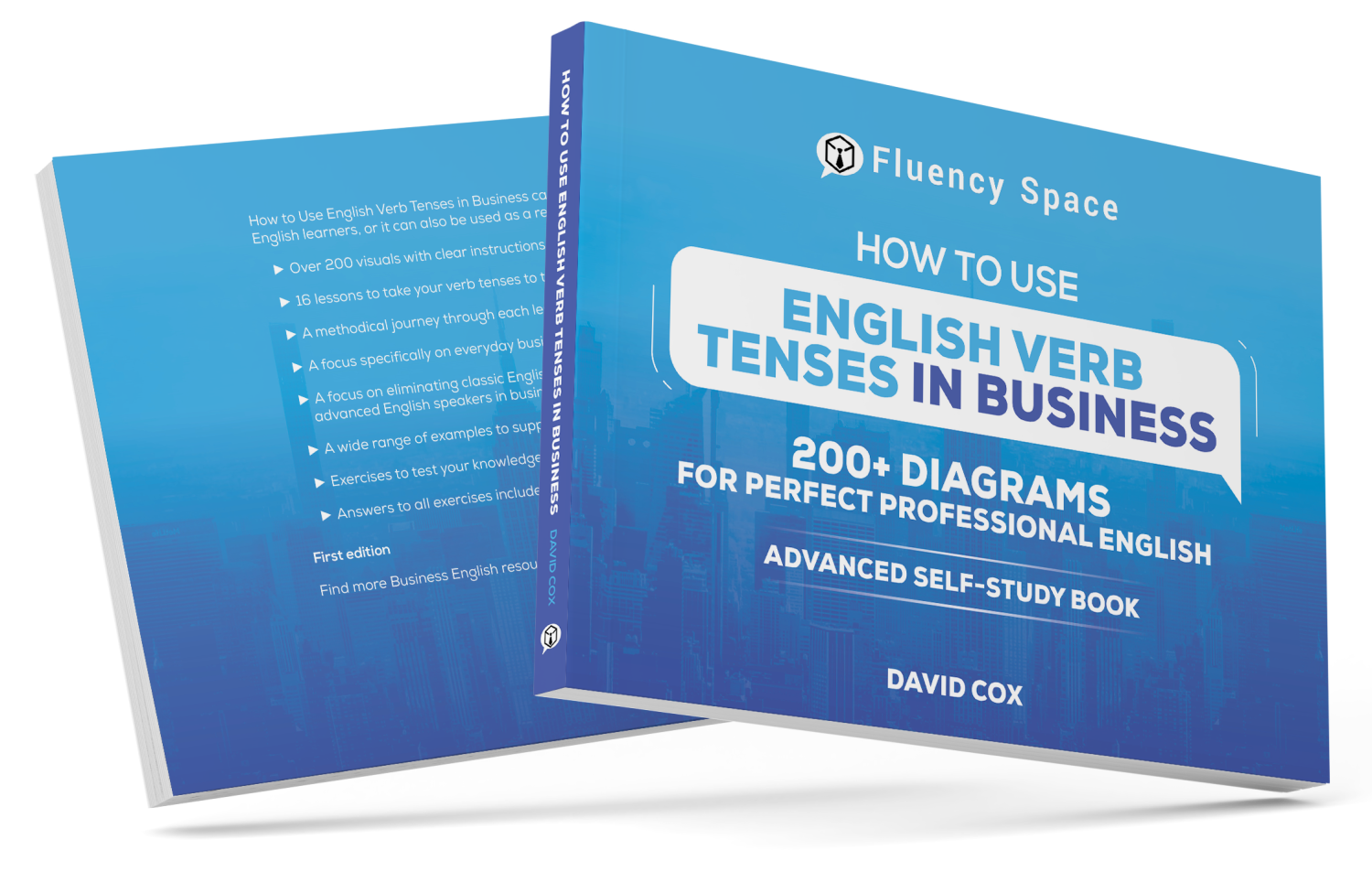
Your advanced English training center. Over 600 pages of PDFs. over 250 diagrams and hundreds of exercises. 32 Vocabulary lessons covering the 400 most important phrases for advanced Business, 2x monthly Adapted Business English texts, 2x monthly YouTube listening lessons, 'How to Use English Verb Tenses in Business' textbook.
All of this and much more for only $5.99 per month. Cancel anytime!