Theranos: A Silicon Valley Nightmare
A C1 Business English lesson on the rise and fall of Theranos, the story told in John Carreyrou's bestseller Bad Blood.
In 2014, Elizabeth Holmes was seen as the next Steve Jobs, and her blood-testing start-up Theranos was valued at $9 billion. There was just one problem: the technology didn't work. This lesson uses the Theranos story to build advanced Business English vocabulary and critical thinking for professionals who need to tell a convincing vision from a credible one.
What business leaders can learn from the story
The Theranos story is a lesson in how easily intelligent people can buy into a compelling narrative. Investors, board members and partners all trusted the founder rather than the evidence, and the employees who flagged up problems were ignored or silenced. For leaders, there are two lessons. The first is to ask difficult questions before committing money or reputation. The second is to build a culture where people feel safe raising concerns. This C1 Business English lesson gives you the vocabulary to discuss risk, due diligence and corporate governance, with practical exercises and a role-play based on a real-world business decision.
Download Lesson
Full lesson including all exercises, answer key and gap-fill. Print-ready format.
Warm up - Before starting the Business English lesson, discuss these with a partner or your teacher.
When was the last time that you bought a product that didn’t live up to your
expectations? What did you do about it?
What do you know about Silicon Valley, and what is your opinion on it?
Why do you think investors and the media are often attracted to "visionary" founders or big promises in business?
Business English Lesson Text - Phrases in bold will appear in the exercises
Elizabeth Holmes was young, ambitious, and focused. In 2003, she founded Theranos while still a student at Stanford University, with a vision to transform blood testing. She modelled herself completely on Steve Jobs, copying his famous sweaters and even adopting an unusually deep voice in interviews! She soon caught the attention of Silicon Valley with the promise of a small machine that could run hundreds of medical tests from one drop of blood.
Investors were quick to invest, drawn by her confidence and the potential to disrupt the $70 billion laboratory testing industry. By 2014, Theranos was valued at $9 billion. Holmes appeared on the covers of Forbes, Fortune, and Inc. magazines, celebrated as the next big name in tech.
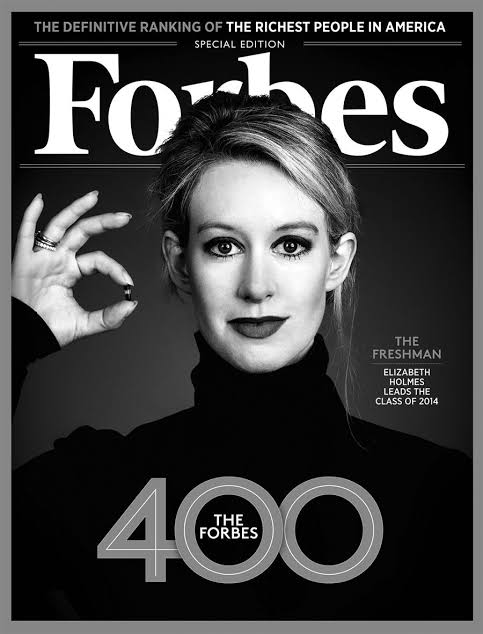
Behind the curtain
However, behind the curtain at Theranos there was one small drawback. The blood-testing machine, named Edison, didn't really work. It was only able to run a small number of tests compared to what Theranos promised, and those it could perform often produced very inaccurate and misleading results. Engineers and scientists repeatedly flagged up serious problems, but no-one listened to their concerns.
Meanwhile, Theranos was getting increasingly popular. Walgreens, one of the largest pharmacy chains in the US, partnered with the company to offer its blood testing services in stores—believing it was at the forefront of convenient, fast diagnostics. This partnership made Theranos appear significantly more reputable. There was no turning back, as Theranos started to dig a deeper and deeper hole.
At Walgreens stores, customers believed their samples were being analyzed by cutting- edge technology—when in reality, the results were often generated using traditional machines in a back lab, or worse, were based on incomplete data from the Edison machine. This deception not only misled investors but put real patients at risk of receiving incorrect medical information.
Maintaining the Lie
In order to get away with such crimes and maintain their reputable image, employees were forbidden from sharing information across departments. Anyone who opposed Theranos' methods was either threatened with legal action or followed by private investigators. The board was also full of respected people, such as 2 former US secretaries of state who had bought into Holmes' vision and the technology that she represented. Their reputations kept the regulators away, while their failure to ask any questions about the technology left them completely in the dark about the technology's serious problems.
The Truth Comes Out
Eventually, the truth came out dramatically. Two employees risked their personal safety by contacting journalists to share what was really going on at the company. Holmes denied everything and turned to her lawyers to try to stop the story, but the facts were clear to see. Regulators started investigating Theranos, and the walls soon came crashing down. The Centers for Medicare & Medicaid Services found serious violations. Walgreens stopped its expansion with Theranos within weeks, and key executives resigned. Journalists, once drawn to Holmes's charisma, turned on her completely. Within months the grand illusion had collapsed.
The Desperate Consequences for Holmes
In 2018, Holmes was charged with fraud and conspiracy, accused of costing investors more than $700 million and putting patients in danger through incorrect test results, faked demonstrations, and repeated lies to doctors, investors, and regulators. She was found guilty of defrauding investors in 2022 and sent to jail for just over 11 years, ending one of the most incredible cases of corporate fraud in decades.
Theranos' story shows the darker instincts of Silicon Valley. It used the myth of the genius founder, the draw of "disruption," and the willingness of investors and media to believe a good story over hard science. Holmes didn't just sell a product; she sold a dream, and people bought into it without asking for any evidence.
Business English Lesson Vocabulary - Key Words from Context
Match each word to its definition and complete the example sentences. Full Business English lesson with the exercise can be found in the downloadable PDF.
Comprehension - Answer these questions in your own words
QUESTION 1
In what ways did Elizabeth Holmes try to imitate her idol?
QUESTION 2
What 2 factors attracted investors to Theranos?
QUESTION 3
True or false? Theranos’ machine was not able to test blood.
QUESTION 4
True or false? Scientists working at Theranos didn’t care to acknowledge the problems with the technology.
QUESTION 5
Based on the article, list 5 reasons why Elizabeth Holmes and Theranos were not caught sooner.
QUESTION 6
How did journalists react when they found out what was really happening at Theranos?
QUESTION 7
Based on the final paragraph of the article, what do you think is the broader message that the article offers?
Business English Lesson Vocabulary in a New Context - Fill in the gaps with words from the vocabulary section
A Sales Leaderboard
Elena (Head of Procurement):
Mark, before we sign with this start-up, I’d like to (1) _____________________ a few concerns. They promise (2) _____________________ technology, but their data only covers their best month. They may not have us deliberately, but it isn’t the full picture, and we still have no references from a (3) _____________________ client.
Mark (COO):
I take your point, but the board has completely (4) _____________________ their vision. The only real (5) _____________________ I can see is the price, but I agree that we can’t (6) _____________________ skipping due diligence on a deal this size. Let’s ask for a live demo — the last thing we want is to leave the board (7) _____________________ if problems come up later.
Discussion - Business insights and takeaways from the text
Based on what you have read, do you think that Elizabeth Holmes wanted to trick investors from the beginning, or did she want to create a legitimate product?
How can a company make sure its board challenges its leaders instead of simply trusting them?
It is debatable as to whether Elizabeth Holmes strived to create a legitimate product, or whether she was more motivated by status and the appeal of emulating her hero Steve Jobs. Find out more about our drive for status in our advanced Business English article about the best-selling book The Status Game by Will Storr.
Have you enjoyed this Business English Lesson? Explore more free C1 lessons in our Leadership and communication categories.
Lesson Creator

David Cox
I am a passionate linguist with over 15 years' experience with high level professionals. In this lesson you will learn:
Want to work through this lesson with me?
Advanced Premium Course
The Fluency Space CEO Package
Enjoyed this lesson? Take your business English further with a structured 3-month programme designed specifically for senior executives.
IN-DEPTH PROPOSAL BUILT WITH CARE
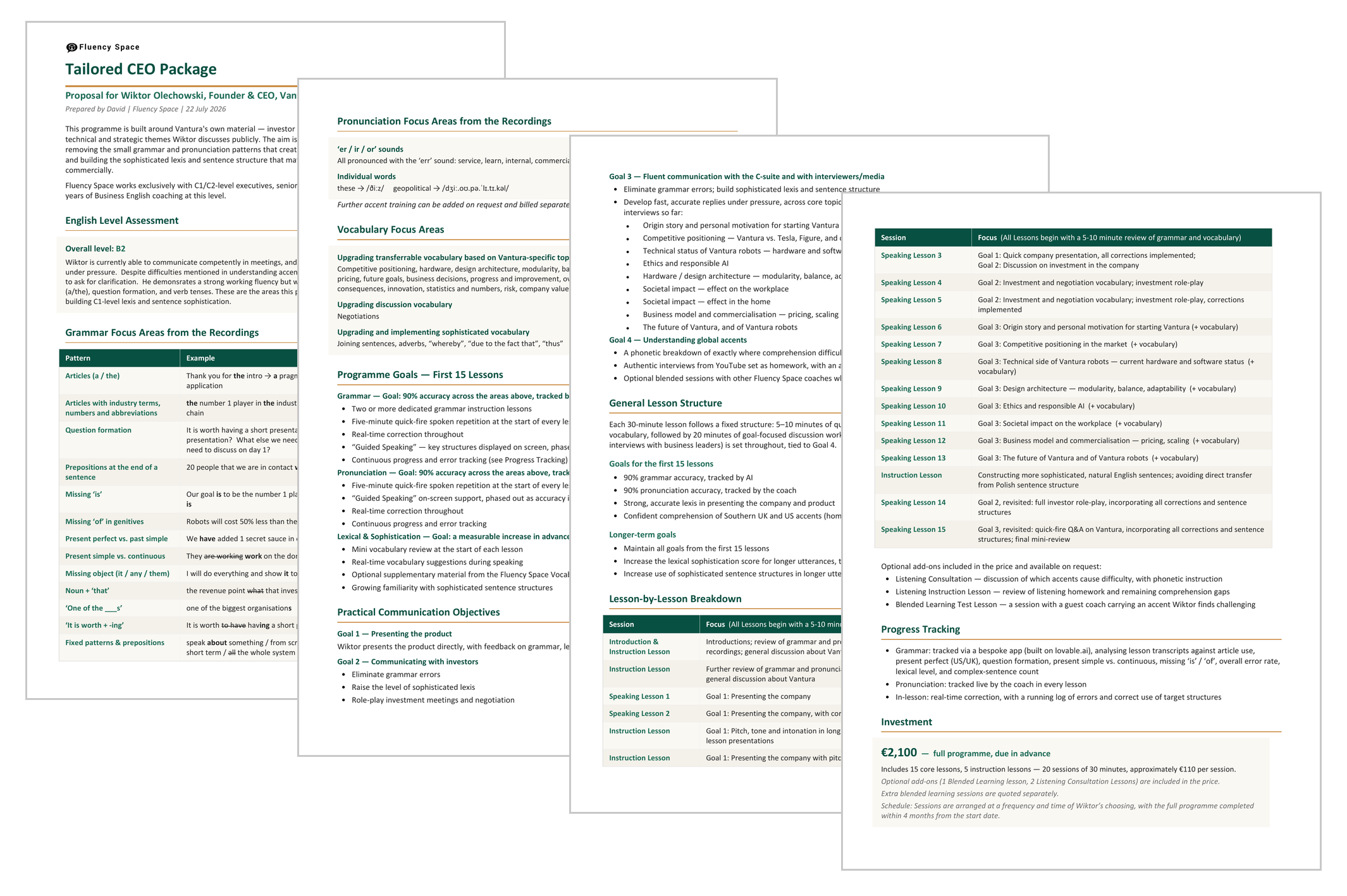
A Course Built around you
After your full English audit, we do a deep dive into your company, your role and your real communication goals - We then build a fully tailored program around them and send a proposal within 3 working days.

© Copyright Fluency Space. All Rights Reserved
OptimizePress Popup Overlay
the fluency space acadademy
Be one of the first 50 to join and get a huge discount!

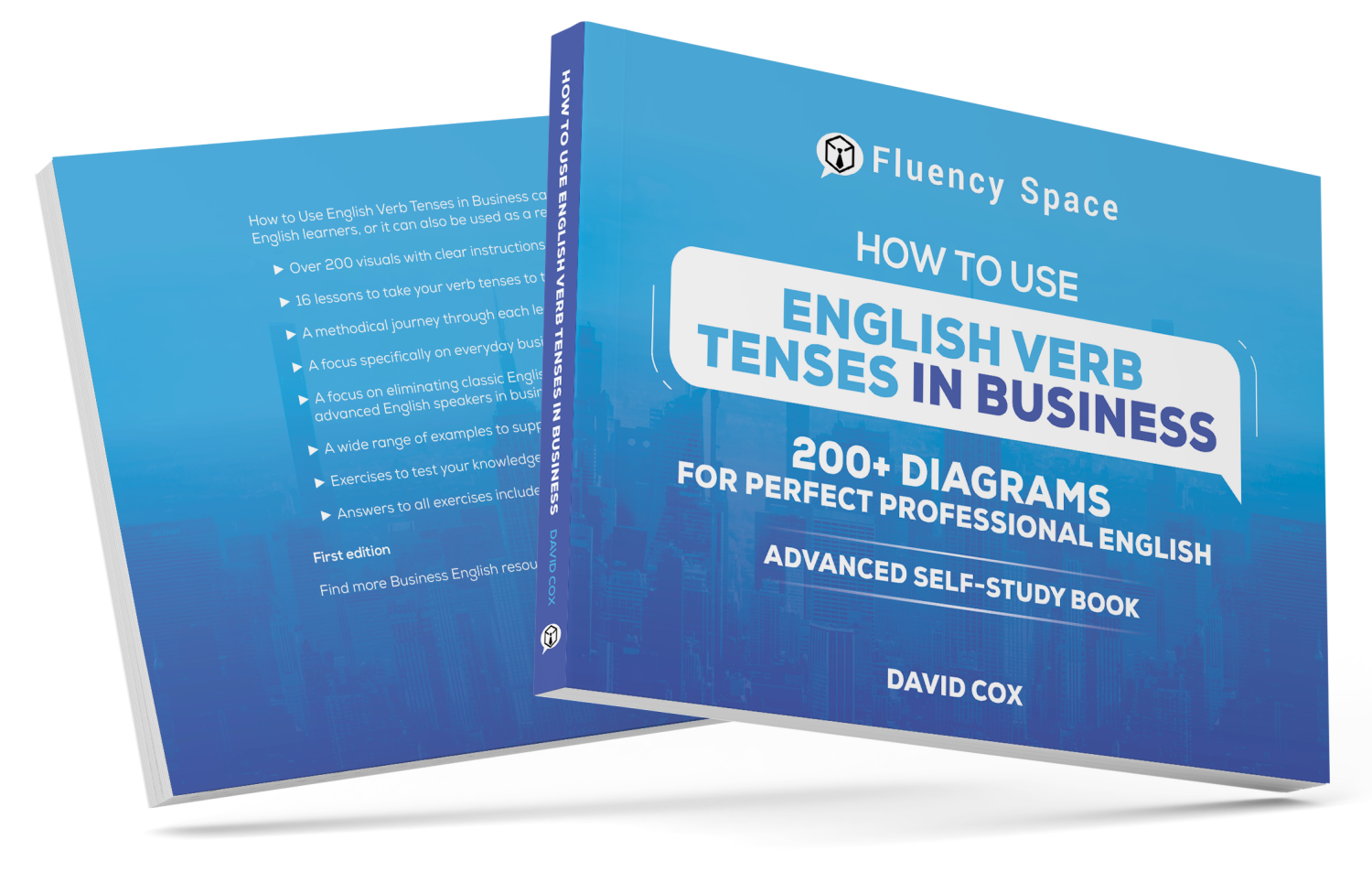
Your advanced English training center. Over 600 pages of PDFs. over 250 diagrams and hundreds of exercises. 32 Vocabulary lessons covering the 400 most important phrases for advanced Business, 2x monthly Adapted Business English texts, 2x monthly YouTube listening lessons, 'How to Use English Verb Tenses in Business' textbook.
All of this and much more for only $5.99 per month. Cancel anytime!